San Diego Council begins rolling back ADU policy that allowed backyard apartment buildings

Add Axios as your preferred source to
see more of our stories on Google.
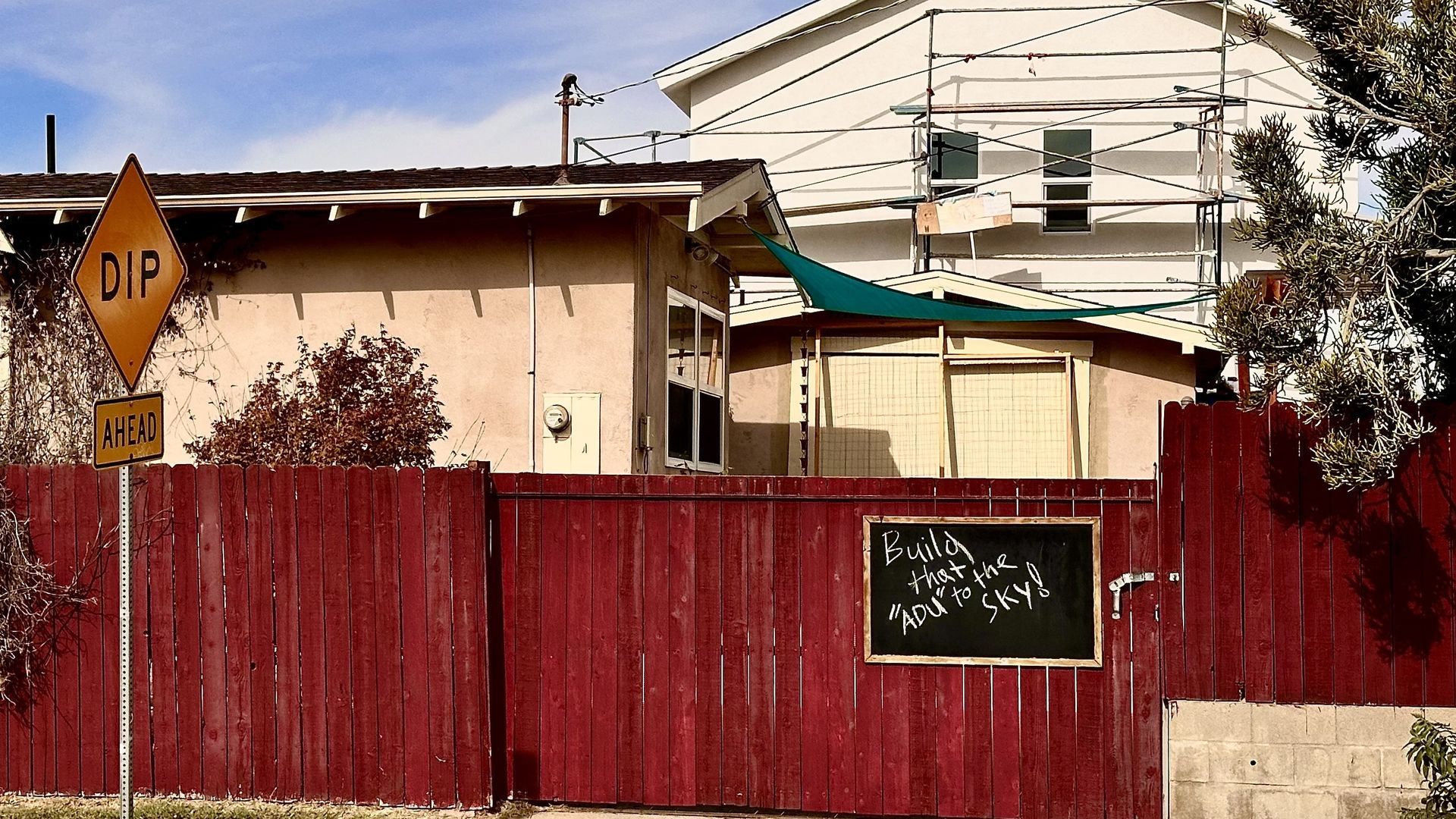
A homeowner in Normal Heights posted a sign protesting a neighbor's ADU. Photo: Andrew Keatts/Axios
San Diego officials took steps Tuesday to roll back a policy that let property owners build apartment buildings in the backyards of single-family homes.
Why it matters: The program exceeded state requirements for allowing accessory dwelling units (ADU), which represented 20% of all homes permitted in the city in 2023, and had been touted by city leaders as part of their approach to curbing housing prices by boosting production.
How it works: In 2020, the city adopted the "ADU bonus program," which surpassed a state mandate that cities allow property owners to build three ADUs on single-family lots.
- In the program, each ADU an owner builds and reserves with income-restricted rents, grants them the right to build an additional ADU.
- In areas near transit, they can repeat that process until they reach the maximum allowed building height or overall square footage allowed in the area.
- In practice, that meant owners of large properties could develop full apartment buildings on single-family lots, and they were technically considered ADUs.
Friction point: In the years since, that's generated significant opposition from neighbors opposed to issues like traffic, parking shortages and aesthetic changes that came with them.
- Opposition Tuesday came specifically from residents of District 4, the city's historically black community that has been hit especially hard with bonus ADU projects because many of its single-family neighborhoods have large lot sizes.
What they did: The council voted 6-3 to direct city planners to return within 90 days with a repeal of the program in single-family zones that tend to have the largest lot sizes, which made them susceptible to "outlier" projects that generated the most opposition.
- They also directed staff to work on a series of substantive reforms to the entire program — like imposing infrastructure fees developers would pay for the projects — that will come back to council later this year.
- The council members who opposed the action disliked the fact that it did not make any immediate change to the types of single-family zones common in their districts.
The intrigue: The decision is an indication the council may have found the limits of a YIMBY-focused approach to development that dominated city housing politics for a decade.
- Similarly, the council in 2020 rejected a proposal to become the first California city to implement a state law that would allow up to 10 units on any single-family lot.
Reality check: Many development-friendly policies of recent years — like the "density bonus" and "Complete Communities" programs, and community plans that increased density in many neighborhoods — are still on the books.
Between the lines: The hours of public comment before the council vote may have foreshadowed another shift in how the city's housing discourse plays out.
- The push to make it easier, cheaper and faster to build more housing has positioned itself as a progressive effort combatting older, whiter and richer communities opposed to growth.
- But many of the hundreds of commenters Tuesday were Black D4 residents, who instead framed the disproportionate share of development in their neighborhood as an extension of the long-standing narrative of city disinvestment in communities south of I-8.
- Daniel Horton, the District 4 chief of staff, even compared the projects to "slave quarters."