California earns B grade for maternal, infant health care outcomes


Add Axios as your preferred source to
see more of our stories on Google.
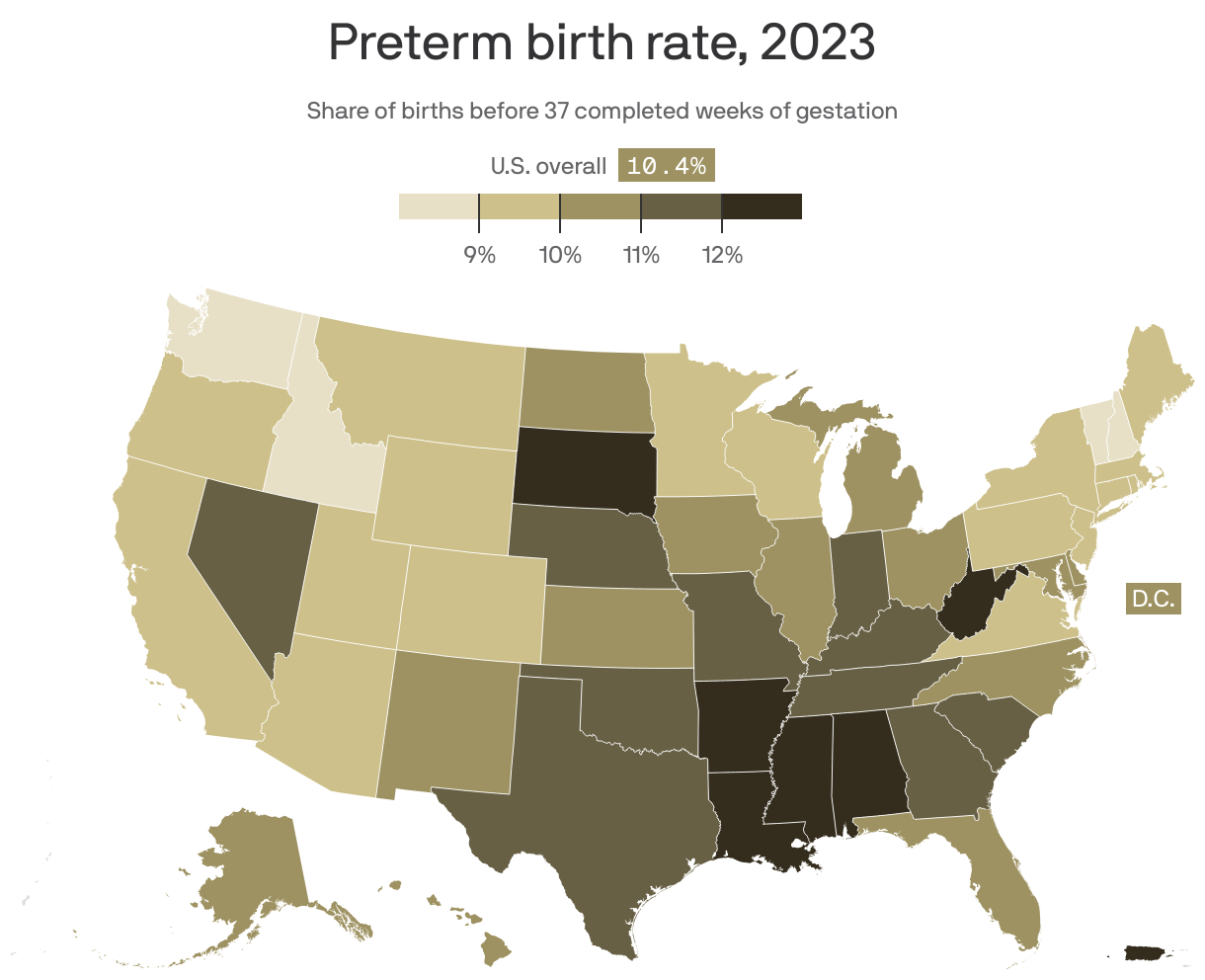
Preterm birth rates are continuing to rise in California and San Diego County, which both received a B- in a March of Dimes report on the state of maternal and infant health.
Why it matters: Babies born early have a higher risk of health problems at birth and throughout their lives, including trouble breathing, hearing loss, and intellectual and developmental disabilities.
By the numbers: The rate of preterm births, defined as those happening before week 37 of gestation, was 9.2% across California in 2023, according to the report.
- San Diego County's preterm birth rates are 9%, with San Francisco County at 8.6% and Los Angeles County at 9.4%.
- That's compared to 10.2% nationally.
- California is one of 24 states where rates increased from 2022, in line with the decade-long, statewide trend.
Stunning stats: In California, Black babies are 1.4 times more likely to be preterm than all others.
- Their infant mortality rate (8.4 per 1,000 births) was double the state rate (4.1) in 2022.
Between the lines: Socioeconomic and environmental factors, including heat exposure and lower air quality, are the biggest influences in poor maternal health outcomes, per the state's report card.
- But that vulnerability risk is relatively low in San Diego and San Francisco counties.
- The state's clinical measures of infant and maternal mortality, c-sections and inadequate prenatal care worsened but are all lower than the national averages.
- The report highlighted California's policies for extended and expanded Medicaid coverage, doula reimbursement and mandated paid family leave, while pointing to a need for better support of the midwifery workforce.
The big picture: For the third year in a row, high preterm birth rates earned the U.S. only a D+ in the report.
- Black, Latina, Native American and Pacific Islander women experience disproportionate rates of preterm births, infant mortality and maternal deaths.
- People in the South and Midwest experience the worst outcomes.
Context: March of Dimes says "an alarmingly high preterm birth rate" is one of the contributing factors "to maternal and infant mortality and morbidity."
- The infant mortality rate rose in 2022 for the first time in two decades, the report says, in line with other studies carried out after Roe v. Wade was struck down.
What they're saying: Public policy measures could help curb these problems, says Yadira Tabales, maternal and infant health manager for Puerto Rico at March of Dimes.
- Licensing midwives, which California does, can help when women can't get to a doctor.
- Mobile clinics in counties with no nearby OB/GYN providers, hospitals or birth centers can also make a difference.
What to watch: Gov. Gavin Newsom signed a law in September meant to address abrupt and rapid maternity ward closures happening statewide and locally.
- The new law requires hospitals to notify county government 120 days before closing a labor and delivery or psychiatric unit, instead of 90 days.
- That notification will also include a public hearing, which could help hospitals and communities better prepare for the loss of services.