San Diego's fall is getting warmer


Add Axios as your preferred source to
see more of our stories on Google.
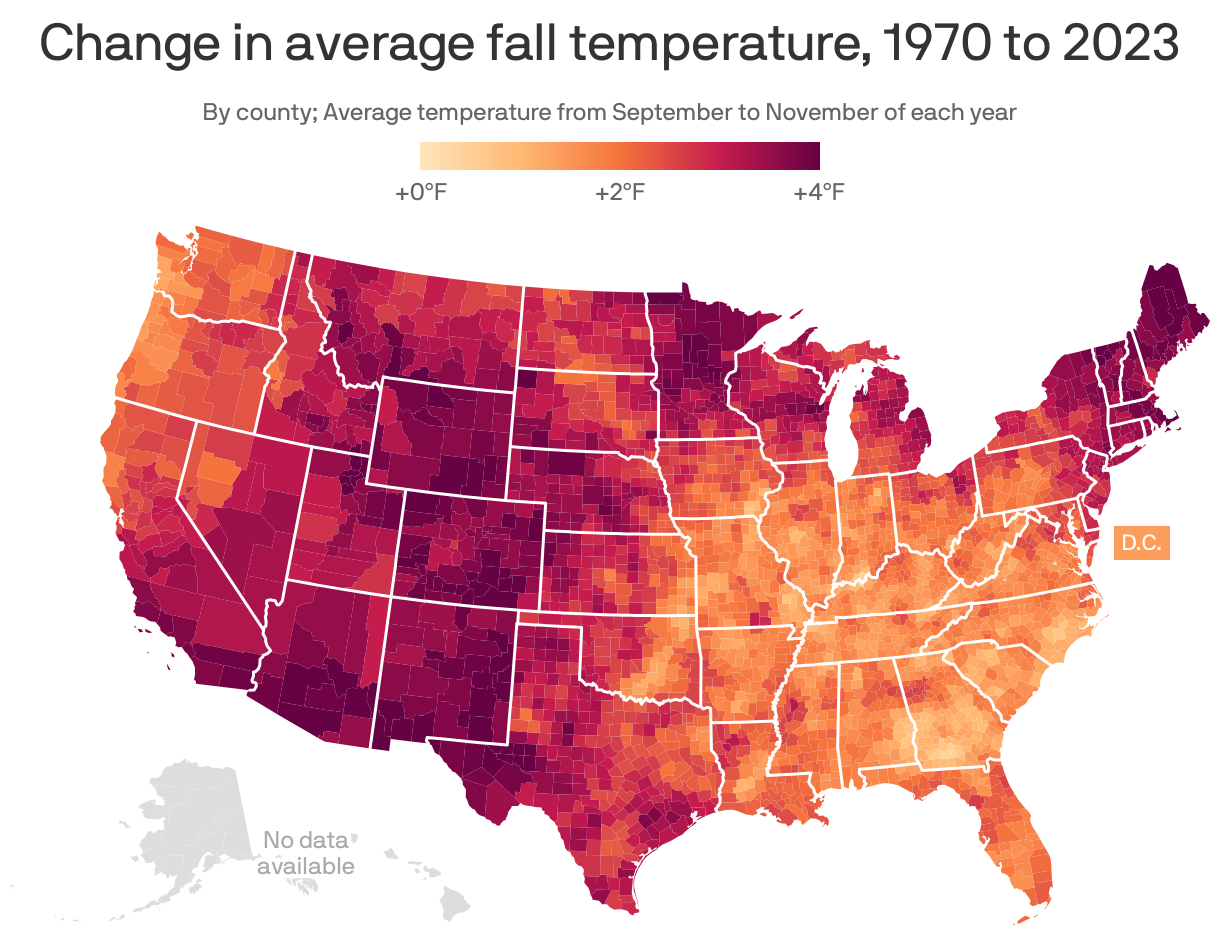
Fall is getting warmer nationwide, and especially in Southern California, a new analysis finds.
Why it matters: Warmer autumns mean more demand for cooling, higher energy use and longer wildfire seasons.
Driving the news: Average fall temperatures in San Diego County rose 3.7° between 1970 and 2023, per a new Climate Central report.
- The nonprofit climate research group's analysis is based on average temperatures between September and November of each year.
By the numbers: That compares to a nationwide increase of 2.5° on average across 234 cities in the U.S. during the same period.
- The Southwest region overall clocked some of the biggest increases, while the Southeast did comparatively better, increasing by 2° or less.
Zoom in: Reno, Nevada (+7.7°); El Paso, Texas (+6.1°); and Las Vegas (+6.1°) saw the biggest increases in average fall temperature among U.S. cities.
Between the lines: The fall trends are consistent with climate science findings showing how the planet is responding to human-caused increases in greenhouse gases, such as carbon dioxide.
- All other seasons are also warming.
The latest: San Diego has spent the last week grappling with a record-smashing September heat wave that's impacted the Western U.S. from Phoenix to Seattle, Axios' Andrew Freedman reports.
- About 14,000 San Diego Gas & Electric customers were without power at some point Sunday — the majority near Spring Valley — but by Monday that had fallen to fewer than 1,000, the Union-Tribune reported.
- The National Weather Service, though, expects temperatures to begin cooling today, and San Diego could settle in with below-average highs by Wednesday.
What's next: Expect above-normal temperatures across much of the country this fall, per the National Oceanic and Atmospheric Administration's seasonal outlook.