Historic rain overwhelms San Diego, causing severe flooding

Add Axios as your preferred source to
see more of our stories on Google.
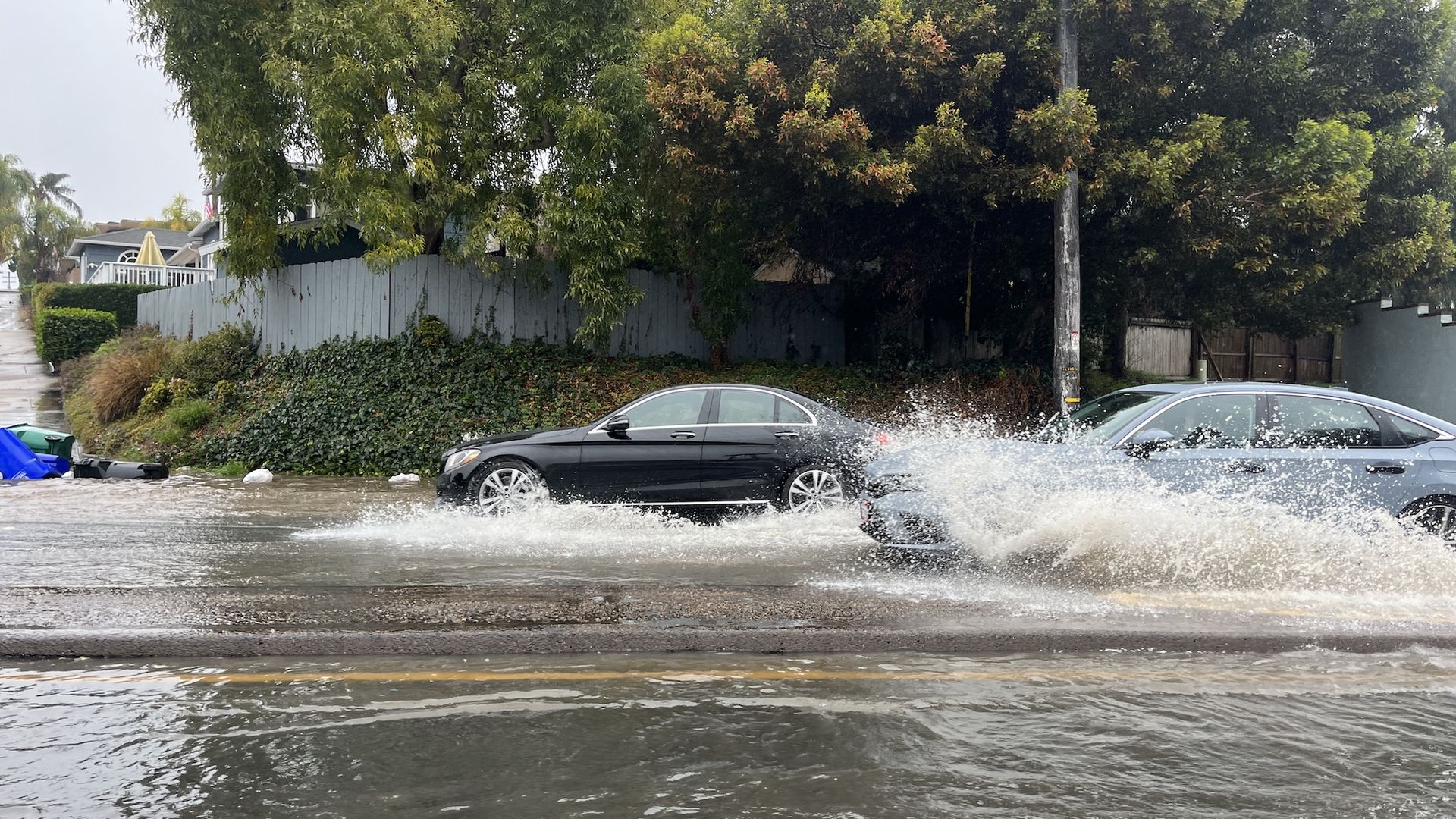
Cars drive through flooded streets in Point Loma. Photo: Kate Murphy/Axios
Historic rainfall Monday closed roads, damaged property and threatened lives from Pacific Beach to the city's southeastern neighborhoods.
State of play: San Diego had one of its five wettest days in recorded history, the National Weather Service estimates, after 2.73 inches of rain fell at San Diego International Airport.
- Firefighters and lifeguards conducted 24 rescues from the San Diego and Tijuana rivers — and hundreds more from homes and cars — and reported no fatalities from flooding incidents as of Monday evening, per the San Diego Fire Department in a post on X (formerly Twitter).
Why it matters: Torrential rainfall overwhelmed city and county services Monday, forcing road closures in beach communities, the urban core and south San Diego. It also left thousands without power, required the Metropolitan Transit System to suspend or severely delay trolley and bus routes and necessitated multiple water rescues by emergency responders.
- Two safe camping sites for homeless residents in Balboa Park both flooded, leading the city to establish a temporary shelter at the Balboa Park Recreation Center.
Historic downpour: San Diego's one-day precipitation record of 3.34 inches was set Dec. 2, 1854, said Adam Roser, a meteorologist with the NWS San Diego office.
- Monday was the fourth wettest day in city history, with 2.73 inches of rain.
- Of note: The city saw 2.7 inches of rain on Oct. 27, 2004 — the only day among San Diego's 10 wettest on record that occurred this century.
What they're saying: "We had an atmospheric river come across the area, and even though it was fairly weak in nature, it did have a lot of moisture in it," Roser said.
- "Some of the region's infrastructure can't handle this much water in such a short time period," Roser said, of the widespread flooding Monday.
Zoom out: Officials have been aware for years of the massive and growing budget deficit facing the city's stormwater infrastructure.
- A scathing city audit in 2018 concluded stormwater funding was insufficient to cover current and future needs, and the city had not taken meaningful steps to create a solution.
- Of the $2.3 billion infrastructure deficit the city projected in 2021, $1.23 billion was pegged for stormwater needs alone.
- The city's unfixed stormwater system results in polluted waterways and increased risks of flooding, the auditor concluded.
- The city's stormwater department and some elected officials pursued a 2022 ballot measure for new taxes or fees to support infrastructure upgrades in response to the audit but ultimately did not put the question to voters.
Our thought bubble via Axios' climate reporter Andrew Freedman: Studies have shown that extreme precipitation events such as this one are becoming likelier and more intense as the climate warms in response to the burning of fossil fuels and deforestation.
- El Niño also raises the odds of heavy precipitation in California, though this was a highly localized event.