The growing fight over Flock cameras


Add Axios as your preferred source to
see more of our stories on Google.

Illustration: Brendan Lynch/Axios
Mounting privacy concerns are fueling bipartisan opposition to license plate readers made by Flock Safety and similar companies.
The big picture: Automated license plate readers (ALPRs) from several vendors have operated across Southwestern Pennsylvania, including Allegheny County, for over a decade.
- But national reports of police misuse and objections to how long data is stored — and who can access it — are drawing fresh scrutiny from politicians, civil liberties groups and social media users.
How it works: Flock cameras are typically pole-mounted solar installations near a road entrance, intersection or parking area.
- The cameras use AI to scan plate numbers; vehicle make, model and color; and features like bumper stickers or body damage with a timestamp. They’re used by law enforcement, businesses, HOAs and other institutions.
- The details Flock cameras capture give law enforcement a searchable, nationwide database, although network sharing can be limited by state laws and department discretion.
- The company says it does not use biometric data or facial recognition.
- Flock says it doesn’t have an active contract with ICE, but law enforcement can share data with federal authorities where legally permitted, per its website.
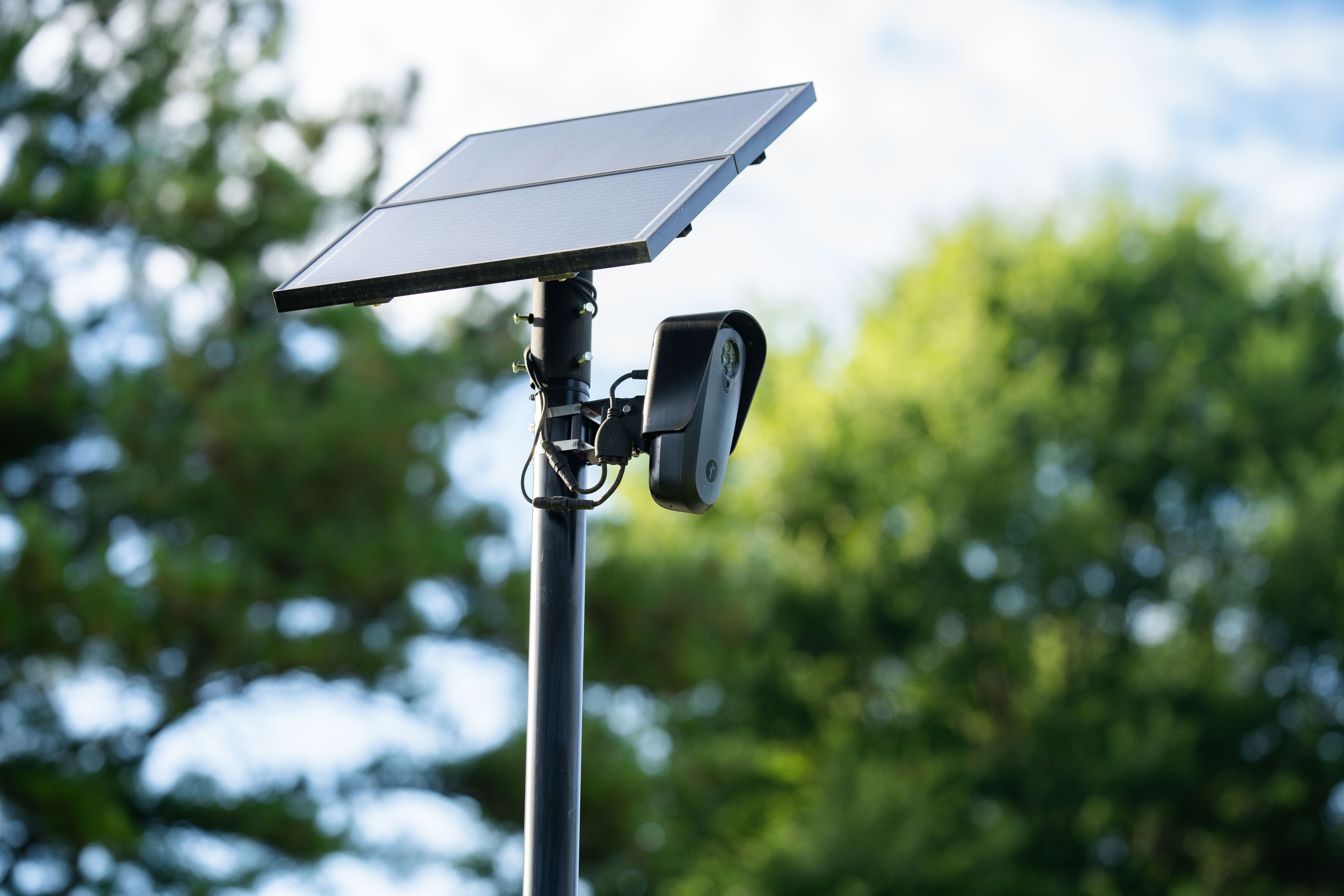
By the numbers: Flock has over 120,000 cameras across the country, the company tells Axios.
- Flock owns roughly 30% of more than 1,300 ALPRs logged across 10 Southwestern Pennsylvania counties on DeFlock, a national organization that maps Flock cameras and other ALPRs via crowdsourced data.
Friction point: Supporters say the tech helps police quickly find missing people, stolen vehicles and solve violent crimes. Flock estimates its tech helps solve about 10% of reported U.S. crimes, or more than 700,000 a year.
- Critics, including the ACLU, argue the large-scale network enables warrantless tracking of all citizens that amounts to mass surveillance.
The Washington Post reported that at least 50 police officers nationwide have been accused of misusing Flock and similar surveillance systems to track intimate partners, including a former Frazer Township officer who pleaded guilty in 2021 to using a Flock competitor to stalk his estranged wife.
The latest: Flock said last week that it's improving its privacy, security and accountability features amid a wave of canceled Flock contracts and reports of vandalism.
- The company is making misuse detection mandatory for all customers and cutting default data retention from 30 days to seven days in some cases, though police departments can retain data longer and local or state policies can override the default.
The other side: The ACLU called several of the proposed changes “retreads of previous inadequate safety measures.”
Flashback: Washington City Council this summer approved a one-year trial of Flock cameras for local law enforcement, and a Flock trial in Munhall prompted some residents to petition for the cameras’ removal in April.
Worth noting: Flock cameras are not the same as Pittsburgh’s recently installed red-light cameras.
What's next: Pennsylvania lawmakers plan to introduce legislation adding clearer regulations for ALPRs, including limits on data retention and sharing, local opt-outs, transparency requirements and civil penalties for misuse, the Pennsylvania Capital-Star reports.