Pittsburgh metro population dips again

Add Axios as your preferred source to
see more of our stories on Google.

Like the Duquesne Incline, the region's population is going down. Photo: Alexis Johnson/Axios
We're returning to Pittsburgh normalcy: population decline.
Why it matters: Census estimates released Thursday show the eight-county Pittsburgh metro region is losing population again, continuing a well-trodden trend.
By the numbers: The metro population declined by 3,160 residents between July 2024 and 2025, about 0.1% of the population.
- The metro population is 2,421,992, down 1.4% from 2020, according to Census figures.
Zoom in: Most counties in the region lost population between 2024 and 2025, but three grew a little. All population changes were almost insignificant percentages.
- Allegheny led the decline (-2,139), followed by Westmoreland (-1,149), Fayette (-938), Lawrence (-176) and Armstrong (-57).
- Butler grew the most (+839), followed by Beaver (+263) and Washington (+167).
State of play: It appeared the metro's population was starting to inch up, but longer-term trends show the region is still stuck in a slow decline.
- Last year, estimates clocked the metro area actually gaining over 450 residents between 2023 and 2024, but those numbers were adjusted with these latest estimates, and about 3,000 were lost during that period.
Between the lines: Low births and a high number of deaths continue to weigh on the region.
- The metro saw nearly 7,800 more deaths than births between 2024-2025.
Stabilizing the population was a combination of international and domestic migration, though fewer immigrants moved to the region than is typical.
- The region netted 2,894 immigrants between 2024-2025, down 46% compared to 2023-2024.
- Yes, but: The region saw a positive domestic migration, with 1,659 more people already living in America moving to Pittsburgh than leaving.
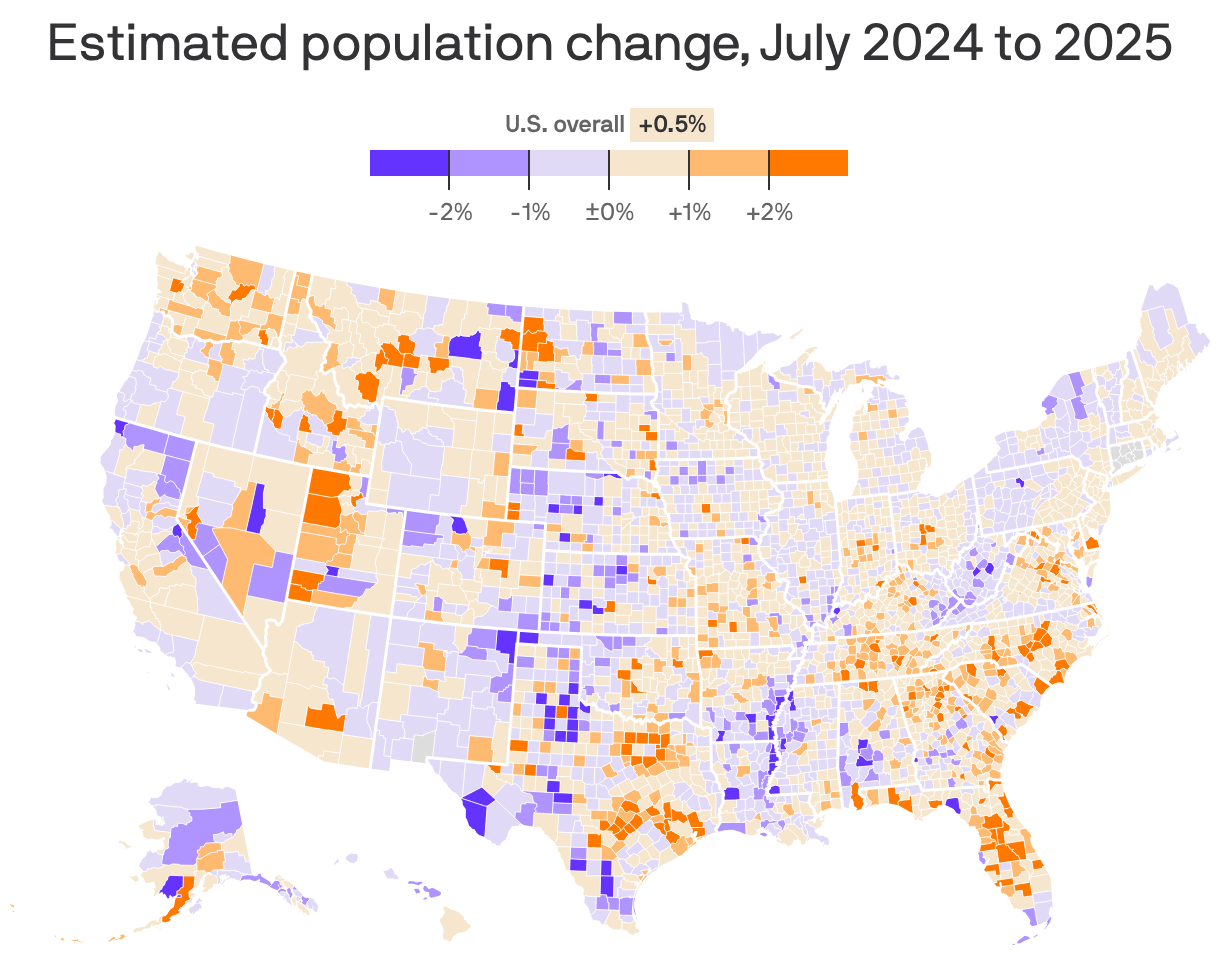
The big picture: A massive drop in immigration is causing many counties in the nation to decline, while slowing growth just about everywhere else.
- The U.S. overall still grew by 0.5% from 2024-2025.
- Nationwide natural change (births minus deaths) held steady, while international migration plummeted from about 2.8 million people to 1.3 million — about a 55% drop.
What's next: City-specific census estimates are released later in the spring.