Immigration helps Pittsburgh area's population stabilize

Add Axios as your preferred source to
see more of our stories on Google.
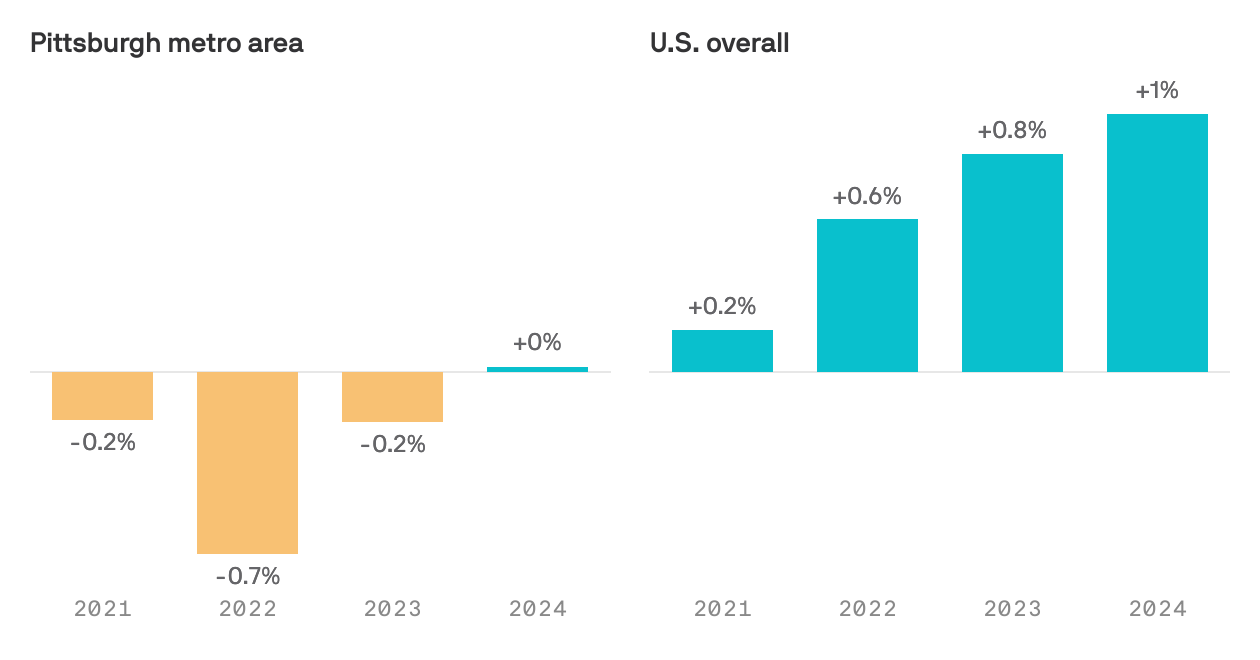
The Pittsburgh metro area had been shrinking since the pandemic, but an influx of immigrants helped the region's population stay above water last year.
Why it matters: The metro has long struggled with population loss, but there are signs it is turning things around.
Driving the news: The Pittsburgh region gained about 450 residents between 2023 and 2024, according to data released by the U.S. Census Bureau last week.
- That's an extremely small gain, considering there are about 2.4 million people living in the eight-county metro.
- Population growth in Allegheny, Butler and Washington counties barely outstripped losses elsewhere.
State of play: "All of the nation's 387 metro areas had positive net international migration between 2023 and 2024, and it accounted for nearly 2.7 million of the total population gain in metro areas," the bureau said in a statement accompanying the new data.
- Pittsburgh netted more than 10,000 immigrants between 2023 and 2024.
- "That is a big international migration number for us," said Chris Briem, a regional economist with the University of Pittsburgh's Center for Social and Urban Research.
By the numbers: The region lost about 7,600 people due to natural decline (more deaths than births) between 2023 and 2024.
- It also lost about 2,000 people due to natural migration, or more domestic residents leaving than moving in.
- Those losses were offset by the large international migration gain.
What they're saying: Briem tells Axios he was surprised the region had any gain at all.
- "That for us is not bad," Briem says. "The fact that we are able to maintain population, given our natural population decline, is something."
Context: The number of people living in U.S. metro areas rose by almost 3.2 million between 2023 and 2024, the Census Bureau said — a gain of about 1.1%.
- By comparison, the total U.S. population rose by 1% during that time.
- Pittsburgh grew by 0.001%.
What's next: Demographers and other researchers will be keeping a close eye on how Trump administration policies may affect immigration levels.