Pittsburgh poverty ticks up amid national decline

Add Axios as your preferred source to
see more of our stories on Google.
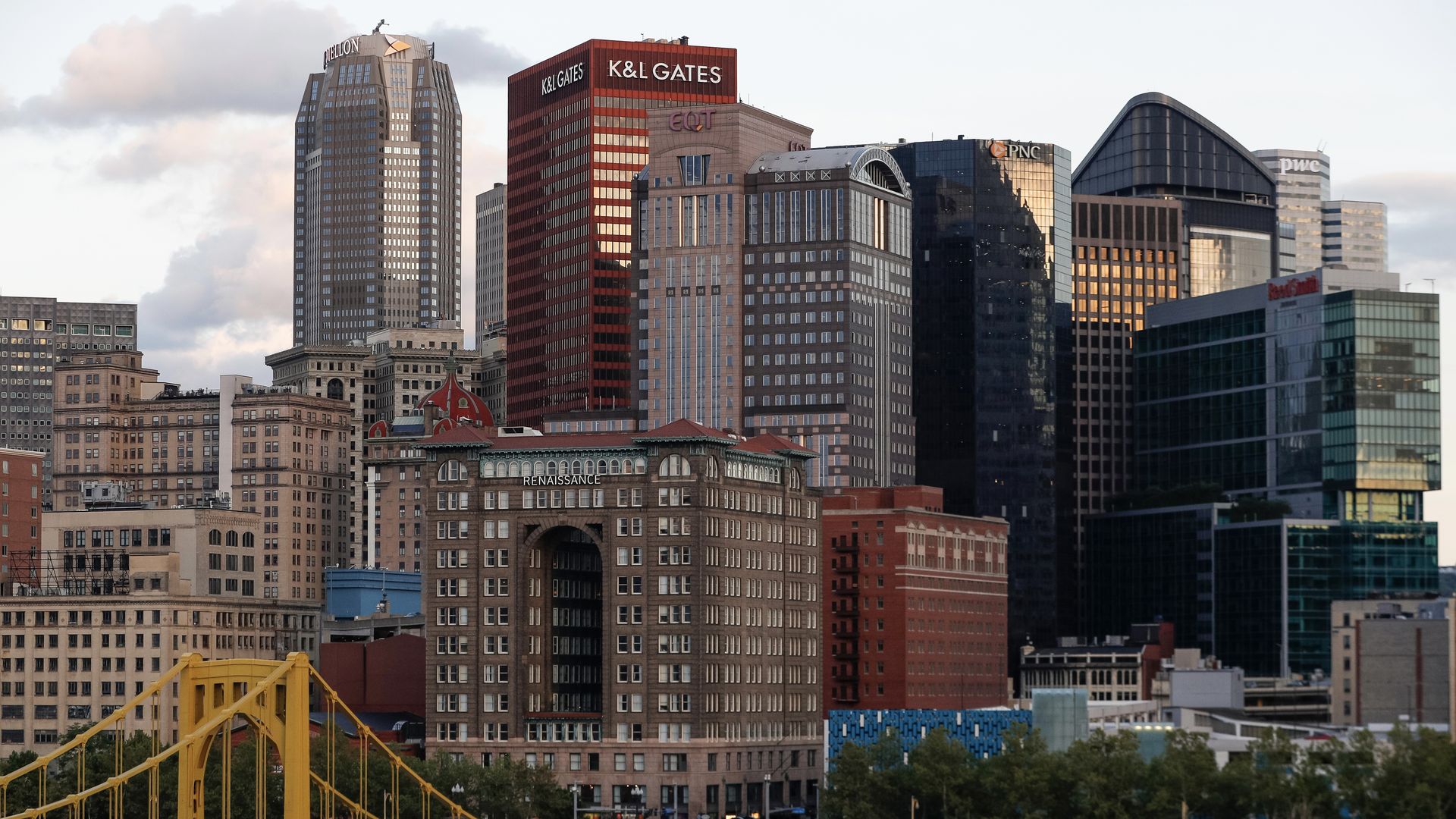
The downtown Pittsburgh skyline in July 2023. Photo: Brandon Sloter via Getty Images
Pittsburgh's poverty rate rose slightly last year despite declines across Pennsylvania and the nation, per U.S. Census data released in early September.
Why it matters: Low-income households are already facing weaker federal safety nets — from looming Medicaid cuts to stricter SNAP rules — as rising grocery and utility prices push family budgets to the brink.
- Poverty often blocks paths to education and work, locking people into cycles of hardship and disproportionately affecting people of color.
State of play: Poverty ticked up to 20.1% of Pittsburgh's population in 2024, up from 19.9% the year prior, per Census data.
- That's about 57,000 residents living below the poverty line.
How it works: The poverty threshold is about $32,000 for a family of four.
The big picture: Pittsburgh's poverty rate has fluctuated slightly over the past 10 years, holding near 1 in 5 people, but it remains below its 20-year peak of 23.8% in 2014 as the city worked to shed its financially distressed status.
By the numbers: The poverty rate for children under 18 in Pittsburgh was 31.2% in 2024, per the data.
What they're saying: "Since the pandemic, we've seen an increase in folks hitting some of the barriers that can feel insurmountable in Pittsburgh right now — finding affordable housing, affordable childcare and affordable transportation," Sarah Cook, executive director of Pittsburgh Community Services Inc (PCSI), tells Axios, noting a spike in requests for emergency services like food and help with utility bills.
Zoom out: The nation's estimated poverty rate fell from 12.5% to 12.1% in 2024; Pennsylvania's fell from 12% to 11.6%.
Stunning stat: Philadelphia's poverty rate fell to 19.7% in 2024 — the first time in decades it dropped below 20%, shedding its title as the "nation's poorest big city."
Yes, but: Despite recent improvements in similarly sized regional cities, many still face higher poverty rates than Pittsburgh.
Case in point: Buffalo, New York's rate fell to 23% in 2024, down from 27.6% the year prior.
- Cleveland's rate fell from 30.7% to 28.3%.
What we're watching: How the city balances shrinking federal aid and a tightening budget with efforts to expand affordable housing and protect vulnerable residents.