Flash flood warnings drench the region


Add Axios as your preferred source to
see more of our stories on Google.
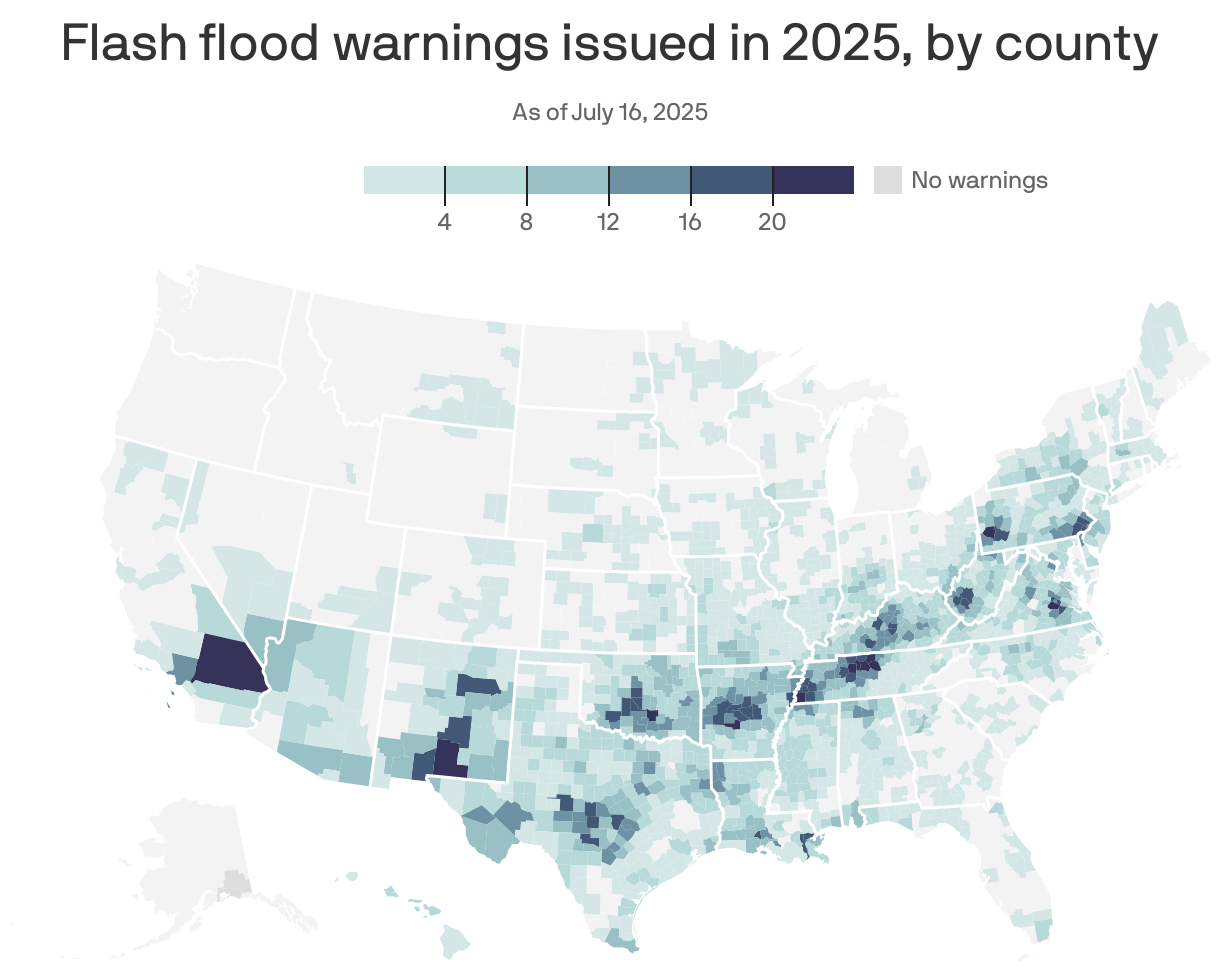
Storms sweeping through the U.S. this summer have dumped intense rain on cities nationwide, including dozens of communities across the Pittsburgh area.
The big picture: Scientists who spoke to Axios say the deadly floods in Texas that killed more than 130 people underscore the risk that climate change can worsen extreme rainfall events.
Zoom in: 112 flash flood warnings have been issued in the greater Pittsburgh region through July 17, according to National Weather Service data.
- That's more than the past three years combined and the most since 2003, when two hurricanes descended on the region contributing to more than 300 flash flood warnings that year.
- Allegheny County saw the most in the region, with 29 warnings, the second-highest total of any county in the nation, just behind Sumner County, Tennessee (33).
Zoom out: In North Carolina, Tropical Storm Chantal rapidly formed — and slowly drenched the state with flooding rains.
- Last week, storms sparked floods in New Mexico that killed three in the village of Ruidoso.
- Widespread rainfall along the I-95 corridor in the mid-Atlantic last week set off flash flood warnings, grounded flights and sent torrents rushing through New York City subway stations.
- In New Jersey, two people died after the vehicle they were in was swept away by floodwaters.
Context: Climate change "is supercharging the water cycle," sparking heavier precipitation extremes and related flood risks, according to Climate Central, a climate research group.
- Among 144 U.S. cities analyzed by the group in a report from earlier this year, 88% experienced an increase in hourly rainfall intensity from 1970 to 2024.
- The summer months already provide the weather patterns for higher rainfall rates in some regions, and climate change makes that risk worse.
Go deeper: Why flash floods like those in Texas and New York are becoming more common