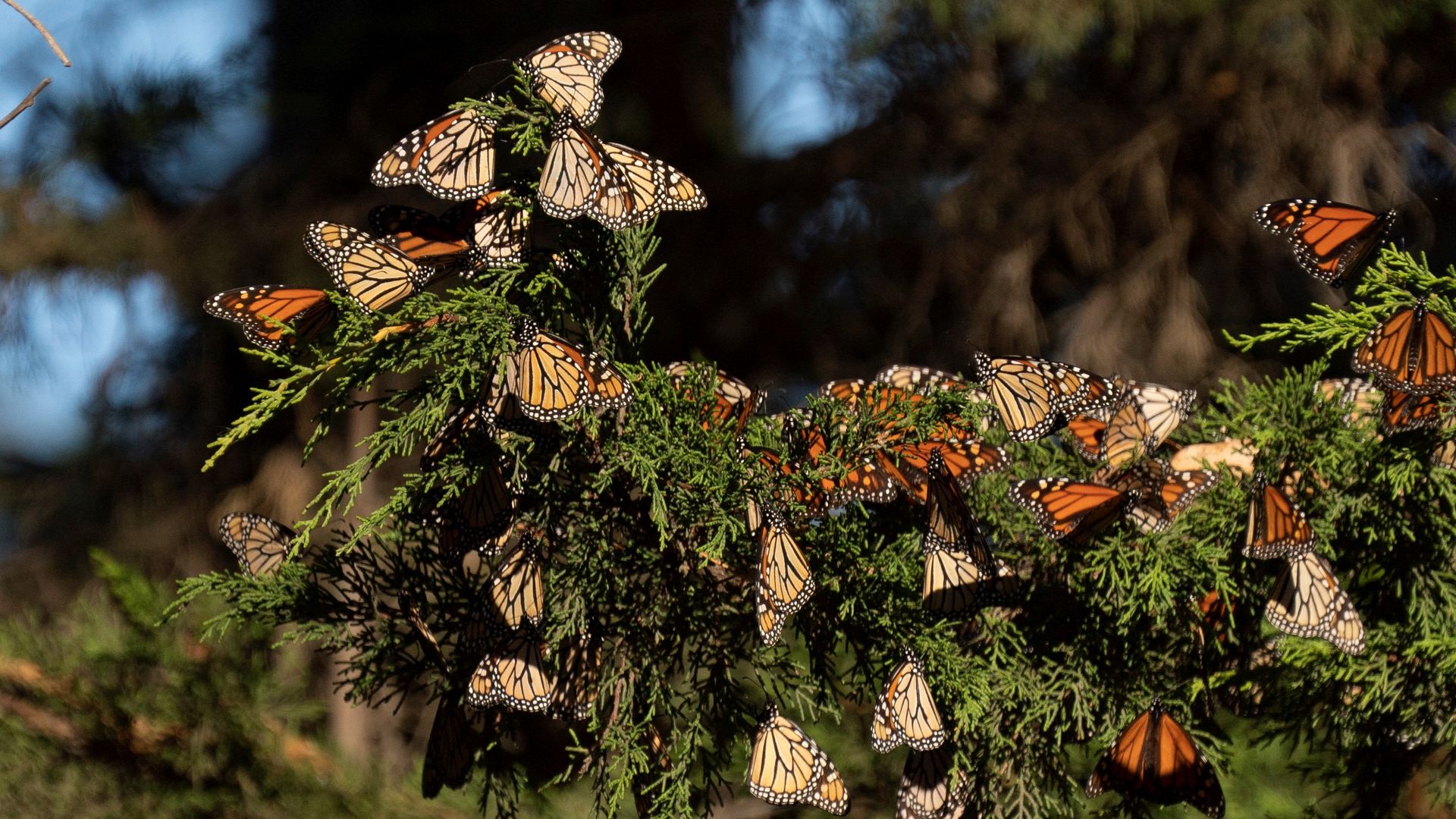
The U.S. government is considering listing the Monarch butterfly as a threatened species. Photo: Li Jianguo/Xinhua via Getty Images
The monarch butterfly's annual migratory journey from Canada — through Pennsylvania — to Mexico is a breeze compared to the federal government's lengthy process to protect the dwindling species.
Why it matters: The monarch, whose population has declined more than 80% since the 1990s due to habitat loss, climate change and pesticide use, has waited more than 10 years for protection under the Endangered Species Act.
Butterflies are important pollinators, helping plants reproduce, maintaining biodiversity and supporting ecosystems — including food sources for wildlife and humans.
Driving the news: The U.S. Fish and Wildlife Service announced earlier this month it would reopen the public comment period on a proposal issued by the Biden administration to list the monarch as a threatened species with enhanced habitat protection.
Members of the public now have until May 19 to weigh in.
The big picture: Everyday gardeners can start helping monarchs now by planting a pollinator garden with milkweed (the only plant the butterflies will lay eggs on) and nectar-producing plants (for eating) that can provide a hospitable habitat for migrating monarchs.