Food banks hit by soaring costs


Add Axios as your preferred source to
see more of our stories on Google.
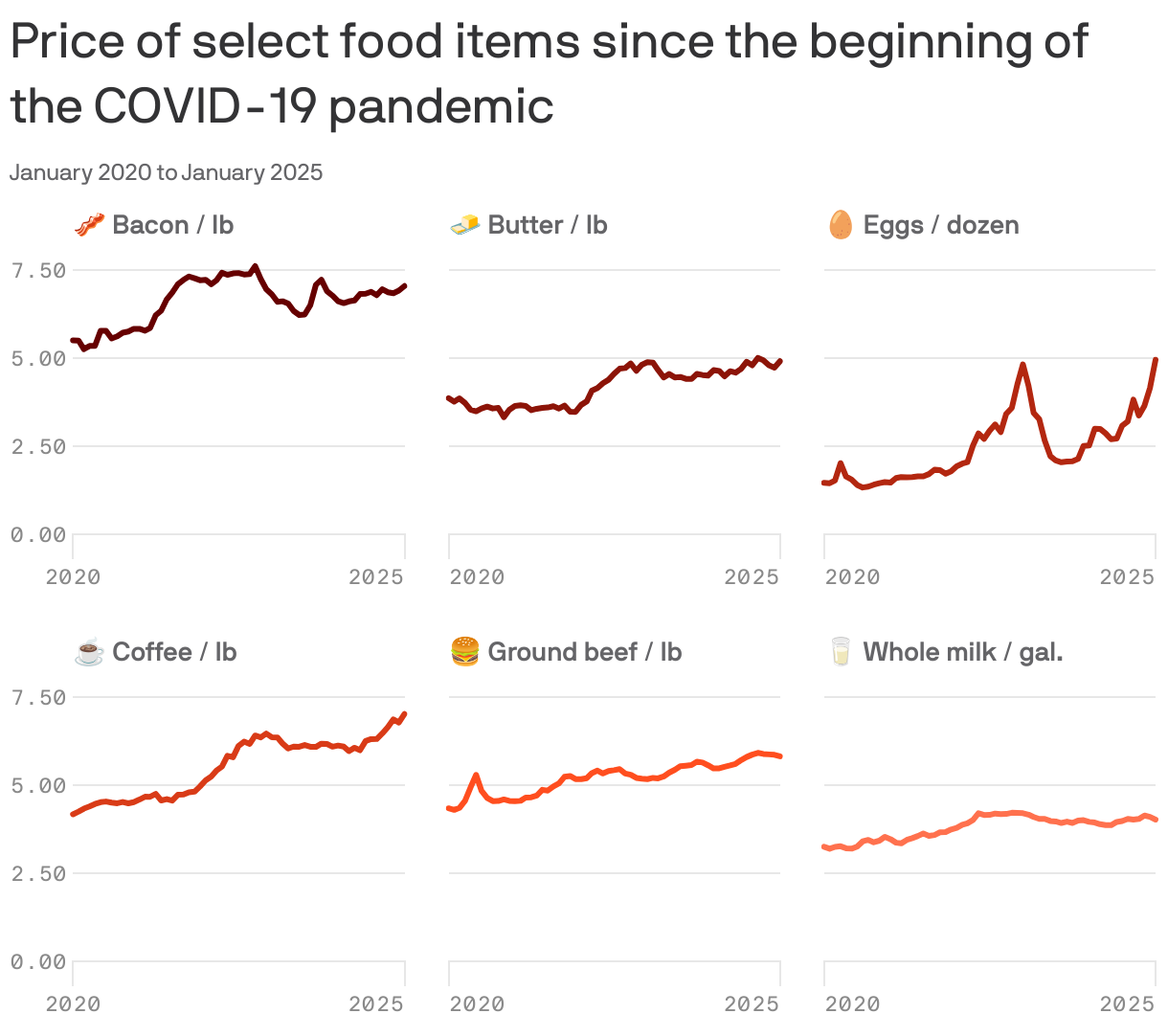
Skyrocketing food prices crushed local food banks during the pandemic — and they're bracing for new challenges five years after COVID hit the nation.
Why it matters: Higher prices have been unavoidable since the start of the pandemic, and new tariffs and retaliatory action could cause food prices to rise again.
- Rising food costs can strain food bank budgets, tighten donations and fuel greater demand for assistance.
The latest: The U.S. Department of Agriculture just scrapped two federal programs that sent $1 billion to schools and food banks to buy food directly from local farms, ranchers and producers — part of President Trump's push to shrink the federal government.
What they're saying: Greater Pittsburgh Community Food Bank supply chain strategy director Josh Murphy tells Axios the nonprofit is "constantly seeking ways to obtain better food at lower costs" as food prices rise.
- "We maximize as many sources of free and inexpensive foods as we can," he says. "But we already spend $11 million to $14 million on food purchasing annually, and we anticipate either that spend goes up or the overall food available goes down."
By the numbers: More than 142,000 people in Allegheny County live with food insecurity, according to nonprofit Feeding America — that number grew by more than 12% from 2019 to 2022.
- 1 in 8 people in the food bank's 11-county service area was food insecure in 2022, a 25% increase from the prior year.
The big picture: Food prices increased by 23.6% from 2020 to 2024 nationally, outpacing overall inflation of 21.2% during that period, according to the U.S. Economic Research Service.
- It was a story of supply chain disruption and demand eruption and their complex interplay. Supply chains broke, costs of raw materials, energy and labor rose — and consumers paid in the end.
- Food insecurity nationwide has steadily risen since before the pandemic, with 65% of food banks recording an increase in the number of people served in October 2024 compared with October 2023, Axios' April Rubin reports, with an average of 20% more people seeking food bank resources.
The bottom line: Community support for food banks and pantries remains crucial as funding faces new threats.