Pittsburgh's air quality is improving


Add Axios as your preferred source to
see more of our stories on Google.
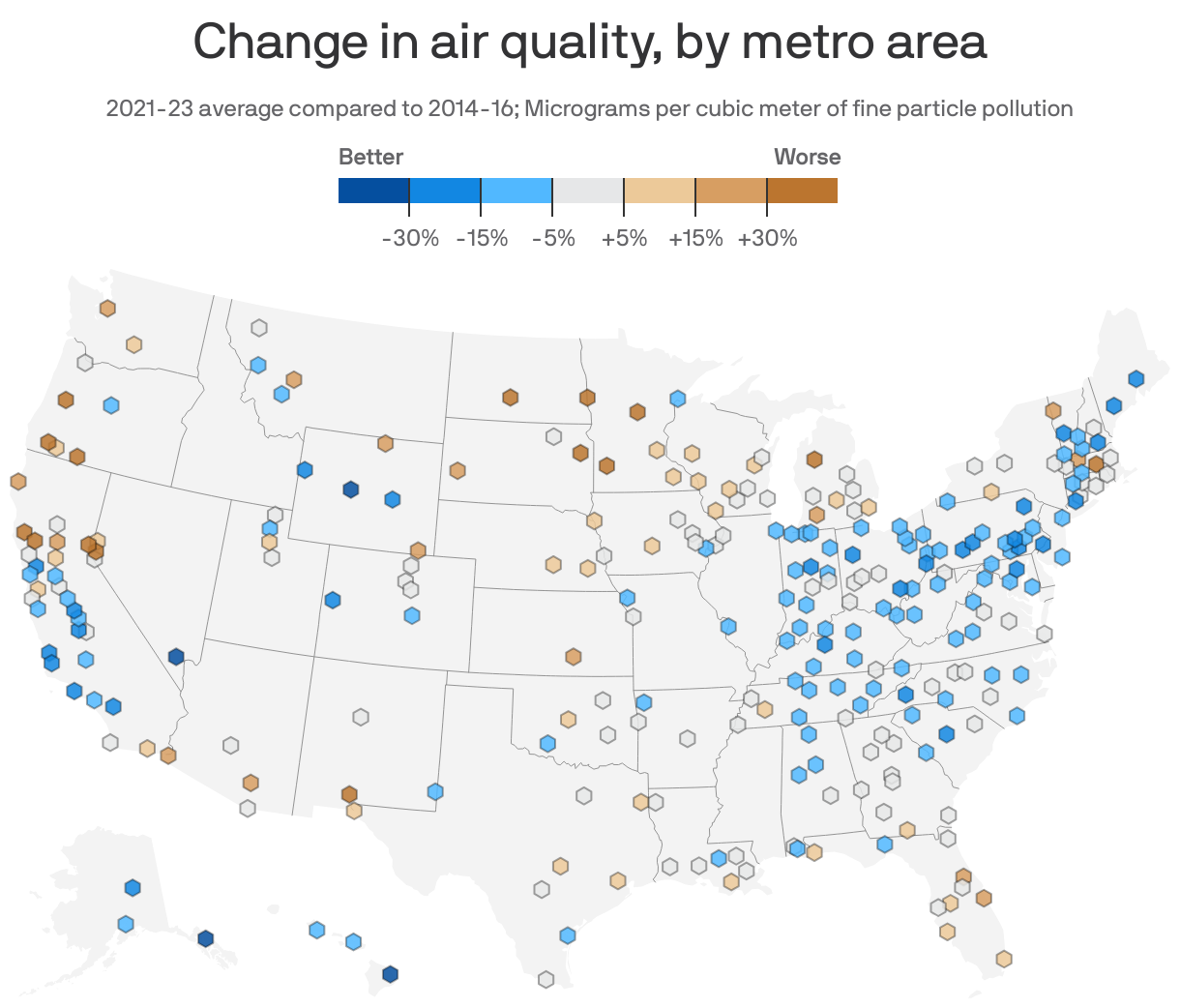
Good news: Air quality in Pittsburgh is improving, according to year-over-year data.
Why it matters: Long-term exposure to poor air quality is harmful to your health and has been a problem in Pittsburgh for decades.
By the numbers: The average percentage of fine particle pollution in the Pittsburgh region decreased 12.1% from 2021-23, compared to 2014-16.
The big picture: Tracking fine particulate matter (PM2.5) is a helpful indicator of air pollution and a major factor in air quality index scores, but it doesn't account for all variables. So air pollution can be worse than it appears on your weather app.
Yes, but: The Pittsburgh region still has some of the worst air quality in the nation, according to the American Lung Association.
Zoom in: In Pittsburgh, industrial facilities like coke plants, steel mills and other heavy manufacturers are a significant source of air pollution.
Zoom out: A growing body of research shows that polluted air is connected to poor reproductive outcomes, increased dementia risk, more asthma attacks and other respiratory health effects.
To stay safe, air quality experts recommend checking your local AQI, and also trusting your nose. If it's hard to breathe — even if the AQI is "green" — limit your time outside.
- The American Lung Association also shares these tips to stay safe during poor air quality days.