Nixon's Cuba comments spark backlash, underscoring Democrats' muddled messaging

Add Axios as your preferred source to
see more of our stories on Google.
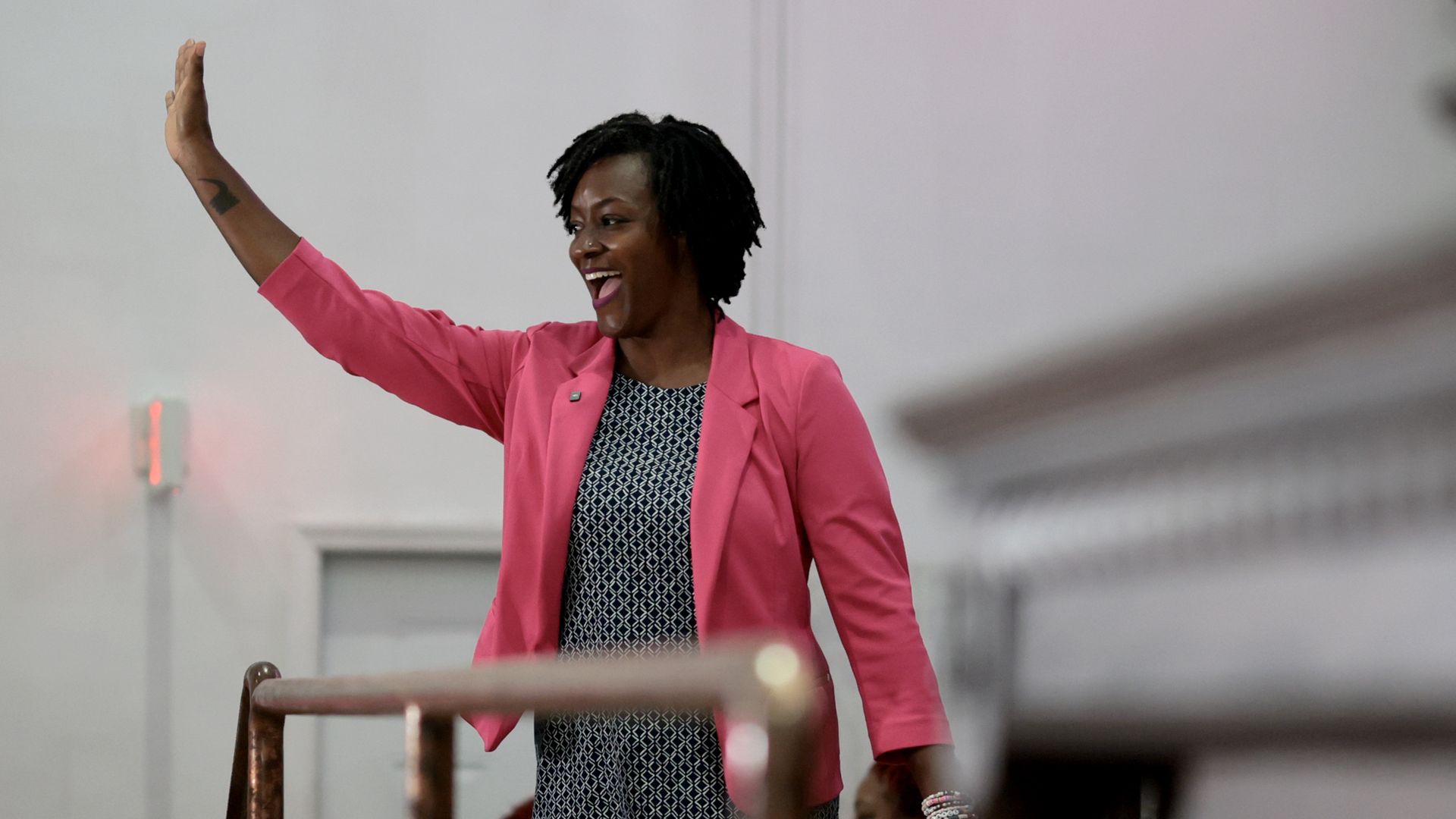
Democratic Senate candidate Angie Nixon at a campaign event. Photo: Joe Raedle/Getty Images
Florida's Democratic Senate nominee Angie Nixon's hesitation to call Cuba a dictatorship triggered bipartisan criticism, underscoring Cuban-American voters' influence over Florida Democrats' effort to rebuild a winning coalition.
Why it matters: The backlash highlighted the power of Miami-Dade's Cuban Americans, who have narrowed Democrats' ability to secure statewide power, even as statewide candidates including Nixon make inroads.
- The controversy spilled into Miami's most contested congressional race, where many voters have personal or family ties to communist regimes — and where Republicans have made socialism a political attack.
Catch me up: Nixon's problems started Monday night when CBS News aired an interview with Nixon in which she was asked whether she considered Cuba a dictatorship.
- "That is what people have told me. I have never been to Cuba, and so I will have to take their word for it," she said. She also criticized the "decades-long failed embargo" and called for a return to "Obama-era policies" to normalize relations.
- "I've been pushing back [on politicians] who are OK with Cubans being sent back to Cuba at this moment," she said.
- She said immigrants deserve access to quality health care and supports creating a pathway to citizenship.
Friction point: Nixon's reluctance to answer with a "yes" provoked a swift negative reaction online, including from a usual ally, Miami-Dade Democratic congressional candidate Eliott Rodriguez.
- Despite agreeing with Nixon on "many issues," the Cuban American from Miami wrote that "Cuba being a dictatorship is not a matter of opinion. It is a fact."
Meanwhile, Rodriguez's opponent, Rep. Maria Salazar, slammed Rodriguez for his overall support of Nixon.
- "For our community, the answer should never be complicated. And yet my opponent is cheering her on," she wrote on X.
- "He wants to go to Congress alongside the same socialist wing of his party that Miami knows all too well."
Flashback: Earlier this month, a Democratic campaign event at a Cuban bakery in Miami also sparked online outrage after conservatives claimed that associating with the Democrats equated to supporting socialism.
The big picture: Despite her amassing support for her stance on Israel and her push for affordable health care, Nixon's comments highlight the challenges a Democratic socialist-adjacent platform has in an environment like South Florida.
- Nixon's energy and messaging most closely resemble 2018 Democratic gubernatorial nominee Andrew Gillum, who campaigned as an unapologetic progressive.
- But after Gillum's loss to Ron DeSantis by less than half a percentage point, Gillum wrote in the Washington Post that Democrats can't let "socialism" define their candidacies in Florida.
- In contrast, Nixon joined the Democratic Socialists of America before her come-from-behind primary win, even though she has been at pains to emphasize she's not really a socialist.
The latest: By Tuesday afternoon, Nixon took to social media, saying, "I do not celebrate Castro. I call Cuba what it is, an authoritarian regime, and I will fight for the Cuban families who fled from it."
Yes, but: The damage of her comments were already felt, Ricardo Herrero, executive director of the Cuba Study Group, told Axios.
- Her statements are "another example of Democratic candidates and their advisors refusing to do their homework" around policy and messaging to Cuban Americans, he said.
- Moreover, "it's frustrating to see Democrats get this wrong cycle after cycle, especially when they have models of candidates that got it right and won."
The bottom line: While Democratic socialists are gaining ground in American politics, the dispute highlighted the tension between those ideas and Cuban American voters.
Axios' Marc Caputo contributed to this report.