"Orwellian flavor": FIU disciplines students for silent protest

Add Axios as your preferred source to
see more of our stories on Google.
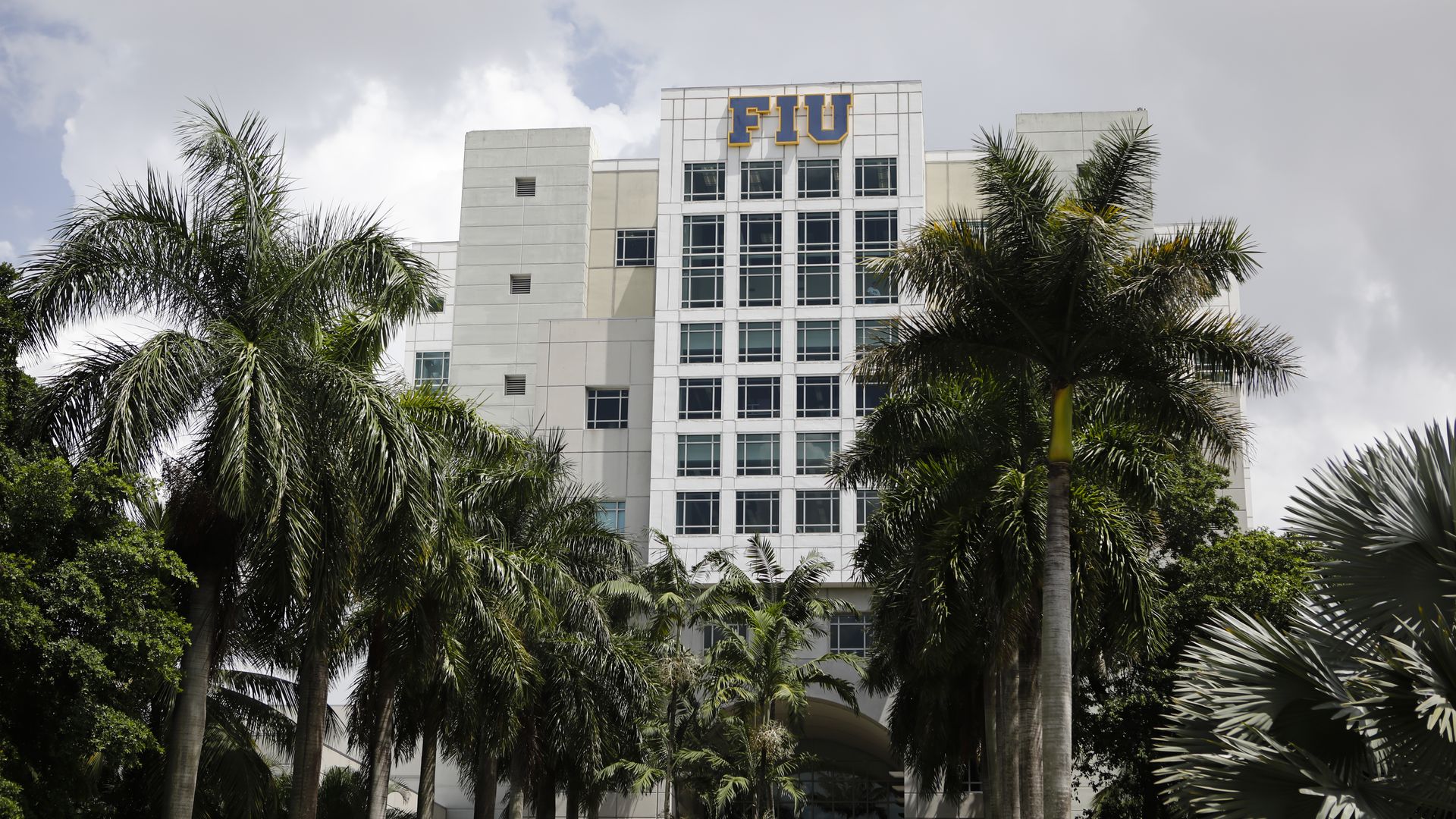
FIU disciplined students for partaking in a peaceful protest. Photo: Eva Marie Uzcategui/Bloomberg via Getty Images
Florida International University is doubling down on its decision to discipline a group of students for participating in a silent protest earlier this year.
Why it matters: The ruling, free speech advocates say, goes against the university's own values, which call for upholding freedom of thought and expression.
- Critics say it also undermines federally protected speech and could set a new precedent for campuses across the country regarding student-led demonstrations.
The latest: At the end of June, the students were found "responsible" for their actions and required to submit recorded "reflection" videos detailing how they violated university policy and how they will comply in the future.
- Last week, their appeals were denied, one student involved in the matter confirmed to Axios.
What they're saying: "There's an Orwellian flavor to this," Robert Shibley, special counsel at the Foundation for Individual Rights in Expression, told Axios.
- "A written reflection is still a problem, but people should be very concerned if [universities] feel it's appropriate to require people on video to make these confessions," he added.
The other side: Florida International University officials did not respond to Axios' requests seeking information on why the students' appeals were denied, but have claimed its ban on indoor "expressive activities" is consistent with the First Amendment, WLRN reported.
- Officials also did not respond to a request for comment regarding advocates' calling the punishments, including the video, unlawful.
Catch up quick: In April, university officials alleged that seven students violated conduct policies for silently standing up while wearing "ICE Out" shirts during a fireside chat involving university president Jeanette Nunez.
- Despite acknowledging the students' actions didn't disrupt the event, officials sent each one a letter alleging they violated campus policy that prohibits "protests, parades, marches, picketing, demonstrations and other similar expressive activities" inside university buildings.
- That same policy, however, defines "expressive activities" as protected by the First Amendment.
The bottom line: Shibley says disciplining students on college campuses is nothing new, but the addition of coerced speech could lead to future examples of students being made "to say what they don't believe."
- "It's hard to imagine what the purpose of this is," he added. "Generally speaking, it's only to show who has the power and who doesn't, and that's not a legitimate exercise of government and power."
Editor's note: This story has been corrected to reflect that the organization for which Robert Shibley is special counsel is called the Foundation for Individual Rights in Expression (not in Education).