How new congressional districts change voting power in South Florida

Add Axios as your preferred source to
see more of our stories on Google.
Illustration: Aïda Amer/Axios
South Florida's congressional districts saw a significant shift under a newly signed map.
Why it matters: The new lines group together communities that span county lines and have little in common, and they dilute the Black vote in what activists say undoes the state's Fair Districts Amendment.
Driving the news: Gov. Ron DeSantis last week signed into law a new map that could net Republicans four more seats in Congress, arguing the new lines are "race neutral" and reflect Florida's recent population boom.
- DeSantis posted the map on his X account, with the caption: "Signed, Sealed, and Delivered."
- Click here to search by address and find out what district you'll be in under the new maps.
The other side: "I don't know that we can say we have equal-seized districts because [the administration] is using old [census] data," Jared Nordlund, UnidosUS Florida political director, told Axios.
- The maps, based on data from the 2020 census, "could be grossly wrong in terms of the people who actually live" in those areas, he said.
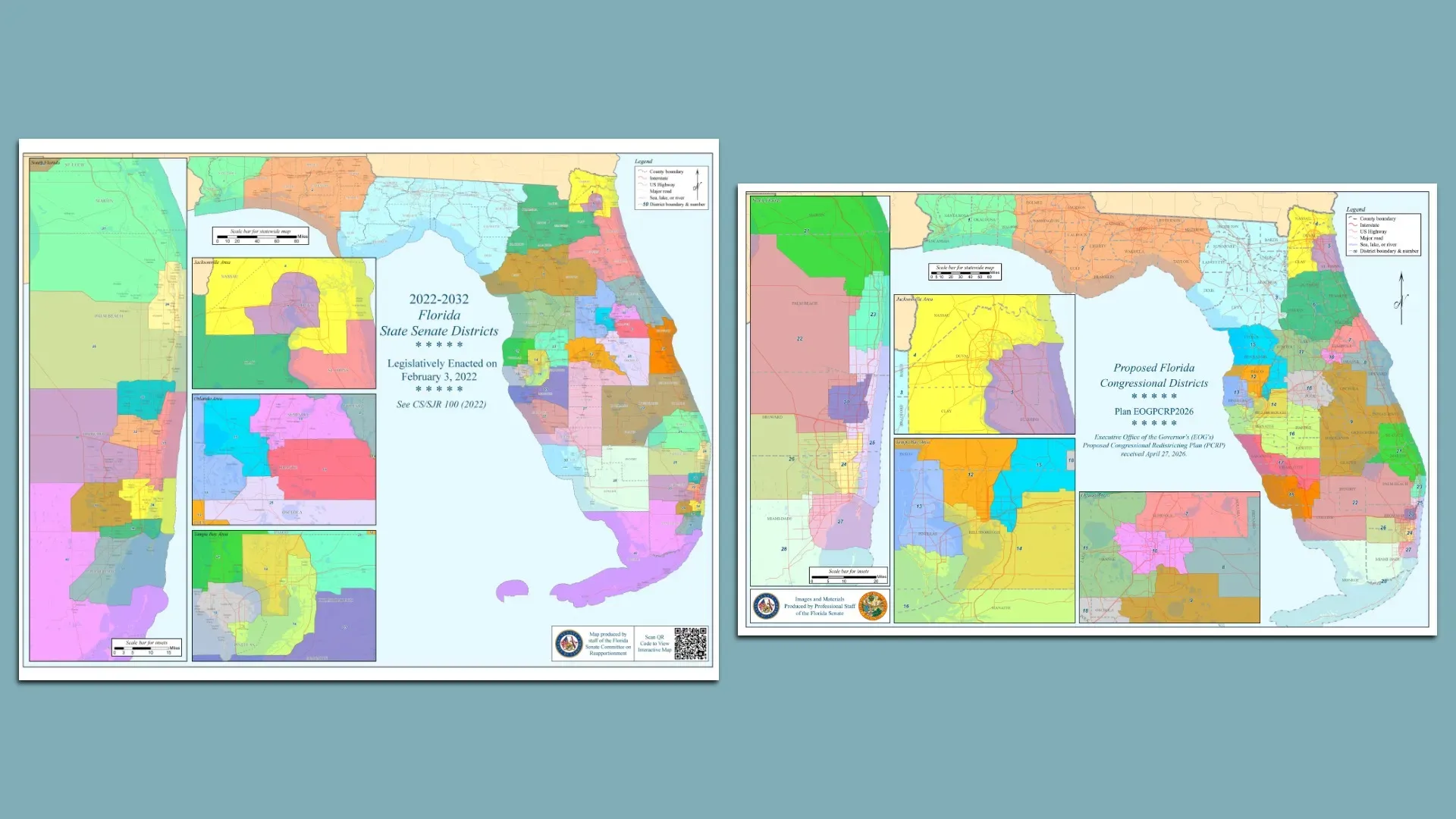
The big picture: Eighty-six percent of the state's congressional districts will favor the GOP, despite just 41% of Florida voters being registered Republicans.
- And of those registered Republicans, 80% are white, the Miami Herald reported.
Zoom in: In District 20, formerly held by Sheila Cherfilus-McCormick, who is Black, the new map pulls majority-Black areas into a district with surrounding majority-white areas.
- And a portion of District 24, represented by Frederica Wilson, who is also Black, is being merged with a newly created District 25.
- That district runs from Miami Beach to north of Boca Raton, areas that would seem to share little in common.
The intrigue: Districts 27 and 28, represented by Maria Elvira Salazar and Carlos Gimenez, respectively, didn't change.
- Nordlund says that shows those responsible for redrawing the maps suspect those races to be vulnerable in upcoming election cycles.
Zoom out: In Orlando, the maps split the once-grouped Hispanic population into three separate, majority-white districts.
- The new maps will result in a "dilution of power and voice" of voters, where their needs in Congress might not be met, Nordlund said. "How is that fair?"
- The governor's office did not respond to Axios' request for comment.
What we're watching: A lawsuit filed by the civil rights group Equal Ground Education Fund argues that DeSantis' map violates the state constitution's ban on partisan gerrymandering.