How to see (and protect) baby sea turtles during South Florida nesting season

Add Axios as your preferred source to
see more of our stories on Google.
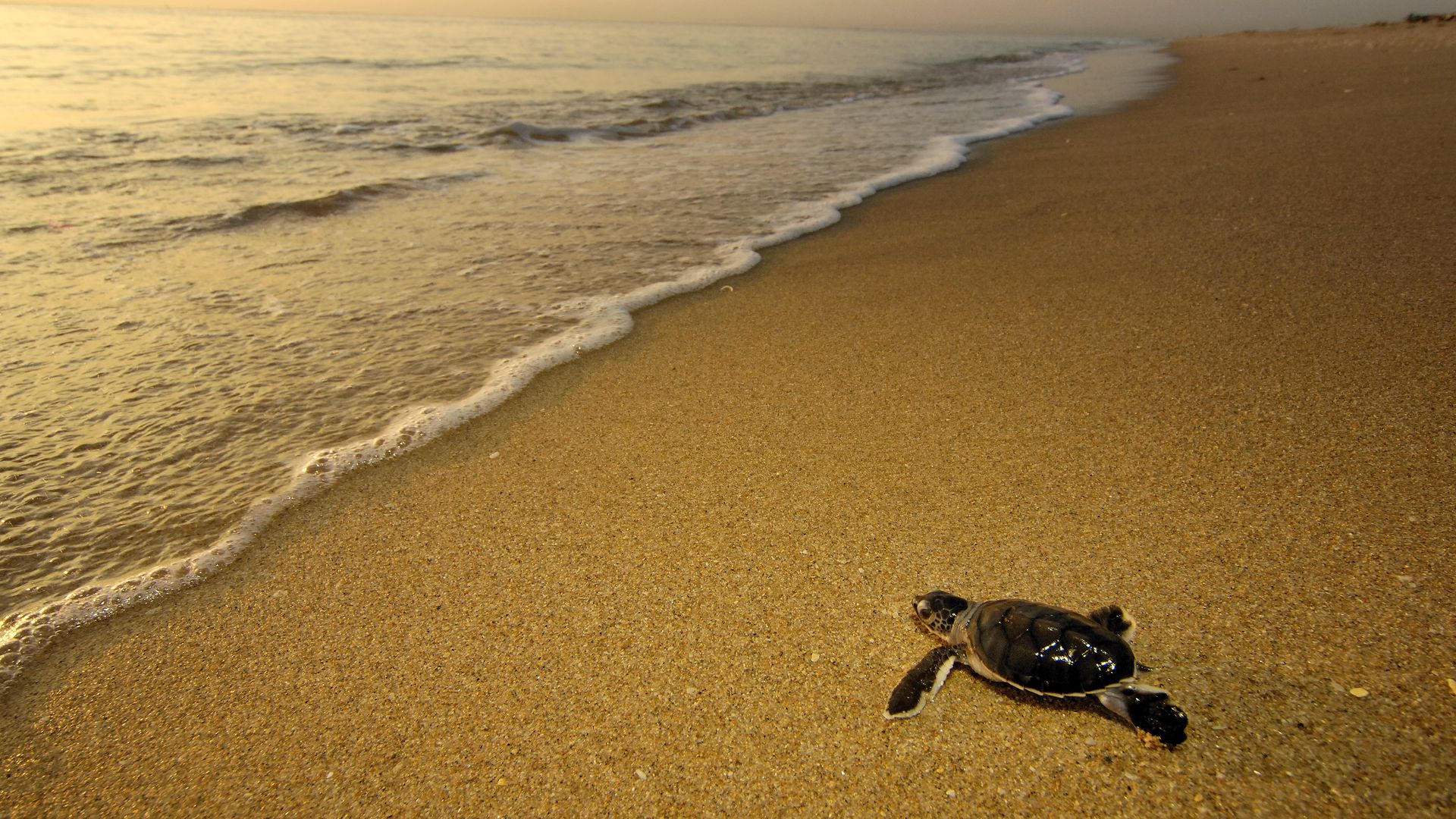
A green sea turtle hatchling in Florida. Photo: Mark Conlin/VW PICS/UIG via Getty Images
It's sea turtle nesting season in South Florida — that time of year when our beaches become runways for newborn hatchlings making their daring escapes into the sea.
Why it matters: This is a time for cautious curiosity.
- Local governments are enforcing rules against bright lights near the beach and protecting nests, while groups offer guided tours to view the turtles from a safe distance.
How it works: Nesting season for these endangered and threatened turtles typically begins in March across Florida, according to the Florida Fish and Wildlife Conservation Commission, but it begins April 1 in Miami Beach, per the city.
- Miami-Dade County's most common nester is the loggerhead sea turtle, but we're also popular among the green and leatherback sea turtles, per the county's website.
- During the season, biologists with the Miami-Dade County Sea Turtle Conservation Program survey for turtle nesting every day across over 19 miles of county land, including most of the county's beaches, seven municipalities and two county parks.
- Around 600 nests are laid every year on Miami-Dade County beaches, which are marked off with stakes, neon tape and a sign advising the public to stay away.
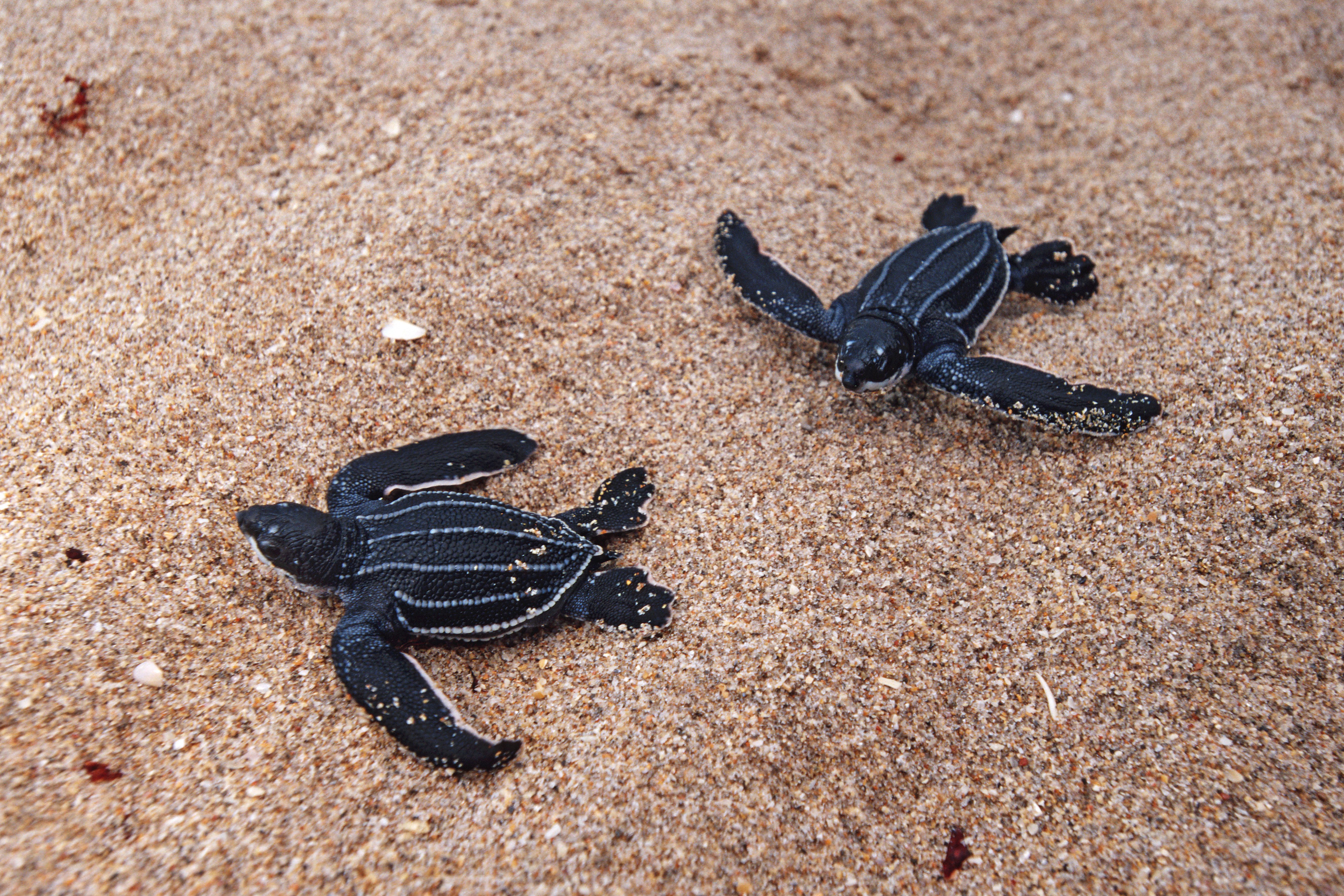
Stunning stat: Each nest will have about 100 hatchlings that make their way to the ocean. One out of 1,000 hatchlings survives to adulthood, underscoring the need for conservation efforts, the county says.
Threat level: Artificial light can disorient nesting adults and hatchlings, who may mistake it for the Moon's reflection on the ocean.
- The FWC encourages those living along or visiting the beach to turn off porch, parking or deck lights when not in use and close curtains after dark.
- Amber and yellowish long-wavelength lights that are mounted low and shielded are OK, per the FWC. (Many cities, including Miami Beach, have local ordinances requiring properties to reduce or eliminate any lighting visible from the beach.)
- If you ever see a nesting sea turtle or hatchling, keep your distance, keep all lights off and report any emergencies to FWC.
How to watch: Sea turtle nesting walks are typically held in June and July.
- Nova Southeastern University, the Museum of Discovery and Science and Dr. Von D. Mizell-Eula Johnson State Park are some of the many organizations that offer nighttime turtle walks.
- Some groups, including Miami-Dade County, also organize hatchling release events.
What's next: The season runs through Oct. 31.