How development has changed Wynwood — and what's next for upzoned arts district

Add Axios as your preferred source to
see more of our stories on Google.
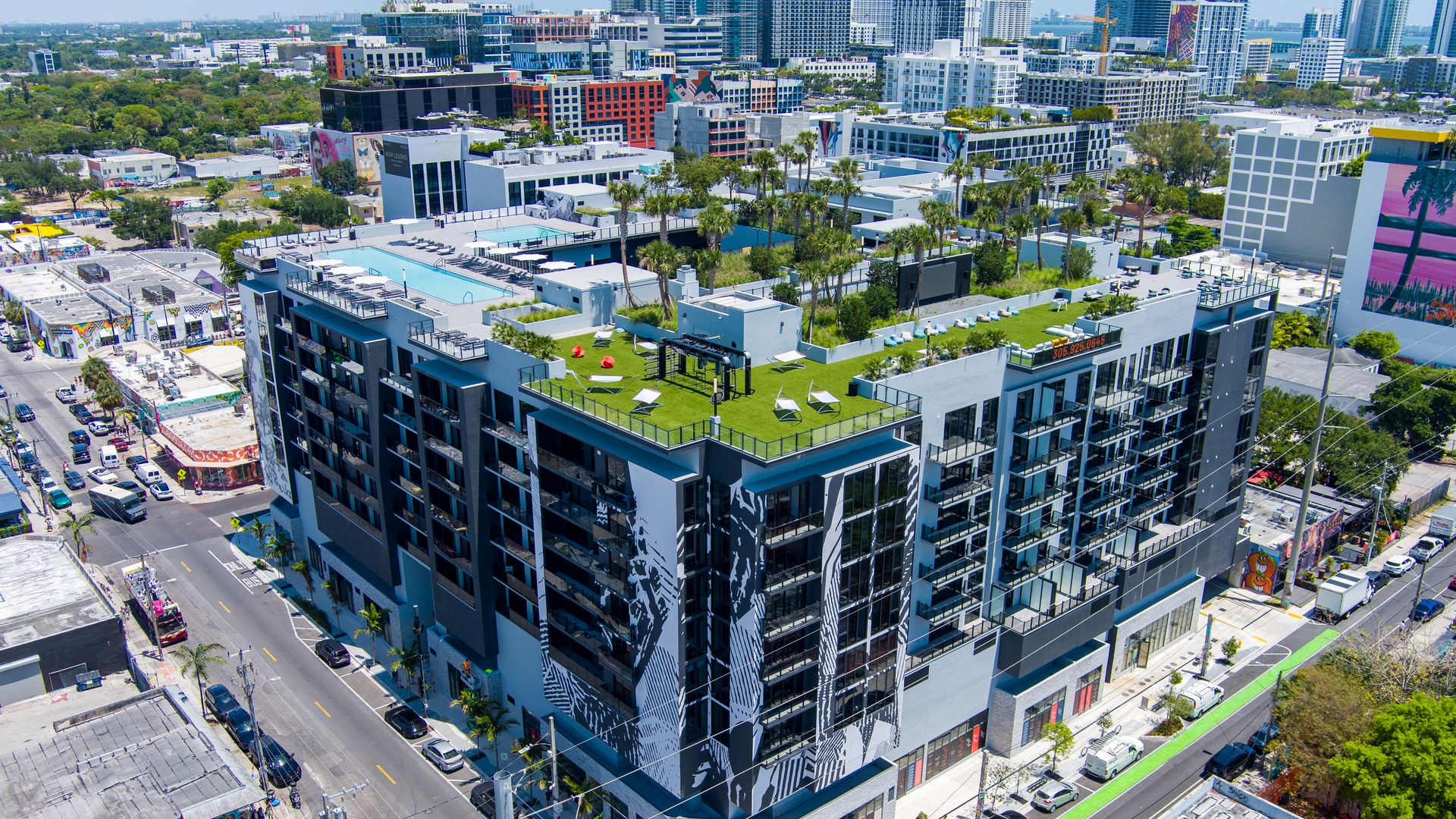
The Society Wynwood apartment complex opened in 2024. Credit: Society Wynwood
New apartments, hotels and office buildings have transformed Wynwood from a low-rise arts district into a densely packed mixed-use neighborhood.
Why it matters: The wave of taller, denser buildings has coincided with the opening of new restaurants and the arrival of companies including Amazon and Spotify — along with the closure of popular neighborhood bars Gramps and Wood Tavern.
The big picture: Wynwood is no longer just about street art and nightlife.
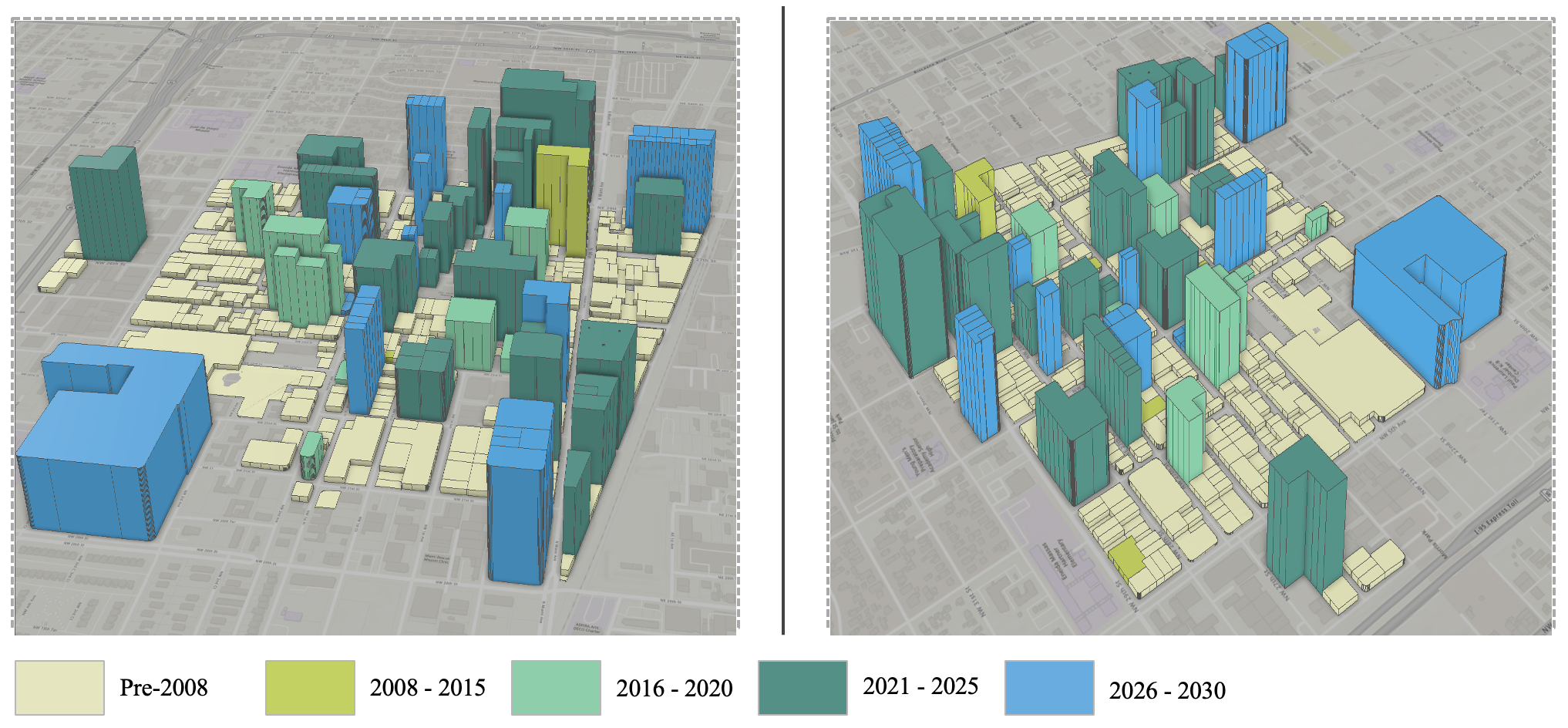
- A major zoning change in 2015 kick-started the neighborhood's development into a place where you can live, work and play.
The Wynwood Neighborhood Revitalization District (NRD) allowed developers to build taller, higher-density residential and hotel projects in an area that had largely been limited to industrial and workplace zoning.
- The new rules capped heights at 12 stories and incentivized the preservation of warehouses through the transfer of development rights.
- It also created a dedicated funding source for public improvements and required new developments to incorporate murals or glass treatments to their facades.
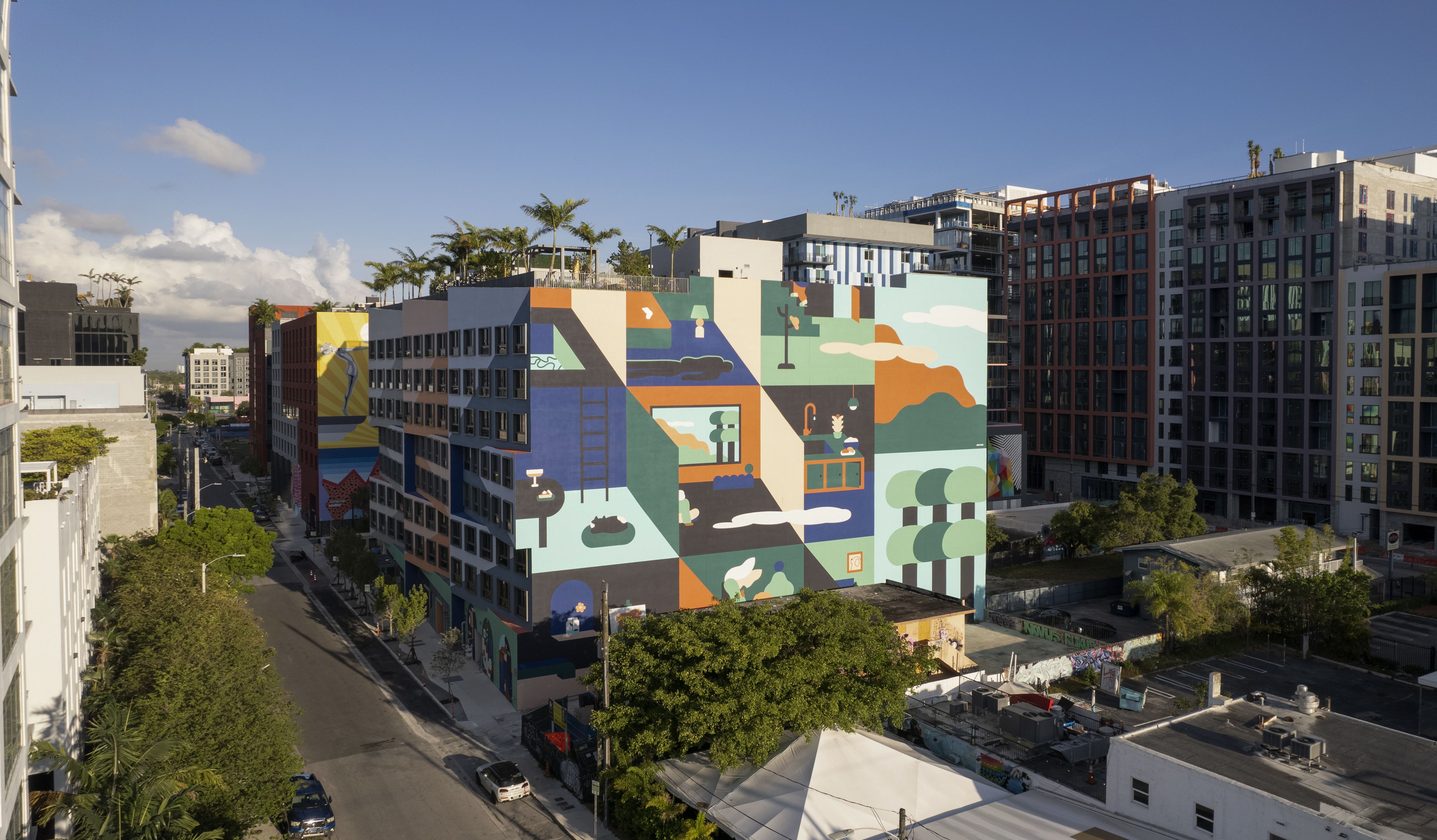
What they're saying: The rezoning plan, commissioned by the Wynwood Business Improvement District, aimed to help Wynwood grow while maintaining the character of a neighborhood known internationally for its street art.
- Wynwood BID executive director William Kelley tells Axios that he wants to "preserve the look and feel of Wynwood" while improving the pedestrian experience with seating areas, trees and temporary street closures.
- "We want the grit but not the grime," Kelley says. "We want it to be a place where you feel inspired, but you're OK if you sit down on the sidewalk."
Stunning stat: Kelley says Wynwood's population went from 1,000 before rezoning to around 6,000 today, about a decade later.
- New developments will add over 3,000 residents, he says.
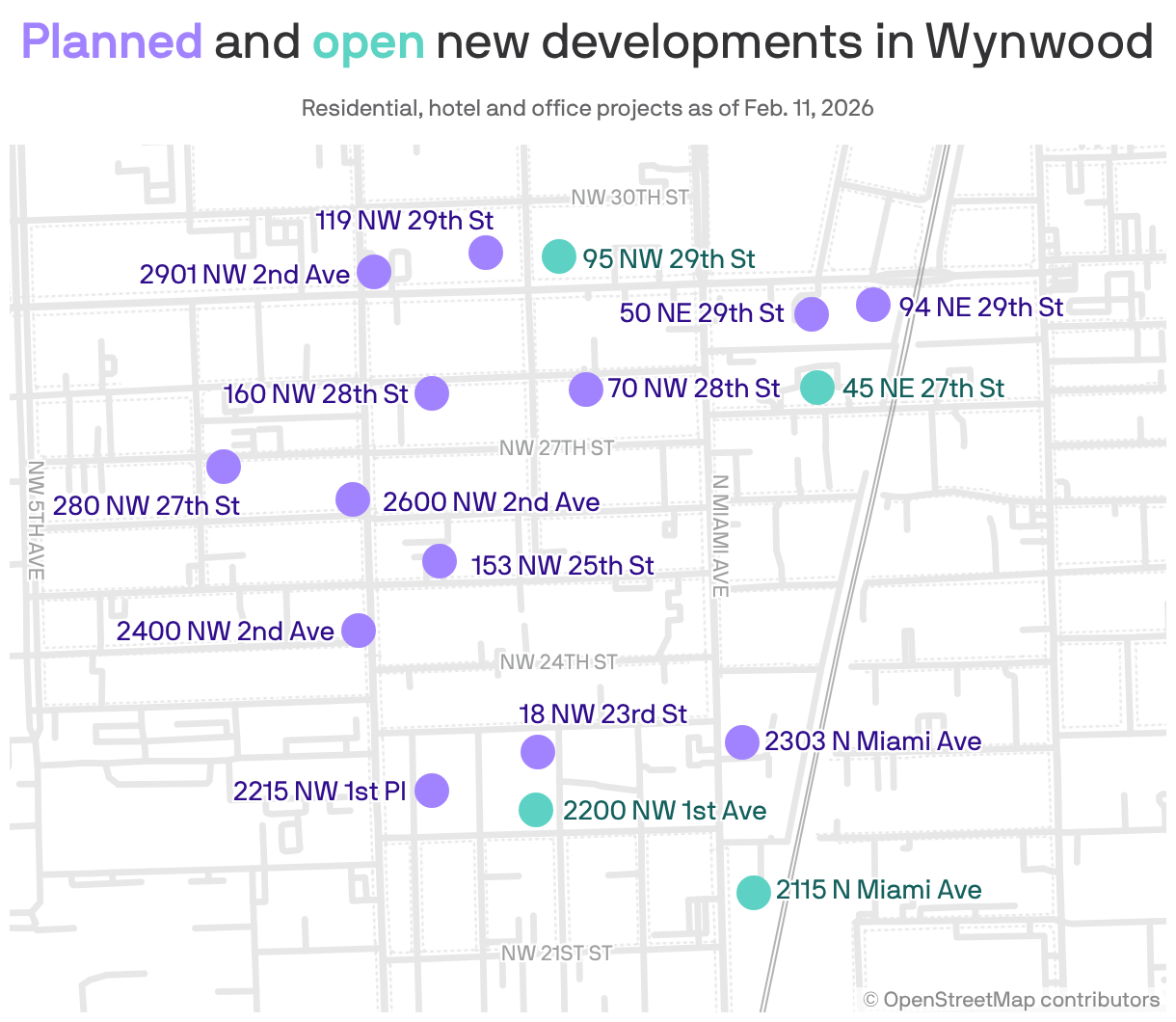
By the numbers: Data shared by the Wynwood BID shows at least four residential, hotel or office projects completed in the neighborhood in 2025, with another 14 planned.
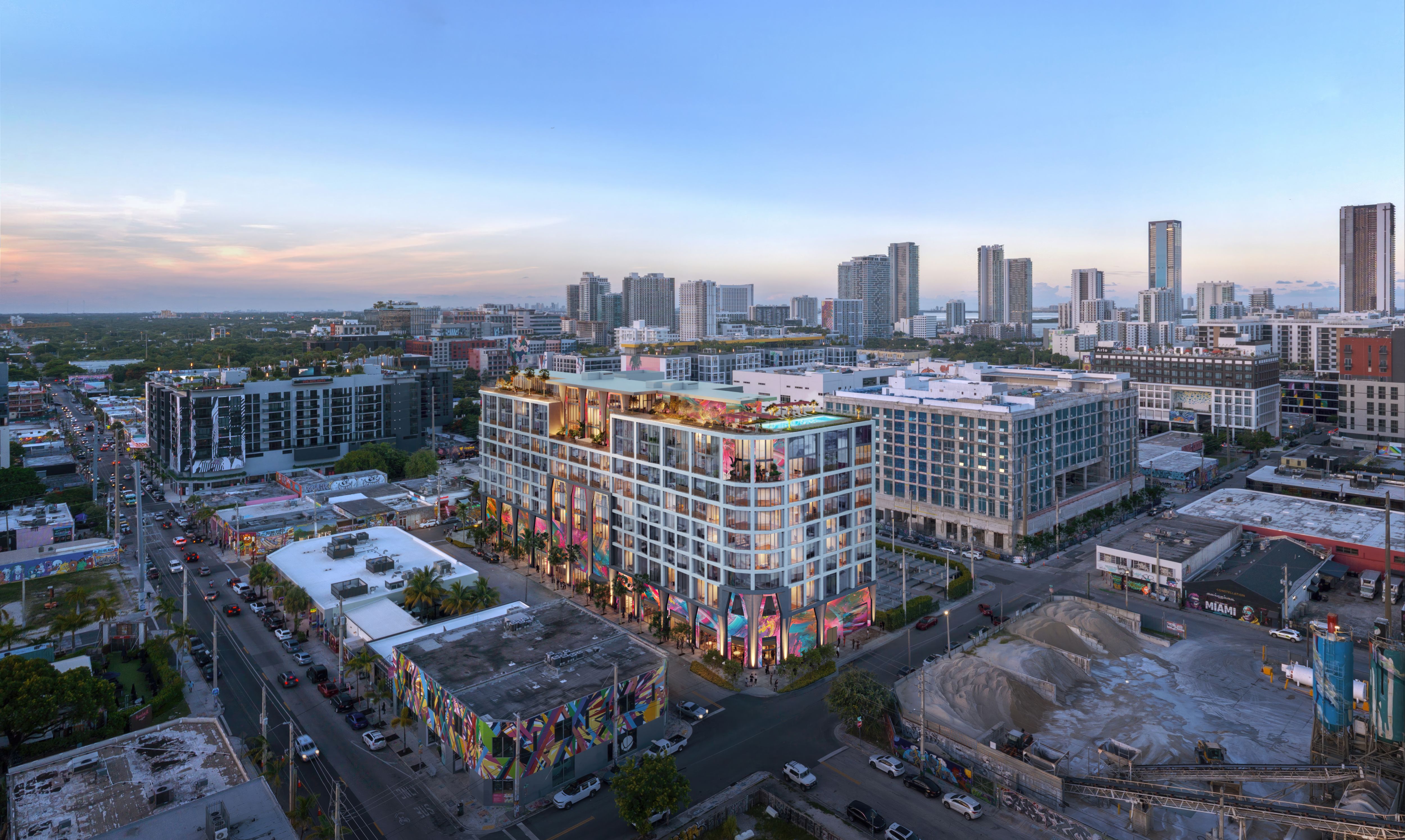
Zoom in: One of those projects, The Cloud One Hotel & Residences Wynwood, plans to feature 214 hotel rooms, 85 condos and perhaps a small corner market when it opens in 2028.
- Co-developer Sebastian Lüdke of the ALP.X Group tells Axios that any growing city will have "some stories of replacement that are not great" but that Wynwood's redevelopment will be a net-positive.
- "You have new buildings and you have new streets here that are so activated, that have attracted new businesses, that have created great new places."
The other side: When Gramps announced it was closing, Miami hospitality broker Felix Bendersky said it marked the end of the "old Wynwood."
- In a podcast interview with Gramps owner Adam Gersten, Bendersky said he was "pissed that once that goes, everything's going to be a f—ing Foot Locker and a Starbucks."
Mapped: Kelley shared a map showing how the 2015 zoning supercharged higher-density development in Wynwood and what else is planned for the neighborhood.
Meanwhile, Florida's Live Local Act, which allows developers to exceed height and density limits if they build workforce housing, has sparked a wave of proposed projects that would exceed Wynwood's height limits.