Free speech advocates say Florida officials are policing criticism

Add Axios as your preferred source to
see more of our stories on Google.
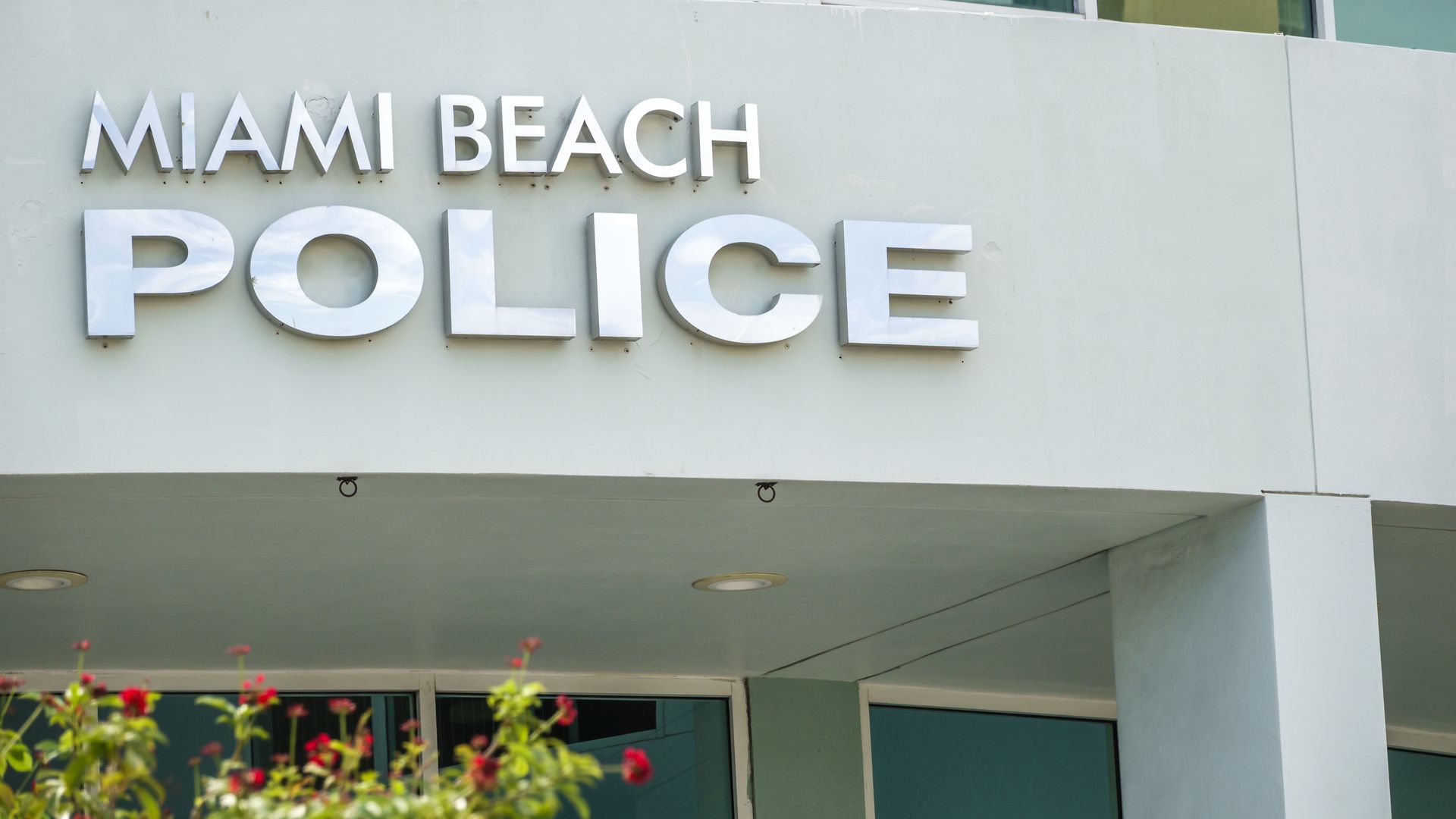
The police response to a Facebook post criticizing Miami Beach's mayor has sparked backlash. Photo: Jeffrey Greenberg/Universal Images Group via Getty Images
When police questioned Miami Beach activist Raquel Pacheco earlier this month over a Facebook comment criticizing the mayor, she said it felt like free speech had died on her doorstep.
Why it matters: Pacheco's case is the latest in Florida in which governments have responded to political speech with intimidation or retaliation, the ACLU of Florida tells Axios
Catch up quick: Pacheco's Jan. 7 Facebook comment said, in part, that Mayor Steven Meiner, who is Jewish and a supporter of Israel, "consistently calls for the death of all Palestinians."
- Her comment — which she said referred to his support of Israel in the Gaza war — was responding to a post from Meiner that said, "Miami Beach is a safe haven for everyone."
- Meiner's office reportedly flagged the post to the Miami Beach Police Department, which sent two detectives to Pacheco's home "to ensure there was no immediate threat" to Meiner or the community, Chief Wayne Jones wrote in a statement.
Zoom out: In October, a similar situation occurred on Florida's west coast.
- Police visited the home of 77-year-old James O'Gara for writing a critical letter to the state's chief financial officer.
- "You lack values," the Largo resident wrote to CFO Blaise Ingoglia.
- That was enough to prompt a "threat assessment" from the Department of Financial Services, which Ingoglia controls.
- A spokesperson for the DFS told USA Today Network-Florida that Ingoglia was not involved in the police response.
The ACLU of Florida has also filed lawsuits on behalf of state and college employees who were fired for criticizing conservative pundit Charlie Kirk on social media after his murder in September.
What they're saying: "Despite rhetoric about Florida being a 'free state,' many Floridians ... are increasingly fearful that expressing their political views could cost them their jobs, invite police scrutiny, or trigger other forms of retaliation," an ACLU of Florida spokesperson tells Axios.
Bobby Block, executive director of the First Amendment Foundation, tells Axios that the police response in Miami Beach and Largo are symptoms of the "climate of fear" in the U.S. today following cases of political violence.
- "We need to be more resilient. We need to be more tolerant. We need to recognize that public debate is very often unpleasant, ugly and uncomfortable, and that's just the way it has always been and likely [will] always be."
Zoom in: Jones, the Miami Beach police chief, said Pacheco's comments were "inflammatory" and "potentially inciteful false remarks." He said he was concerned they could "trigger physical action by others."
- His worries stemmed from "the real, ongoing national and international concerns surrounding antisemitic attacks and recent rhetoric that has led to violence against political figures," according to the statement.
- The police visit with Pacheco, he said, was brief, voluntary and handled without incident.
- Jones said Meiner did not direct him to act. A spokesperson for Meiner referred a reporter to Jones' statement.
- Meiner previously called the incident a "police matter" and said critics have a right to disagree with his views on Israel.
The other side: Daniel Tilley, legal director for the ACLU of Florida, said in a statement to Axios that the actions of Miami Beach police will likely deter other residents from criticizing the city government.
- "This Facebook post was protected speech, and it's not a close question — not remotely," he said.