Miami cruise terminal's new art highlights Florida's changing corals

Add Axios as your preferred source to
see more of our stories on Google.
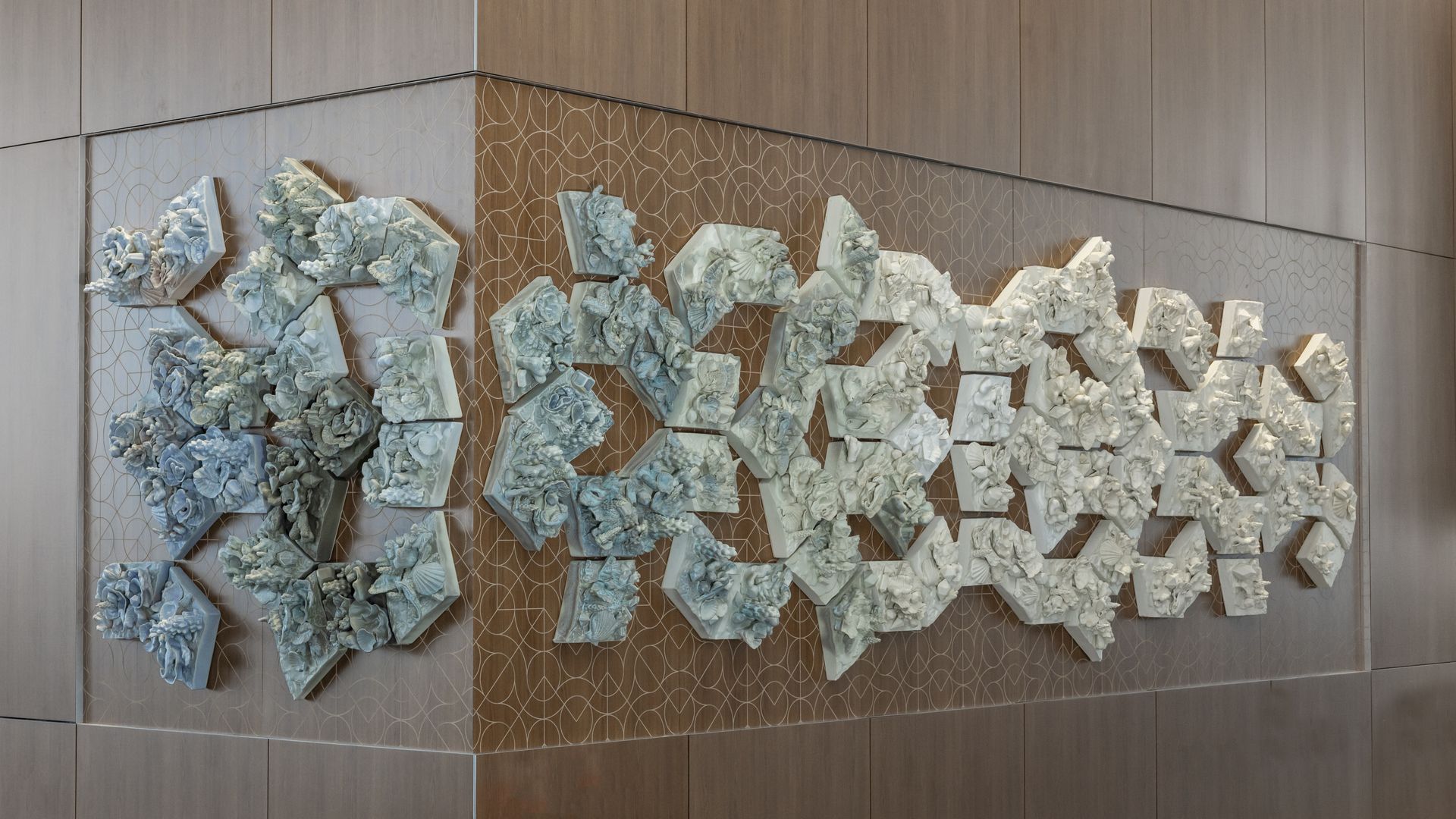
Lauren Shapiro's sculptures highlight Florida's changing corals. Photo: Pedro Wazzan
Growing up in Florida, artist Lauren Shapiro enjoyed collecting seashells, finding inspiration in the textures and forms found in different environments along the shore.
- Now, that influence is on full display in her latest project, "Collected Forms," at the new MSC Miami Cruise Terminal.
Why it matters: The installation is the Miami-based artist's first public art commission and the largest piece she's finished. (Shapiro's studio is at Bakehouse Art Complex.)
- The two-part ceramic frieze is comprised of 194 one-of-a-kind glazed ceramic sculptures that highlight the vitality and fragility of Florida's corals.
The big picture: Shapiro is among seven artists who were commissioned for the new terminal, the largest in North America. Their works range from a 10,816-square-foot digital media façade to an immersive terrazzo.
- The project is the result of a partnership between MSC Cruises and the Miami-Dade County Department of Cultural Affairs' Art in Public Places program. It debuted this month during Art Basel.
- Collectively, it reflects Miami's ecological and cultural identity.
Flashback: Around 2020, Shapiro started collecting photos of Florida's coral during scuba diving trips, "taking hundreds of photographs" of different species, she told Axios.
- She later used Photogrammetry, which transforms 2D photos captured on her GoPro into 3D models, to create molds for the ceramic sculptures featured in the terminal project.
"We've had major bleaching events [in the Keys] and a lot of our Caribbean species are gone, so I wanted to make sure those were included in the project," she said.
The intrigue: The piece combines ceramics — an "ancient tool," as Shapiro put it — with digital fabrication technologies.
- "Even though it's rendered using new technologies, there's a handmade element," she said. "Every single piece has been touched by a human being and every coral was cast individually in a mold."
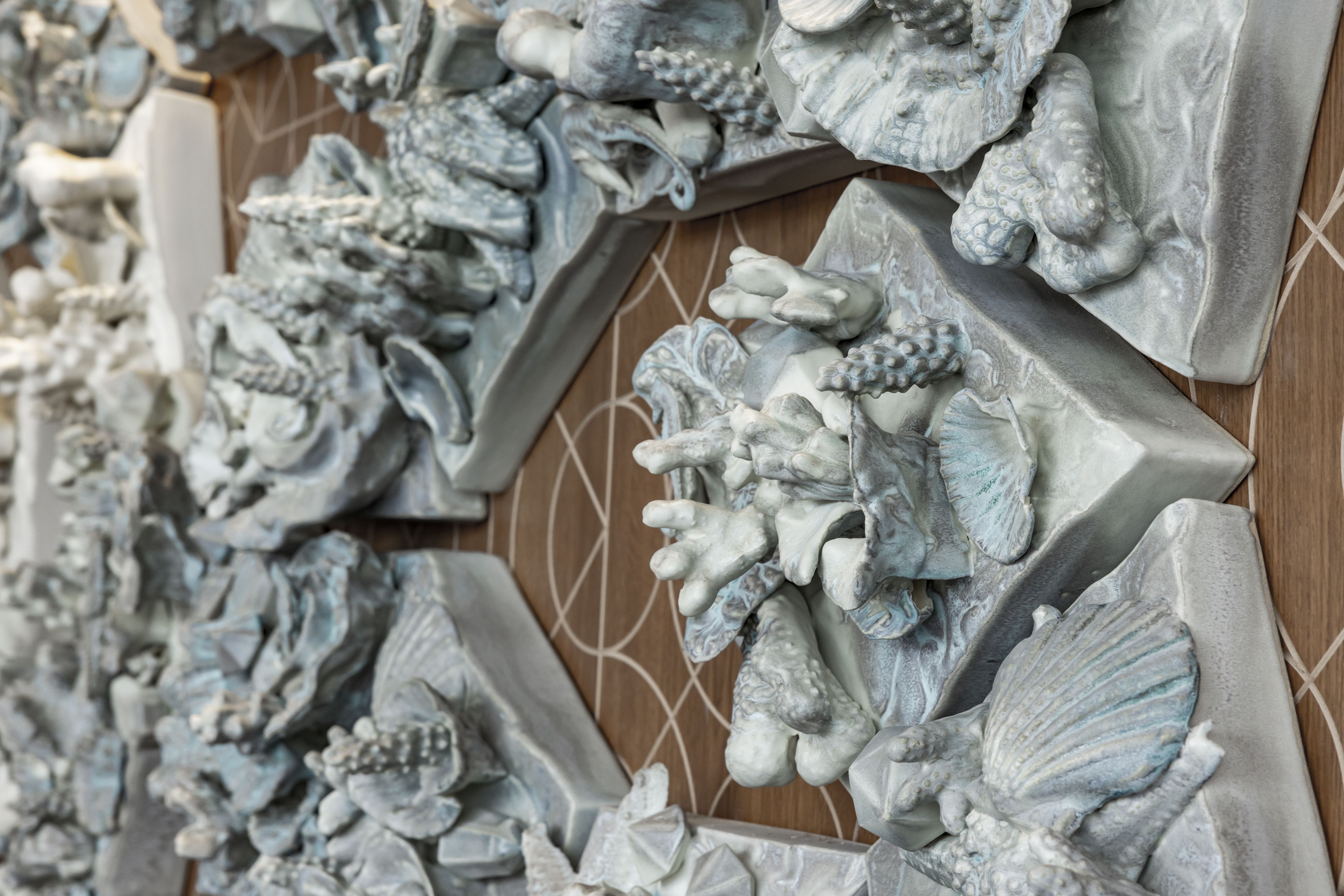
Zoom in: Each piece is fused onto tiles and arranged in a Penrose pattern to mimic nature's flow and unpredictability. (Penrose is a pattern that never repeats, but has order, she explained.)
- The piece's colors also transition from off-white to shades of blue and green, depending on the perspective of the viewer, to underscore how environmental changes visibly affect corals.
The bottom line: The project was a "Herculean effort," with the help of many others, Shapiro said. But she hopes the piece will help visitors understand the fragility of our corals.
- "I hope people will leave with a greater appreciation of what we have while we have it and the importance of conservation."