Scoop: Frost Science sues to remove large billboard from downtown Miami

Add Axios as your preferred source to
see more of our stories on Google.
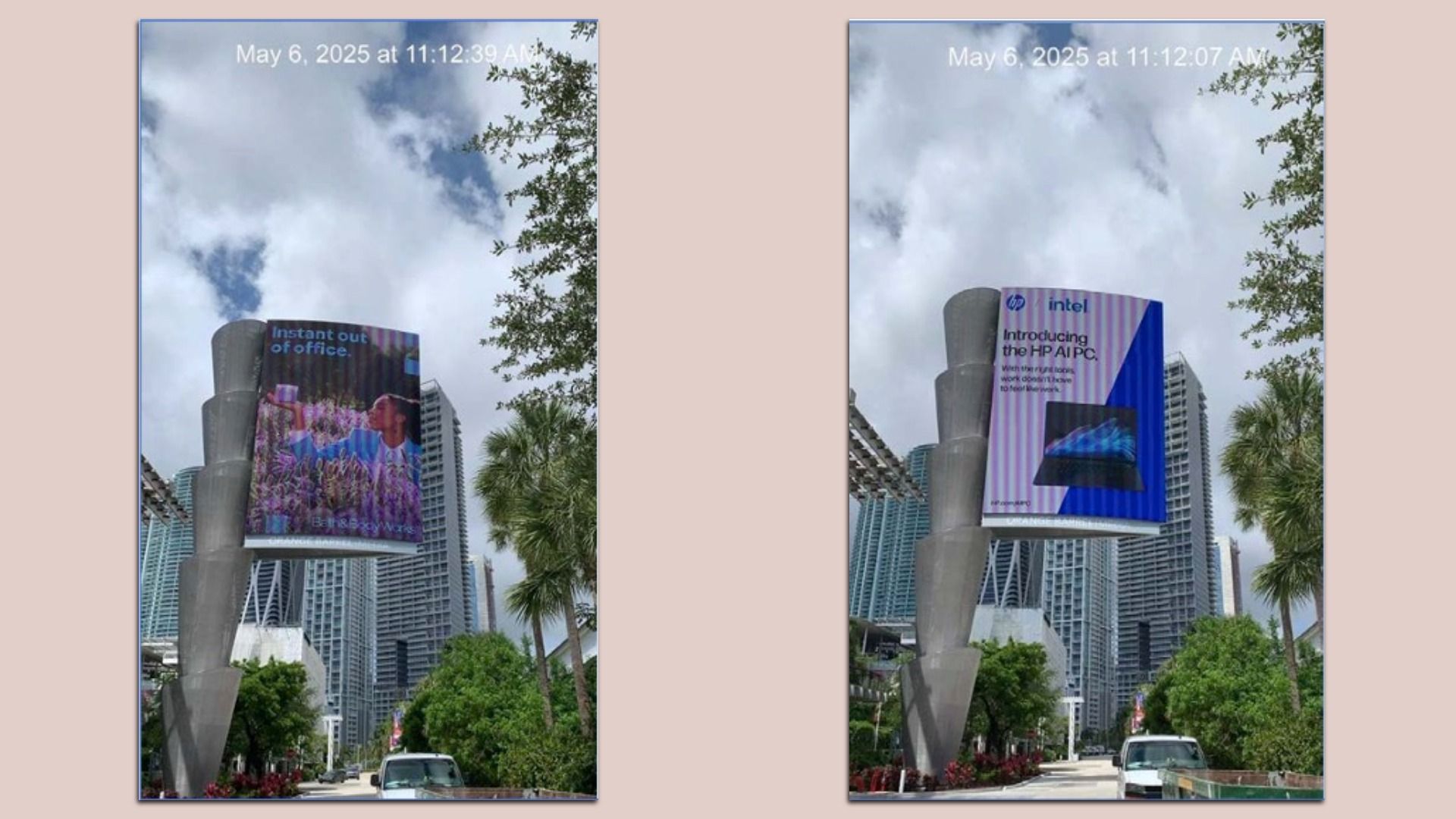
A lawsuit filed by the Frost Museum of Science argues this digital billboard outside the neighboring Pérez Art Museum Miami violates state law. Photos: Florida Department of Transportation
The Frost Museum of Science sued the state, seeking the removal of the 100-foot-tall digital billboard outside the neighboring Pérez Art Museum Miami.
Why it matters: The 1,800-square-foot billboard — which displays commercial ads for brands like Tiffany and Saint Laurent near the MacArthur Causeway — has sparked complaints from downtown neighbors since it went up last year.
The latest: The Frost Museum, which sued the Florida Department of Transportation on Wednesday, argues the billboard violates state law and could jeopardize Florida's federal highway funding.
- The lawsuit alleges PAMM and Orange Barrel Media set up the sign without the necessary state permit.
The other side: In a statement to Axios, the PAMM says its billboard was "meticulously reviewed and approved by all relevant authorities, ensuring full compliance with state and local regulations."
- "While we hold Frost Science Museum in high regard as a cultural partner, we regret the distraction from our shared mission of enriching Miami's arts and sciences landscape."
- FDOT and Orange Barrel Media – which operates the billboard – could not immediately be reached for comment via email.
Between the lines: The lawsuit hinges on two provisions in Florida law regulating outdoor billboards built near state or federal highways.
- In general, outdoor signs near highways require a permit and cannot be taller than 65 feet or larger than 950 square feet.
- There is an exception for signs built on the premises of a business, but only if the billboard primarily advertises the name of the business or products sold at the business.
- The exemption also requires that the owner of the business not receive rental income from the billboard.
The intrigue: In an attempt to satisfy the on-premises requirement, the PAMM installed a digital kiosk in its parking lot that allows guests to purchase goods from advertisers' websites, according to an internal FDOT email contained in the lawsuit.
- In a November 2024 letter to Orange Barrel Media, an FDOT official said that any advertised items purchased through the kiosk must be available for pick up at the PAMM, including gift certificates.
What they're saying: The Frost's suit argues that the PAMM sign violates all facets of Florida billboard law — that it's too big, it mostly advertises products unrelated to the museum, and that it generates at least $1.2 million a year for the museum.
- Douglas Roberts, president and CEO of Frost Science, tells Axios that FDOT's decision to allow the billboard could lead to "even more urban visual blight."
- He says the bright light from the sign restricts use of Frost's outdoor spaces at night and that it could impact highway funding, referring to a federal law that requires states to maintain control over outdoor advertising.
Catch up quick: The PAMM billboard, located on city-owned land, is twice as big as other digital signs in Miami.
- That's the result of a 2023 City Commission vote to provide exceptions for the art museum, the Adrienne Arsht Center for the Performing Arts and Bayfront Park, the Miami Herald reports.
- The Commission overturned those exceptions in 2024, but the PAMM was able to proceed because it had already received a permit.
- The museum sued the city after Miami said the billboard violated the PAMM's lease because the museum failed to seek the city's permission to build it, the Herald reported.
- The lawsuit was settled last month, allowing the billboard to stay up and requiring the PAMM to pay the city a minimum of $500,000 a year, per the Herald.
Editor's note: This story has been updated to include a statement from the Pérez Art Museum Miami