As development threatens black bears, researchers chart path to safety

Add Axios as your preferred source to
see more of our stories on Google.
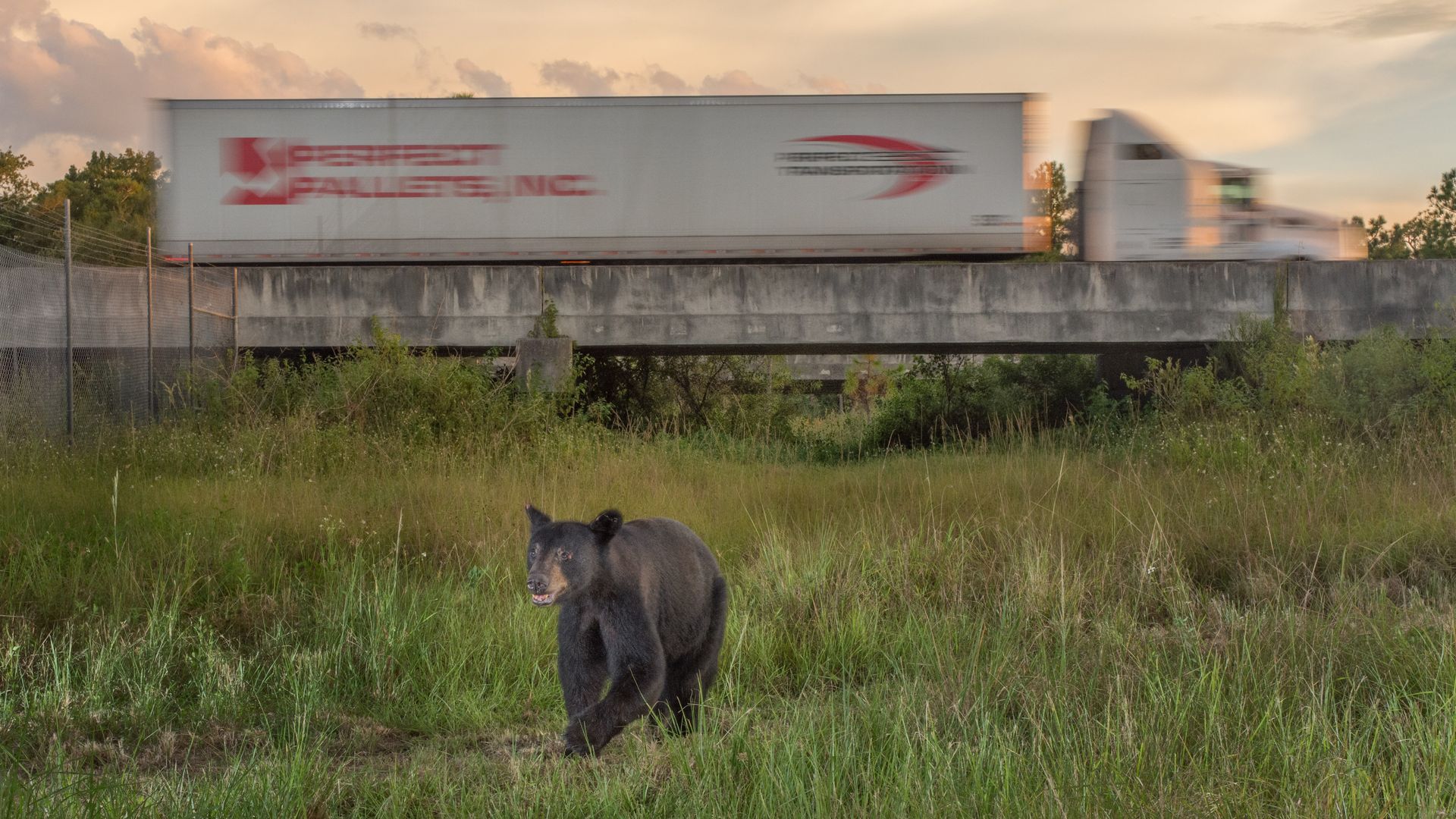
Car crashes are responsible for 90% of bear deaths in Florida, per the Florida Fish and Wildlife Conservation Commission. Photo: Carlton Ward Jr.
The biggest threat facing Florida's black bears is human development — not the recently approved bear hunt, says National Geographic Explorer Carlton Ward Jr.
Why it matters: Ward, who produced a new documentary that spotlights South Florida bear researchers, says Florida is in a race between development and conservation.
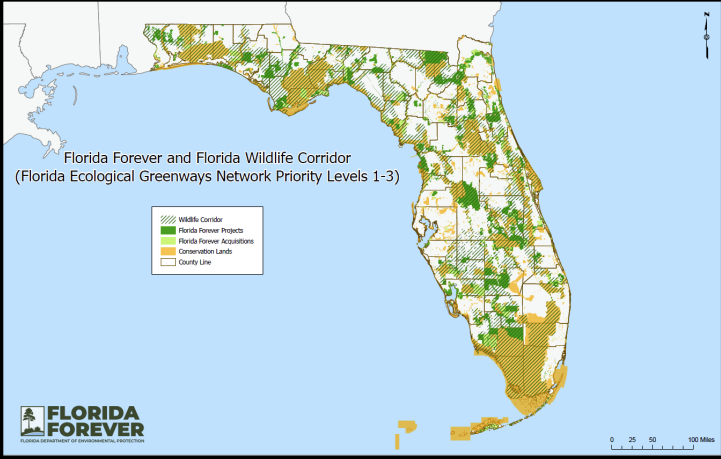
- Since 2010, the conservation photographer has spearheaded efforts to conserve land along the Florida Wildlife Corridor — an 18-million-acre system of natural pathways that allow animals to avoid roads and development.
- Just over half of the corridor — 10 million acres — is currently protected.
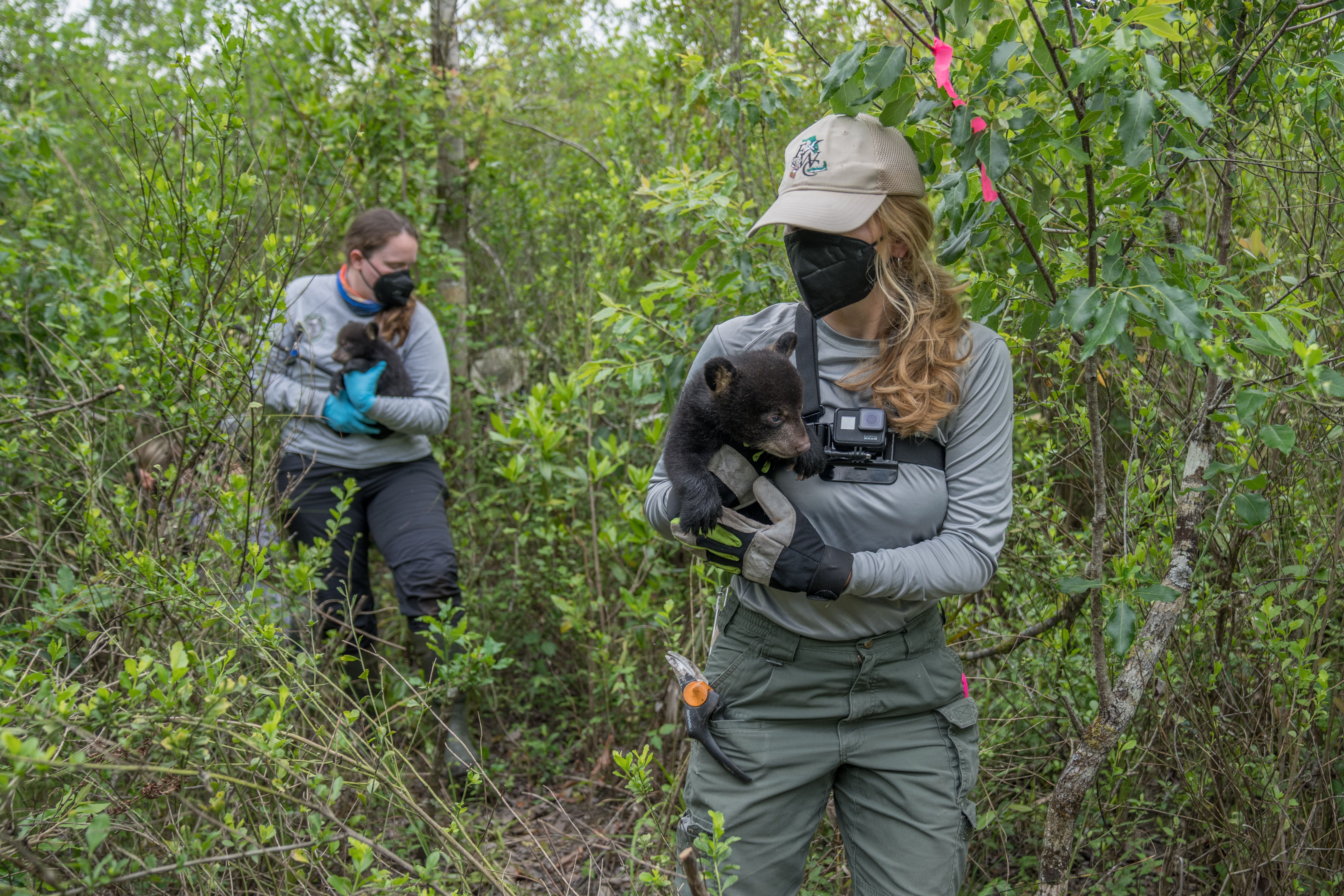
The latest: "Florida Bear Tracks," directed by KT Bryden from Wildpath and distributed by National Geographic, follows an all-female research team from the Florida Fish and Wildlife Conservation Commission (FWC) as it tracks the movement, health and population growth of South Florida black bears.
- The team, led by research biologist Shelby Shiver, captures bears and tracks them using GPS ear tags and collars.
- The hope is that male bears in the thriving South Florida habitats use the wildlife corridor to migrate elsewhere in the state, Shiver says in the documentary.
- "Don't come back, OK?" she tells a 500-pound bear named Fatty.
How it works: Florida is divided into seven black bear subpopulations, Shiver explains in the film.
Four of these zones — which include Big Cypress National Preserve in South Florida — have strong populations of more than 1,000 bears, Shiver says.
- The other zones are much smaller, with fewer than 200 each, and face the risk of population decline.
What they're saying: "It's just important to keep them connected so they don't get isolated and reduce genetics," Shiver tells Axios.
- Ward, who produced the film with his nonprofit Wildpath, tells Axios that conserving land along the wildlife corridor "is the answer for how you reconnect these separate bear populations."
The intrigue: The documentary, which was filmed in 2023, does not touch on the upcoming black bear hunt that FWC commissioners voted to approve last month.
- "I'm not for or against the hunt," Ward says. "Hunting is by no means the biggest threat to bears in Florida. It's overdevelopment."
- Shiver, an FWC employee, said she couldn't comment on the hunt. She agreed that human development and habitat loss are the biggest threats to bears.
Yes, but: Ward says the FWC needs to "remain vigilant and cautious as they consider whether they renew hunting year after year" so that the smaller bear populations are not negatively affected.
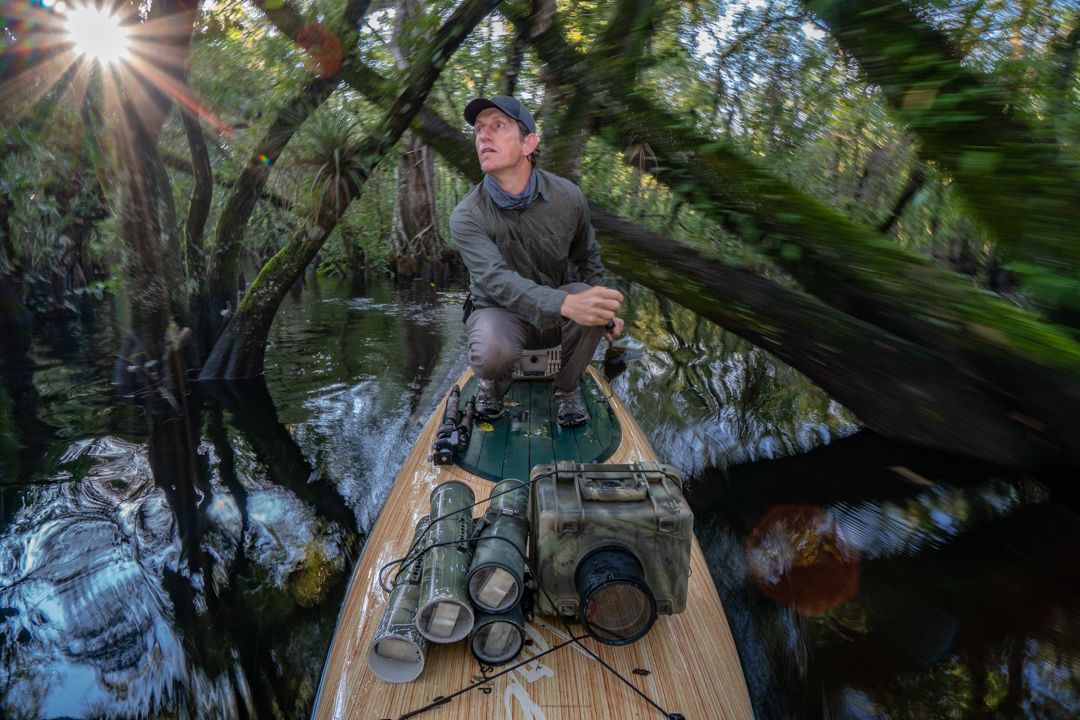
What's next: Ward is pushing for more funding to protect the remaining land along the corridor.
- Since state lawmakers approved the Florida Wildlife Corridor Act in 2021, about 400,000 acres have been conserved, he says.
- "We can't let up," he says, estimating that the state needs to conserve at least 100,000 acres per year to keep up with development.
The biggest challenge is funding, he says. He wants to convince lawmakers that the wildlife corridor is critical infrastructure that sustains water and air quality and provides resilience against storms and flooding.
- "If we were to conserve all the remaining acres today, there would still be plenty of space for development to accommodate Florida's future population."