How the 1920s land boom built modern Miami

Add Axios as your preferred source to
see more of our stories on Google.
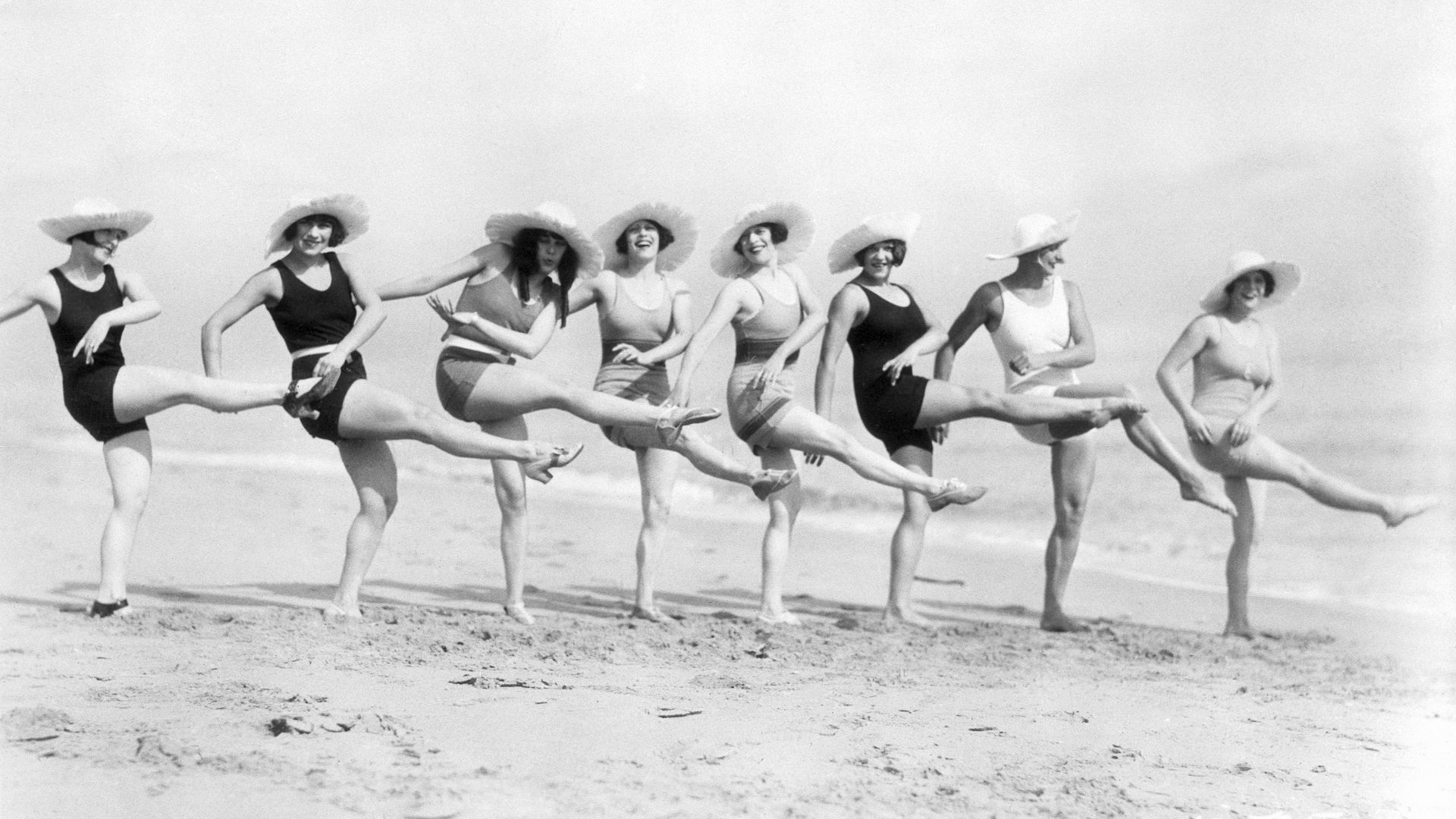
A group of women practicing the Charleston on a beach in Miami in 1925. Photo: Bettmann/Contributor via Getty Images
One hundred years ago, the Miami land boom led to the creation of cities like Coral Gables and local landmarks like the Freedom Tower.
Why it matters: The boom of the 1920s — about two decades after the city of Miami was incorporated — cemented us as a major metropolitan area.
- And this year, several local cities are celebrating their centennial with concerts and other community events.
Zoom in: Six cities in Miami-Dade County were founded between 1925-1926: Coral Gables, Hialeah, Miami Springs, North Miami, North Miami Beach and Opa-Locka.
- In Broward and Palm Beach, cities like Boca Raton, Deerfield Beach and Hollywood sprang up.
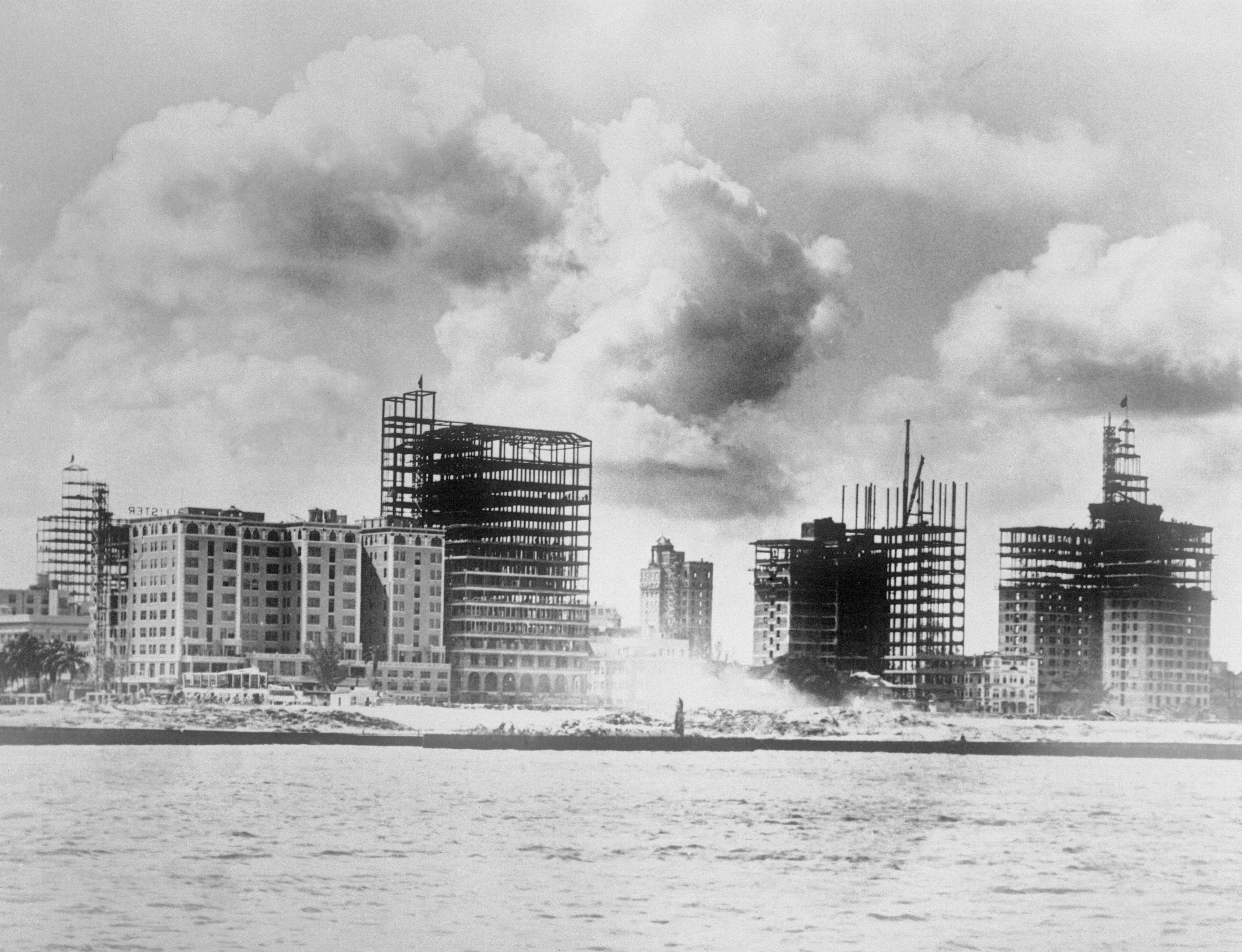
The intrigue: The Miami of the 1920s bore some resemblance to our modern-day city, as Miami historian Paul George wrote for Florida Historic Quarterly in 1986.
- Tourism at that time fueled a construction boom, real estate prices skyrocketed and our population swelled with transplants seeking sun-kissed riches free from state and inheritance taxes, George writes.
- Downtown Miami teemed with real estate agents who conducted curbside transactions at all hours of the day, sometimes accompanied by live bands paid for by developers.
- "At times the sidewalks along Flagler Street were impassable," George writes, "due to the great number of realtors transacting their business."
Stunning stat: Miami's population more than doubled between 1900 and 1910 — and increased 440% by 1920, according to George.
Follow the money: In downtown Miami, lots that sold for $1,000 in the early 1900s were flipped for as much as $1 million in 1925, per George.
- "We have what the people must have…God's sunshine," said William Jennings Bryan, the former secretary of state who was a real estate investor in Miami.
Yes, but: Miami became a victim of its success. The Florida East Coast Railway paused construction shipments to Miami in 1925 for over a year due to overwhelming demand, George writes.
- Around the same time, labor shortages and space limitations at the port of Miami forced cargo ships to wait days for a place to dock.
- A shortage of building supplies, housing and labor — among other factors — ended the boom in 1926, George writes.
Later that year, the Great Miami hurricane hit. Then a few years later, the Great Depression.
- "People who were planning to come to South Florida didn't. People who could get out did," Susan Gillis, curator at the Boca Raton Historical Society, told the South Florida Sun Sentinel. "And that pretty much ended the boom down here."
Some cities ceased to exist following the bust, the Sentinel reports, but other communities pushed forward and incorporated in 1926 — including Miami Springs and Opa-Locka, both founded by aviator Glenn Curtiss, who founded Hialeah a year earlier.
- Ed Dietrich, from the Deerfield Historical Society, told the Sentinel that local pioneers had to "cooperate with each other and cobble things together" or be forced to leave their new communities.
- "I think those were lessons learned back then that not only do you have to prepare, but you have to figure out how to recover."
What's next: Hialeah hosts a big celebration Saturday featuring a performance from Gente de Zona.
- North Miami Beach is throwing a centennial bash in October.
- Hollywood announced a Kool & the Gang concert in November at ArtsPark, among other events.
- Coral Gables is hosting a Venetian Pool concert in December, part of its year-long celebration.
Go deeper: WLRN has been highlighting South Florida's centennial cities with a series called "History We Call Home."