Residents' future uncertain as homeless-friendly hostel is to be demolished

Add Axios as your preferred source to
see more of our stories on Google.
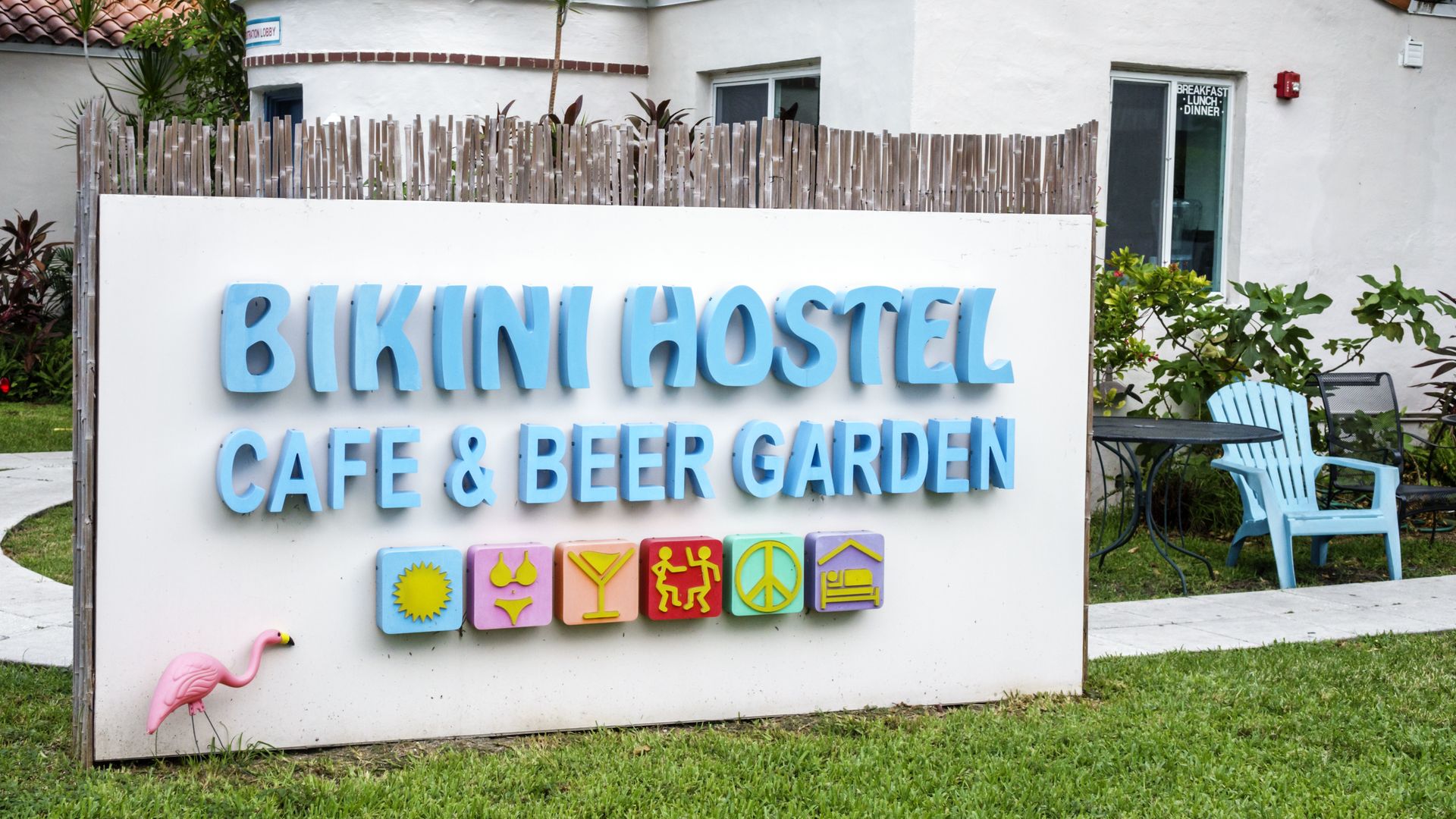
A 2016 file photo shows the Bikini Hostel entrance sign. Photo: Jeffrey Greenberg/Universal Images Group via Getty Images
Kerry Bazewicz says he's blessed to live in South Beach — even if his neighbors don't want him there.
- Three months ago, the 61-year-old was sleeping on a downtown Miami bench when he was offered a bed at the Bikini Hostel, which began accepting unsheltered people last year.
The big picture: After months of complaints from neighbors and Miami Beach officials, a developer has struck a deal with the city to demolish the Bikini Hostel and relocate the roughly 112 residents.
What they're saying: "I like the neighborhood," Bazewicz, who left Minneapolis to start his life over in Miami, tells Axios.
- "It's sad that you don't want me to live in your neighborhood, but how else do you start out in town when you don't have nothing but the clothes on your back?"
Catch up quick: The Bikini Hostel started operating as a homeless-friendly refuge in November after a contract between the Camillus House shelter and the city of Miami expired, leaving 50 people with nowhere to go.
- Neighboring West Avenue residents soon began to complain that they felt unsafe, and Miami Beach officials have since tried to shut down the hostel or pay to relocate its residents.
Friction point: Mayor Steven Meiner, in a June 20 letter to Miami-Dade Mayor Daniella Levine Cava, wrote that the Bikini Hostel "intermingles individuals in need of care with unsuspecting tourists."
- "The Bikini Hostel is certainly not an appropriate setting for those seeking structured assistance, is not conducive to maintaining the quality of life for our residents and families or for the success of our tourism-driven economy."
The latest: JDS Development Group, which is seeking to redevelop the neighboring Bay Garden Manor condominiums, has agreed to purchase and demolish the Bikini Hostel in exchange for being allowed to build a taller, denser project at the Bay Garden site.
- Last month, the City Commission approved the zoning changes and development agreement.
- As part of the deal, the developer would build a park on the Bikini Hostel site and transfer it to the city, while completing the construction of a bayfront pedestrian path. (City leaders are also considering the construction of new housing on the Bikini Hostel site.)
What's next: JDS Development Group now has four months to buy the hostel, relocate its residents and file for a demolition permit, per the agreement.
- The purchase is estimated to be worth $20 million, according to the city.
Yes, but: It's unclear where the Bikini Hostel residents will be moved.
- The development agreement requires the "compassionate relocation of the population of unhoused individuals."
Ron Book, chairman of the Miami-Dade County Homeless Trust, tells Axios his organization has "begun initial steps to wind down operations" and is negotiating with different providers to relocate residents.
- Book says the Trust is sensitive to residents' concerns about the hostel, but that some are conflating its operations with the existing unsheltered homelessness in Miami Beach.
- "Unfortunately, there has also been a litany of untruths, the repeated stigmas associated with homelessness, and fear mongering fueled by [a] handful of elected officials."
He said that since the start of operations in November, 72 people have been transferred to other programs, six have entered treatment, 48 have exited to permanent destinations, and at least 45 have gained employment.
- "These positive outcomes are the result of ongoing, on-site case management and services."