How to avoid heat illnesses during another blistering Florida summer

Add Axios as your preferred source to
see more of our stories on Google.
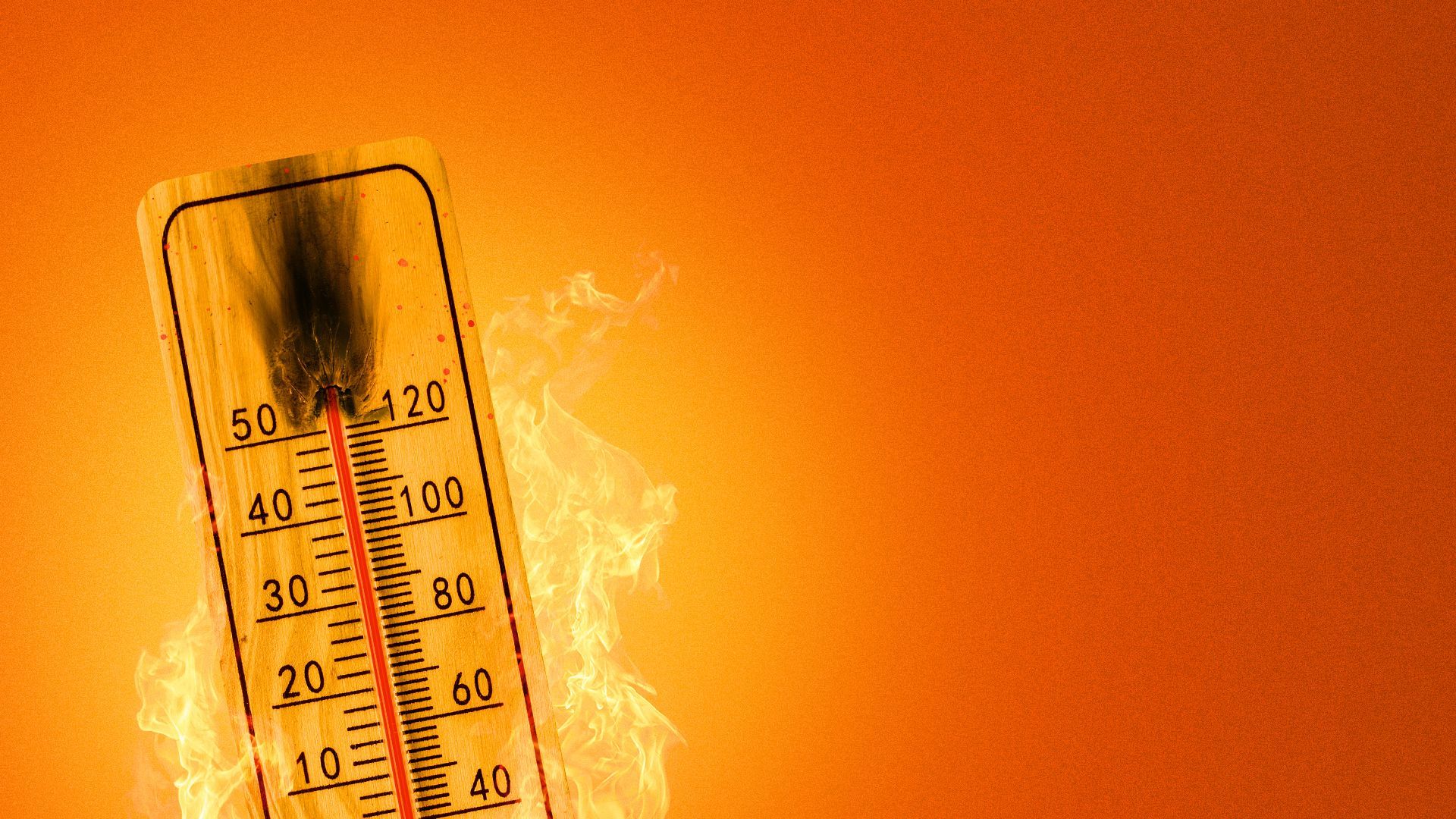
Illustration: Aïda Amer/Axios
Less than a month into the official start of summer, health experts are already warning that even the most heat-acclimated among us need to take precautions.
Why it matters: This summer has a 50% chance of being hotter than average in most parts of the state — a reality some researchers argue will become more frequent in the coming years.
- A recent study from the University of Florida found that some places in the Sunshine State could see as many as 70 hot days (91 degrees or above) annually by 2050, posing potentially serious threats to people's health.
What they're saying: "It's amazing how used to the heat we are and that we all understand it's part of our local environment," Elizabeth Greig, co-director of the University of Miami Global Institute for Community Health and Development, told Axios.
- But heat-related illnesses are a spectrum, she said, and many people don't realize how dangerous prolonged exposure can be.
By the numbers: Florida reported more than 31,000 heat-related emergency room visits and hospitalizations between 2018 and 2022 — exceeding any other state, according to a 2024 Florida Policy Institute report.
- More than 26,000 were trips to the emergency room, while almost 5,000 were hospitalizations, per the left-leaning advocacy group.
- Between 2017-2021, about 150 Florida residents died from heat-related illnesses.
Yes, but: Greig said the real number is probably higher, especially in South Florida, where it's difficult to separate the data in places where heat isn't episodic.
- "We don't have waves [of heat], we have months of consistently dangerous temperatures, which over the past three years have been record-setting," she said.
That means, in places like New York City, which recently endured a heat wave, an excess number of hospital visits related to heat illnesses can be attributed to the spike in temperature, she explained.
- But in cities like Miami or other parts of Florida, patients who come for dehydration or fainting may not be immediately recorded as heat-related, she said.
- Only later, after talking to the individual, do doctors realize the visit could be because of prolonged heat exposure.
Threat level: Heat exposure can make someone sick in many different ways, but some of the main signs to look out for are if someone — or yourself — stops sweating, is nauseous or not thinking clearly, Greig said.
- Little kids and the elderly are particularly susceptible to heat, but even the most conditioned athletes should be cautious.
The bottom line: Everyone has a threshold for tolerating the heat and all heat-related illness is preventable, she said.
- Understanding personal risks — like an underlying heart condition or asthma — and "mitigating those risks is of paramount importance."