Hammocks not allowed at Miami Beach parks; anti-camping ban partly to blame

Add Axios as your preferred source to
see more of our stories on Google.
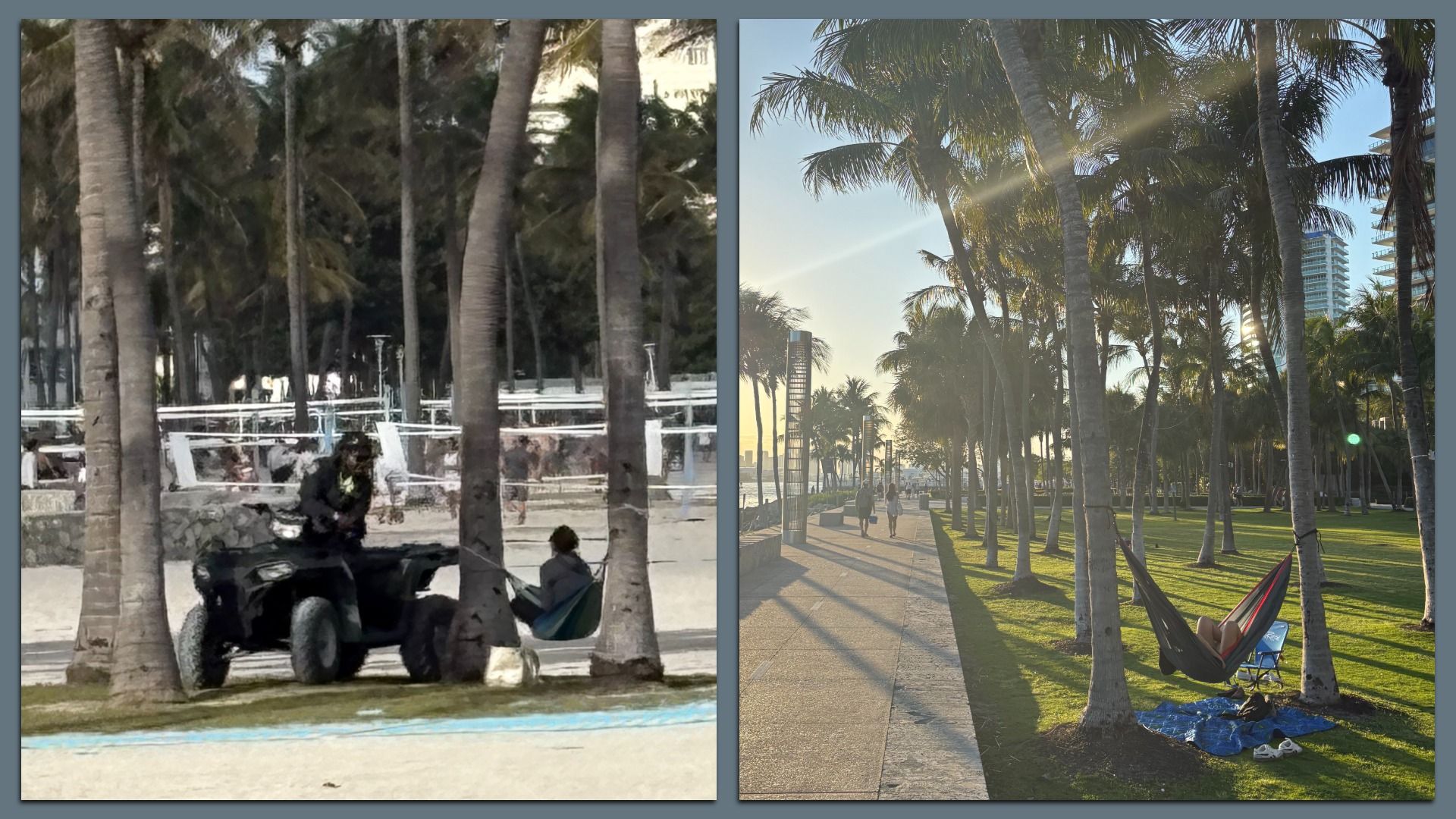
The use of hammocks is technically illegal in Miami Beach. Photos: James Villalobos
For Miami Beach resident James Villalobos, his happy place is sitting in a hammock at the park.
- Since moving to South Beach in 2021, the 29-year-old has spent countless weekends hanging from the city's trees — but not anymore.
Why it matters: It's apparently illegal, according to the city.
What they're saying: City spokesperson Melissa Berthier tells Axios that the use of hammocks has been banned in Miami Beach "for years" because it "lends itself to illegal camping" and violates an ordinance against attaching ropes or chains to public trees.
- "We have a long history of people coming to our City and attempting to avoid paying for accommodations by trying to camp in our parks, on our beaches, and by the side of our roads," Berthier wrote in a statement.
- "More recently, camping by unhoused individuals in our City has become a bigger problem. We have had a camping ordinance prohibiting this activity for more than two decades, and have more recently amended it to address current circumstances."
Friction point: After hammocking unbothered for years, Villalobos said he learned about the ban last fall when a park ranger ordered him to take down his hammock during a movie night at Soundscape Park.
- He complained to the city, arguing that its "goal of preventing homelessness is impacting the basic activities and quality of life" of residents.
- He says he stopped using his hammock last month but continues to see others using theirs — thanks to "selective enforcement" from the city.
Zoom in: The city's anti-camping law does not explicitly ban hammocks but broadly prohibits "lodging or residing in an outdoor space as evidenced by …lying, sitting, or resting upon or under any item or material."
- Villalobos has contended that, by that definition, it would be illegal to lie down on a blanket or have a picnic in the park.
Between the lines: If the city were to loosen its camping ban, it could run afoul of a 2024 state law prohibiting cities from allowing public camping, Miami Beach Commissioner Tanya Bhatt wrote to Villalobos in a March email.
- "I understand your frustration. Regardless of how I feel about it, we as a city are superseded by the state law."
Zoom out: Miami-Dade County also bans the use of hammocks and slacklines if attached to public trees.
- Both activities can harm trees if not done properly.
- Miami Beach says you can attach ropes or chains to trees if they are "protective or non-damaging."
Villalobos tells Axios that hammock users and slackliners already use protective attachments and are part of the Beach culture.
- It's another example, he said, of the "little freedoms" the city wants to take away, like the former South Pointe drum circle.
- "All these things that make the city enjoyable and fun are being slowly taken away from us, and I don't understand it. It is becoming such a turnoff to live here."
The other side: Berthier said the city's camping ban has "not impacted the recreational activities of residents."
- "As far as we know, only one resident has ever objected to our regulation of camping or, specifically, hammocks."