Miami leaders mourn death of Pope Francis

Add Axios as your preferred source to
see more of our stories on Google.
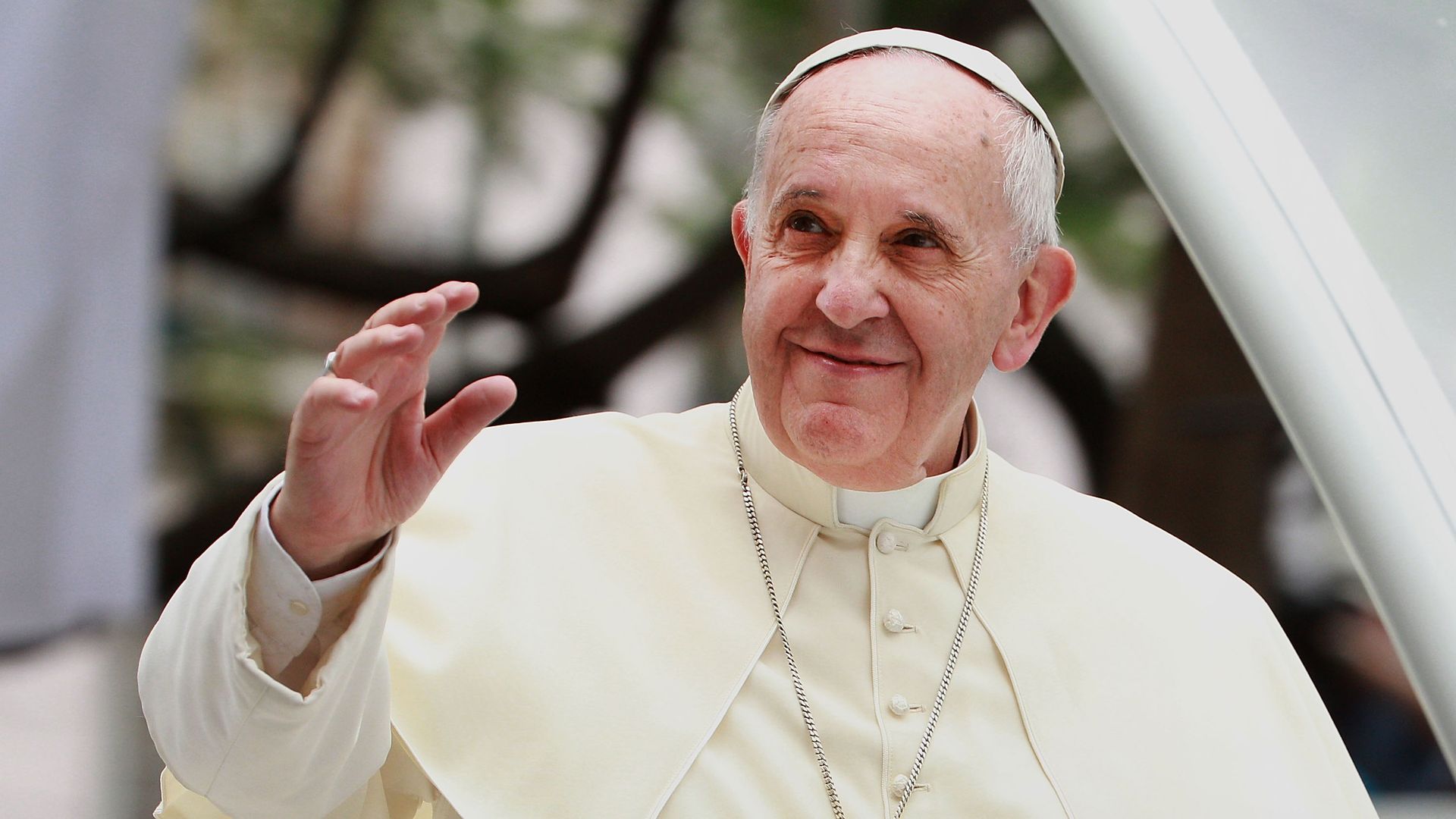
Photo: Lisa Maree Williams/Getty Images
Miami leaders are reacting to the death of Pope Francis, who died Easter Monday at 88.
Why it matters: Francis, the first Latin American pontiff, pushed the Catholic Church to the left, often speaking in defense of immigrants, supporting LGBTQ+ rights and calling for more action against climate change.
- He recently spoke against the Trump administration's mass deportations, urging followers of his faith "not to give in to narratives that discriminate" against migrants and refugees.
Between the lines: Francis never visited South Florida, but his 2015 trip to Cuba was much anticipated by residents here.
What they're saying: Miami Archbishop Thomas Wenski on Monday in a statement said Francis "leaves this world as a 'pilgrim of hope'" and that his legacy "will be defined by a series of 'firsts.'"
- Francis was the first Jesuit Pope, the first from the Americas and the first to address a joint session of Congress.
- He was also the first to appoint women to posts previously held only by men, Wenski wrote.
The Coalition of South Florida Muslim Organizations (COSMOS) told the Miami Herald that Francis was "a strong advocate for peace, justice and interfaith understanding" and that his efforts will have a "lasting legacy."
Meanwhile, Miami's elected officials took to X to issue their condolences.
Secretary of State Marco Rubio on X said, "We unite in prayer with Catholics worldwide for the repose of the pontiff's soul."
Rep. Carlos Gimenez in Spanish wrote that he and his wife joined those of faith in mourning, adding that they met Francis in 2013, where he blessed their marriage.
Friction point: The Miami-Dade Democratic Hispanic Caucus responded to the statements on X with a quote from Francis.
- "It's hypocrisy to call yourself a Christian and chase away a refugee or someone seeking help [...]," the post read.
Flashback: Jorge Mario Bergolio was born in Argentina Dec. 17, 1936, the son of Italian immigrants.
- Francis studied the humanities, philosophy and theology during his religious training, continuing his studies after becoming ordained in 1969, per the Vatican's website.
- When he was named Cardinal in 2001, Francis asked Catholics not to travel to Rome to celebrate him, but instead to donate their would-be travel expenses to poor people.
He was named pope on March 13, 2013.
Steph Solis of Axios Boston contributed to this report.