Miami Jai alai league considering leaving Florida after Magic City Casino lease expires

Add Axios as your preferred source to
see more of our stories on Google.

Andoni LaLoo (left) and Ron Madrigal. Photo: Courtesy of World Jai-Alai League.
Miami could lose a piece of sports history as the only professional jai alai league in the U.S. considers leaving South Florida for a new home.
Why it matters: The world's fastest ball sport has had a presence in Miami for decades, even as jai alai's popularity waned across the country.
Driving the news: Scott Savin, chief operating officer of the World Jai-Alai League, says the league's lease at Magic City Casino is set to end later this year.
- The WJAL, which boasts celebrity investors like artist Pitbull and Miami Heat legend Udonis Haslem, is in discussions with venues in South Florida, Las Vegas and Rhode Island.
- The league will play its final two seasons at Magic City, with the last games to be played in December.
What they're saying: "We really don't want to leave Florida but we have to take the best opportunity that comes along for us," Savin tells Axios.
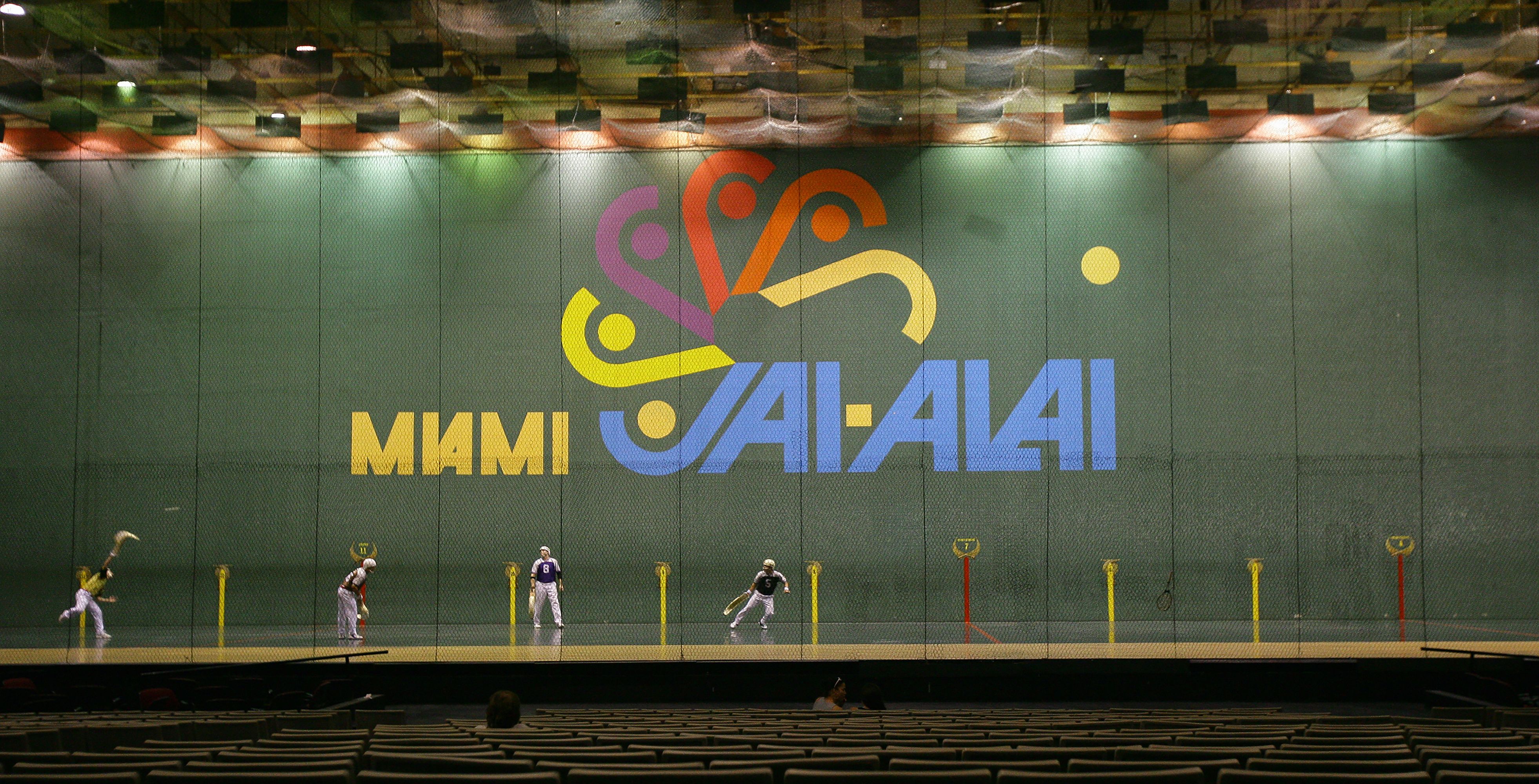
Catch up quick: Jai alai, which originated in the Basque region of Spain and France before landing in the U.S. in 1904, has a 100-plus-year history in Florida.
- The sport's popularity in South Florida began to decline in the 1980s, when Florida authorized the lottery, leading to a players' strike, the Associated Press reports.
- Jai alai operators were hit hard by a 2021 law overturning a requirement that certain casinos host pari-mutuel gaming, like jai alai or horse racing, in exchange for keeping card rooms or slot machines.
State of play: Currently there are only two places in the U.S. where you can watch jai alai – the Magic City Casino and the Dania Beach Casino in Broward County, which now runs an annual tournament.
- The WJAL is owned by West Flagler Associates, which owned the Magic City Casino before selling in 2023.
- The terms of the sale allowed the WJAL to operate through the end of the year, Savin says.
How it works: Jai alai traditionally involves players launching goatskin balls off a three-walled fronton using a curved, hand-held wicker basket.
- The ball can travel up to 186 mph, according to the Federación Internacional de Pelota Vasca.
- The WJAL, which started operating in 2018 and employs 38 players across six teams, has used social media to entertain and educate new, younger audiences about the sport.
- It has also attempted to speed up the game by reducing the size of the court, substituting a rubber ball and making the rules more closely resemble singles tennis.
Follow the money: Each player earns a base salary and has full medical coverage. Earnings increase the more games you win.
- Last season, players earned between about $50,000 and $120,000, Savin says.
- Many players have second jobs or used to be pro athletes, like Tanard Davis, a former NFL player and University of Miami student athlete.
- "Our guys, they're not Jimmy Butlers and they're not making millions of dollars a year," Savin says, comparing his players to the disgruntled Heat superstar who left Miami for a big payday in Golden State. "They play because they love the game."
The latest: As of last month, jai alai fans can bet on the WJAL using the Hard Rock Bet app.
- It's part of the settlement in the lawsuit that WJAL parent company West Flagler Associates filed against the Seminole Tribe of Indians over its monopoly on sports betting.
What's next: Savin says the league, which is currently running a deficit, will begin to see a revenue bump from sports betting.
- The WJAL, which broadcasts games on platforms like Fubo, ESPN+ and for free on YouTube, is also in discussions to land a media rights deal.
- "We really just want to expose people to the sport."
If you go: The WJAL plays for a live crowd on Fridays at 7pm and plays broadcast-only games Monday and Tuesday at 5pm.
- Attendance and parking is free, for now.
- The current season runs through May 9 and the final season runs from September to December.