Miami Beach warns spring breakers, apologizes to residents for inconvenience

Add Axios as your preferred source to
see more of our stories on Google.
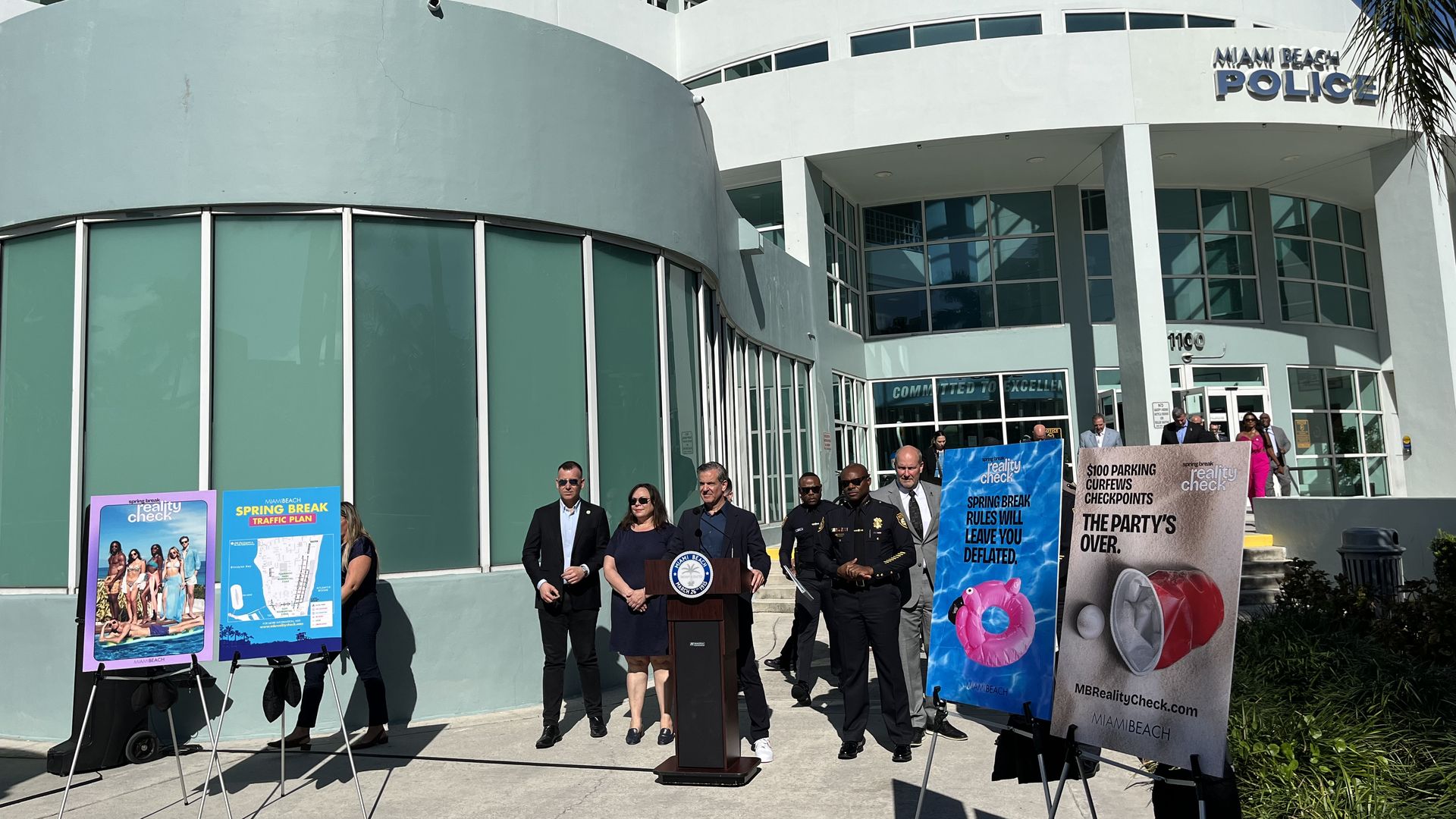
Mayor Steven Meiner (center) speaks to reporters. Photo: Martin Vassolo/Axios
Miami Beach isn't just breaking up with spring break, like its viral marketing campaign says.
- They're divorced with "a restraining order," police chief Wayne Jones told reporters Tuesday.
Why it matters: The city's spring break enforcement plan — which includes restrictions on parking, outdoor seating on Ocean Drive and the threat of curfews — is aimed at preventing the violence and disorder that has historically marred the March vacation season.
- But law-abiding tourists, residents and business owners will be impacted, too, as the city's entertainment district begins its annual transformation into a gridlocked, barricaded zone flooded with police.
What they're saying: "We apologize but this is necessary," Jones said. "I know it's painful. Short-term pain for long-term gain."
Catch up quick: The city's restrictions — in effect every weekend from Feb. 27 to March 30 — include security checkpoints at Ocean Drive beach entry points, restricted street parking in South Beach and a doubling of the non-resident towing fee to $516.
During the busiest weekends, March 13-16 and 20-23, restrictions include:
- License plate readers on the MacArthur and Julia Tuttle causeways and a DUI checkpoint on Fifth Street.
- A ban on sidewalk cafe seating along Ocean Drive.
- The closure of city garages and parking lots south of 23rd Street and $100 parking fees at the Sunset Harbour and 42nd Street garages.
Of note: Residents and local employees are exempt from most parking restrictions but must show proof of eligibility.
The intrigue: Mayor Steven Meiner said it will be a "game-day decision" whether the city enacts a curfew for the fifth straight year.
Stunning stat: Meiner said the city's hardline stance on spring break isn't pushing away tourists, but attracting visitors and locals who want to enjoy a safer Miami Beach.
- Last March, according to the Greater Miami Convention and Visitors Bureau, Miami-Dade County had the highest hotel occupancy rate (85%) of the top 25 markets in the country. Miami Beach was at 83%.
- "There are some inconveniences. I don't discount that. We try to mitigate that as much as possible but we are actually bringing in people more and more by taking these measures."
Z Ocean Hotel owner Louis Taic told reporters after the press conference that his hotel is fully booked this month and in March, which he credits to the city's spring break efforts.
The bottom line: Officials used the press conference to reiterate the city's warning to any spring breakers who want to cause mischief in South Beach.
- "We love spring break," Taic said. "What we don't like is people who take advantage of Miami Beach…by doing things here that they would never do at home."