Why does Miami pardon pigs? Inside the Christmas tradition

Add Axios as your preferred source to
see more of our stories on Google.
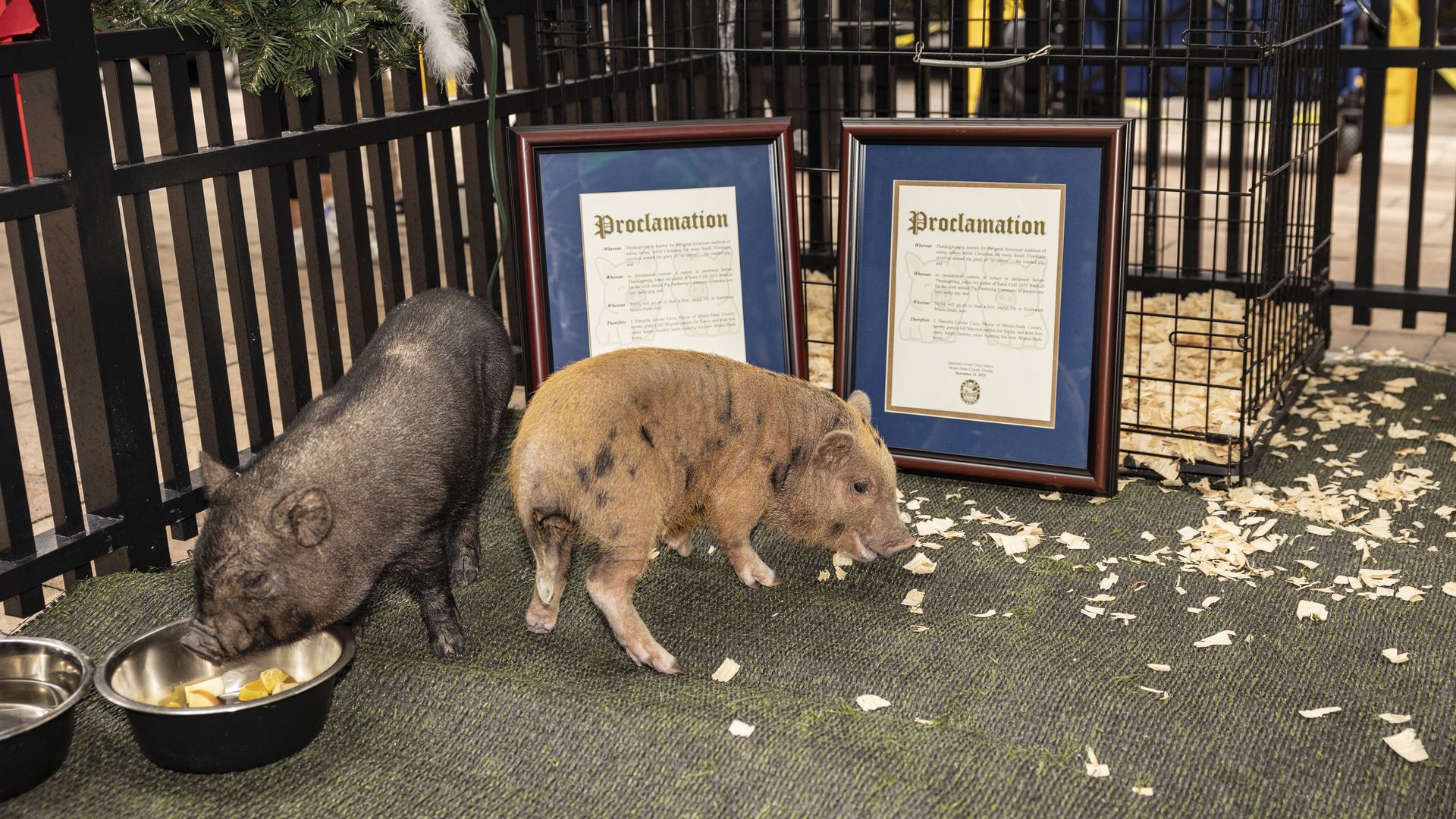
The 2023 pig pardoning. Photo: Courtesy of Revolve Group
Miami doesn't roast chestnuts for Christmas. We prefer pork over an open fire.
Why it matters: The ubiquity of lechón, or roasted pork, on Miami dinner tables has led to a unique holiday tradition: the annual pig pardoning.
- Every year since 2018, the county mayor pardons two pigs bound for la caja china — or the roasting box.
The latest: Today, Miami-Dade Mayor Daniella Levine Cava will pardon Glinda and Elphaba, two pigs with names inspired by the musical "Wicked," at Latin Cafe 2000 in Brickell.
The big picture: Roasting pork for Christmas and other holidays is a staple of Miami's Cuban community.
- The tradition typically involves slow-cooking a whole pig (or a pork shoulder) in a caja china as family members gather around.
- Members of Miami's Haitian community also eat seasoned roast pork — griot — for Christmas.
- "Pretty much every culture here has their own take on holiday pork," Latin Cafe 2000 owner Eric Castellanos tells Axios.
What they're saying: Castellanos says the hallmarks of Christmas in Miami are cajas chinas and lit-up palm trees.
- "While the rest of the country is roasting turkeys, nearly every neighborhood here is filled with the smell of sazón, mojo and pork floating through the streets."
Stunning stat: At Latin Cafe 2000's three locations Castellanos says he serves up to 20,000 pounds of lechón every holiday season.
Catch up quick: Castellanos and his wife, Kali, came up with the pig-pardoning idea in 2018 after watching President Trump pardoning turkeys for Thanksgiving.
- Then-county Mayor Carlos Giménez embraced the idea and became Miami's first official pig pardoner.
What's next: Glinda and Elphaba will be moved to Bonanza Equestrian Center, where Castellanos says they will be "treated like royalty."