With Florida homelessness law in effect, Miami may see more arrests and shelter beds

Add Axios as your preferred source to
see more of our stories on Google.
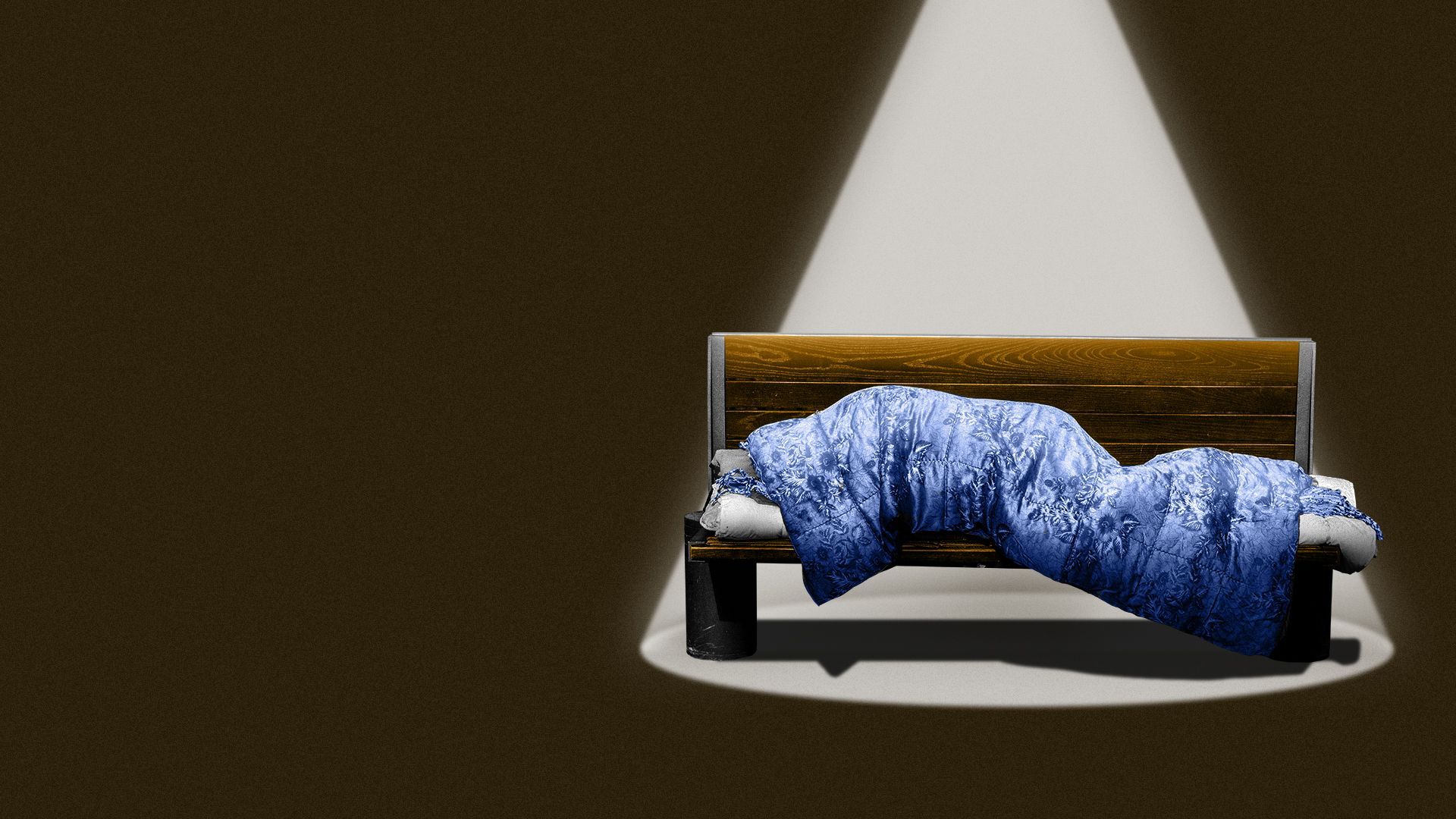
Illustration: Lindsey Bailey/Axios
Sleeping in public places is now illegal across Florida. A new state law targeting residents experiencing homelessness takes effect Tuesday.
Why it matters: Supporters say public camping creates safety and quality of life issues, while critics say the ban would criminalize homelessness instead of developing housing solutions.
Catch up quick: The anti-camping law, HB1365, prohibits municipalities from allowing anyone to sleep in public and empowers residents and business owners to sue their local government if it doesn't uphold the law.
- If homeless shelters reach capacity, the law allows municipalities to create homeless encampments with bans on drugs and alcohol.
The latest: The Miami-Dade County Homeless Trust, which runs the county's homeless services, is working toward adding hundreds of shelter beds and has proposed creating a homeless navigation center and tiny-home community to comply with the law.
- Chairman Ron Book, who has spoken in support of HB1365 in the past, tells Axios the law will likely lead to the arrest of unsheltered individuals who refuse shelter placement — an "unfortunate situation."
- He met with police chiefs from around the county and expects each department to uphold the law differently.
What they're saying: The Miami Police Department says officers will try connecting unsheltered individuals to services and shelters, while complying with the law.
- "If an individual is violating the law and refuses to go to a shelter, officers will assess the situation, prioritizing public health and safety," the department tells Axios in a statement.
Book says the Trust is rolling out an app this week for police to notify Homeless Trust outreach teams in real time.
- "Will some people get arrested? The answer is yes. If they are unwilling to move, unwilling to come off the street and they've been offered an opportunity to be sheltered, then I think that's what will occur."
Zoom in: Armen Henderson, founder of Dade County Street Response and a doctor at the University of Miami, says his unsheltered patients are "really upset and scared" that they may be arrested.
- Miami's at an "inflection point," where high rents and limited affordable housing will drive more people into homelessness, he tells Axios.
- "What happens if it's you tomorrow? Are you OK with getting arrested because you can't afford rent and you find yourself unsheltered?"
David Peery, executive director of the Miami Coalition to Advance Racial Equity, tells Axios his organization is planning to host information sessions and pass out educational flyers to people experiencing homelessness.
- Peery, who once experienced homelessness in Miami, says he supports building low-barrier shelters that serve as a bridge to permanent housing — not arrests or encampments.
- "This is a crisis. We are going to be out there in the streets responding to this crisis."
What we're watching: Municipalities can't be sued until Jan. 1, so Peery says that's when police enforcement may ramp up.
- Book says he wants to open the navigation center by December to beat the litigation window.