WLRN victory claim in fired Sundial host's discrimination case "absurd," expert says

Add Axios as your preferred source to
see more of our stories on Google.
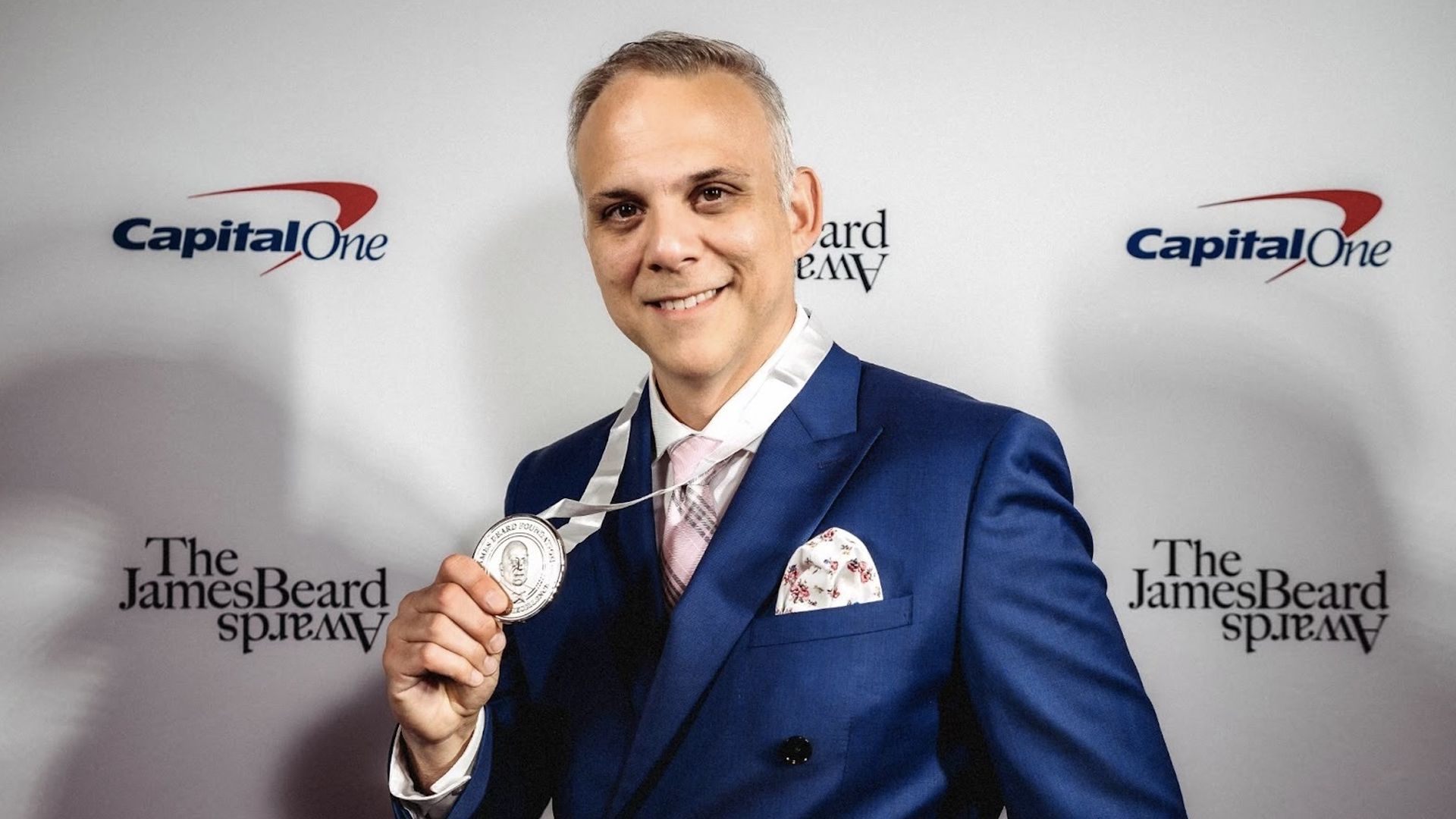
Carlos Frías posing with his James Beard Award. Photo: Nikki Allen/Creative Shot
The spat between WLRN and former host Carlos Frías is getting uglier after the NPR station tried to claim a legal victory against the Cuban American journalist's allegations of discrimination.
Why it matters: Frías, who filed a federal lawsuit this week, alleges that he was discriminated against when WLRN canceled his show "Sundial" and let him and two Latina producers go.
- The lawsuit alleges that prior to canceling the arts and culture show in February, a WLRN editor said the show was "sounding very Latino" and created a spreadsheet tracking Hispanic guests.
WLRN says the allegations are "baseless" and that it has one of the most diverse newsrooms in the country.
- The station says it canceled "Sundial" and eliminated the positions of Frías and his coworkers to focus resources on its investigative journalism and digital operations.
Catch up quick: Frías first made the allegations in a February complaint with the U.S. Equal Employment Opportunity Commission (EEOC), a mandatory step before filing a discrimination lawsuit.
- In March, the EEOC granted a request from Frías that he be allowed to sue after the agency determined it would be unable to complete its investigation in six months.
- As part of its notice, the EEOC said it had dismissed the charge.
Friction point: WLRN general manager John LaBonia released a statement Wednesday claiming that the EEOC "sided with WLRN in dismissing the complaint."
- "The quick decision by the EEOC to end its investigation is a testament to the failure of Mr. Frias to present any credible evidence of discrimination."
Reality check: Two labor law experts, who are not involved in the case, reviewed the EEOC notice for Axios and said the agency did not rule on the merits of his allegations.
- "For WLRN to claim this as a victory is just absurd," Fort Lauderdale labor attorney Jonathan Pollard says.
- University of Florida law professor Rachel Arnow-Richman, chair in labor and employment law, tells Axios a dismissal is a necessary step to filing a federal lawsuit.
Context: Pollard says labor attorneys routinely request a "Right to Sue" notice to skip the "administrative process" and go straight to court.
- Filing a lawsuit could lead to a bigger financial reward compared to going through the EEOC, he says.
- "If you want real money, you just get your Right to Sue, file a lawsuit and commit to going the distance in litigation," he says.
What they're saying: William Amlong, an attorney for Frías, tells Axios that the EEOC dismissed the complaint at his request, so he didn't have to wait six months to file a lawsuit.
- "Not only are they being racist, but they're being liars," Amlong says.
The other side: WLRN said it forbids discrimination or harassment and that 63% of its newsroom employees are people of color, including vice president for news Sergio Bustos, who is originally from Chile.
- "I'm proud to lead our award-winning radio programming and digital news coverage in one of the nation's most diverse audiences," Bustos said.