It's a "busy" termite season in South Florida — and it's not over

Add Axios as your preferred source to
see more of our stories on Google.
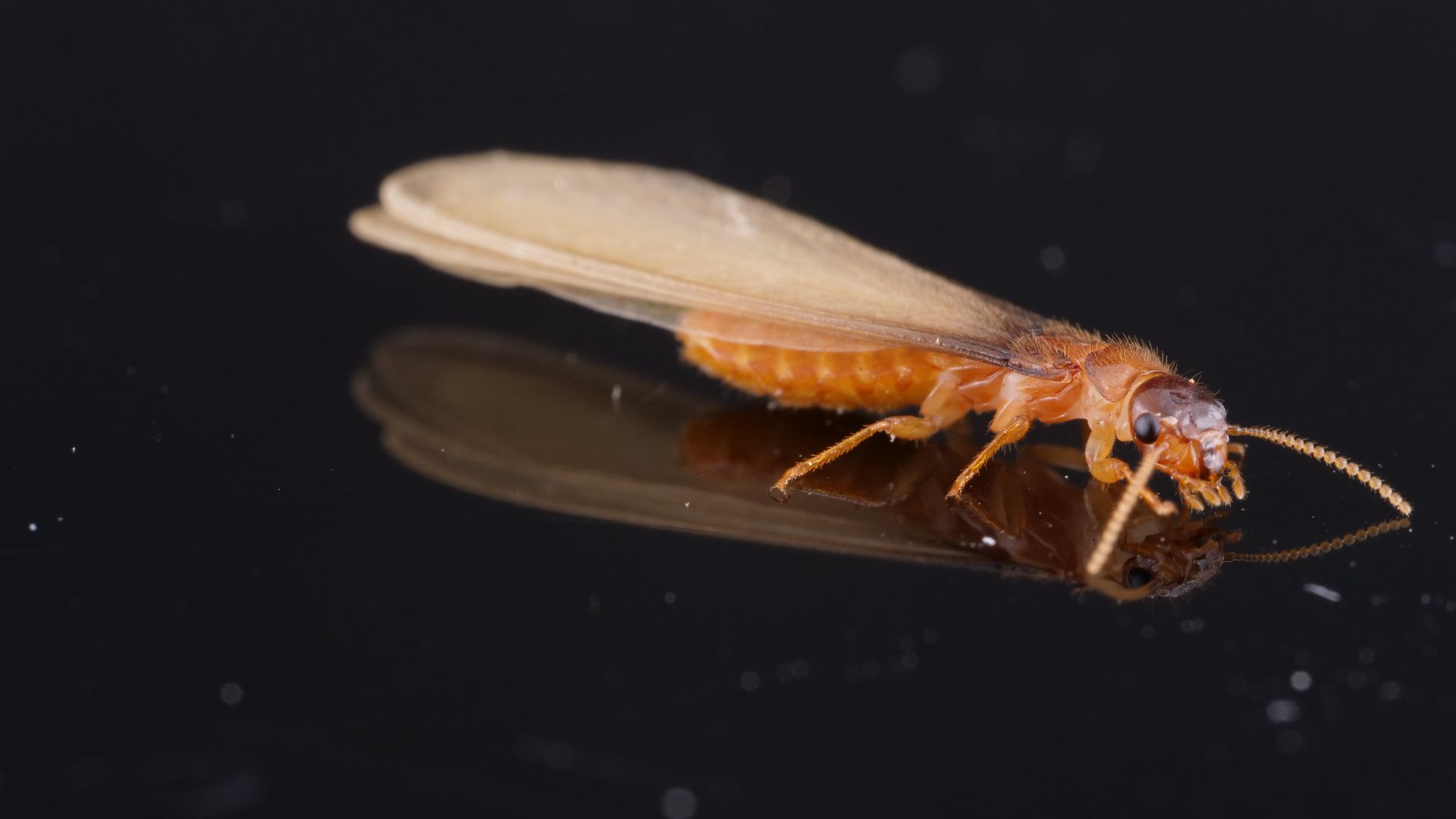
One small, flying thing. Photo: Courtesy of Thomas Chouvenc UF/IFAS
They're baaack. It's termite swarming season in South Florida, the time of year when porches and street lights are surrounded with the wood-eating critters — and you're holding your breath that your home isn't infested.
Why it matters: Termites cause $5 billion in damage nationwide every year and Florida has the highest number of distinct termite species in the continental U.S.
- They also feed on trees, which is slowly destroying the urban canopy, Thomas Chouvenc, assistant professor of urban entomology at UF, tells Axios.
- "You can replace a wall but you cannot replace an 80-year-old oak tree," he says.
What's happening: Two of South Florida's main species — the Formosan subterranean and West Indian drywood termites — will be at peak swarm through mid-June, Chouvenc says.
- Chouvenc, who works out of UF's IFAS extension lab in Davie, tells Axios it's been a "busy" termite season so far. Using a light trap in his front yard, he captured about 70,000 swarming termites in March and April.
- "Right now, every termination company has phones ringing off the hook," he says.
How it works: Termites try to create new colonies by swarming at dusk for about 25 minutes.
Threat level: Don't be alarmed if you see a handful of flying termites in your home, Chouvenc says. They probably floated in from their colonies and don't cause structural damage.
- A telltale sign of an infestation is termite droppings, which look like sawdust and typically accumulate near window sills.
- Fumigation is the best way to clear out an infestation, but there are preventative measures to defend your home, like bait stations.
- Check out what termites are common in your neighborhood using UF's termite-tracking map.
💭 Martin's thought bubble: My wife and I recently bought a house in Hollywood and freaked out when we saw termites swarming outside — and a couple sneaking inside.
- Luckily, the inspector didn't find an active infestation, but we're basically just waiting until we have to fumigate at some point.