Miami Beach to replace Woosh pay-to-pour water fountains

Add Axios as your preferred source to
see more of our stories on Google.
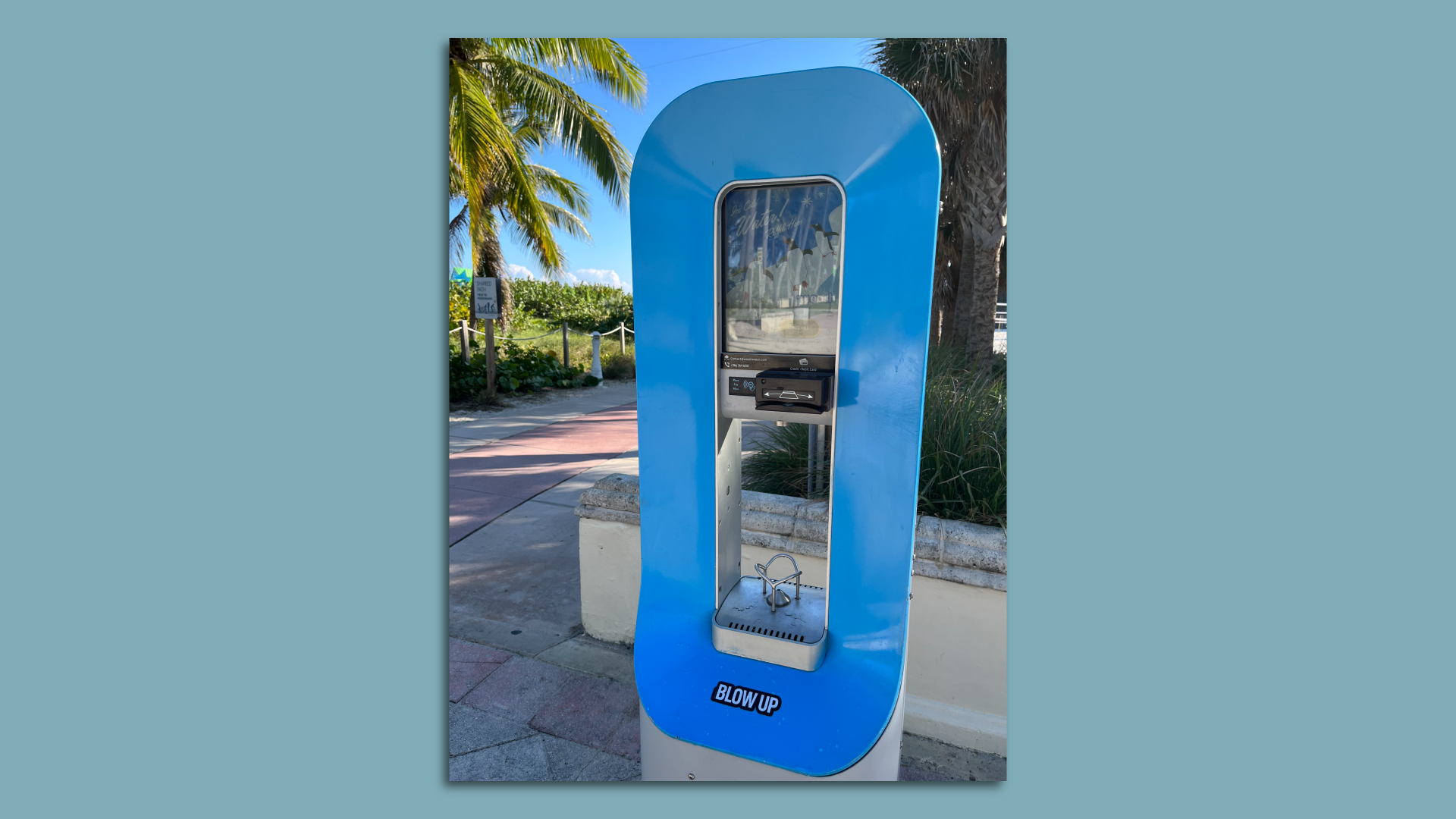
Swipe your card for a sip. Photo: Martin Vassolo/Axios
Miami Beach's credit-card-only water fountains — which charge you 50 cents to fill your bottle — will be discontinued and replaced with free water stations in the new year.
What's happening: Miami Beach is terminating its agreement with Israeli company Woosh Water, which has operated the water bottle-filling stations citywide for more than four years.
- City spokesperson Melissa Berthier told Axios that the Woosh stations "were not widely used by residents and visitors."
Catch up fast: Woosh's 16 stations dispense purified, chilled water in the city's public spaces from the beachwalk to parks and along Lincoln Road.
- Woosh and the city hailed the service when it launched in 2018 as an alternative to single-use plastic bottles. But they've drawn criticism over the years for charging people for public drinking water.
- Over the life of the city's revenue-sharing agreement with Woosh, Miami Beach earned $7,193, Berthier said.
What they're saying: Commissioner David Richardson told Axios he was skeptical from the start about how the Woosh model would work in Miami Beach, because people are used to getting water for free from fountains.
- Richardson said the city has identified public funding to buy its own water dispensers to replace the stations.
Environmental activist Dara Schoenwald, who worked with Woosh to launch the service here but is no longer affiliated with the company, told Axios that the dispensers were never meant to compete with public fountains.
- Rather, they aimed to serve as a cheaper, more convenient alternative to buying a water bottle at a beach concession stand.
- Schoenwald, who heads beach clean-up nonprofit VolunteerCleanup.Org, said it would be a "win for everybody" if the city operated its own free stations, but she's wary that will happen because there are "costs to running the service."
What's ahead: Woosh has until Jan. 31 to remove the stations, Berthier said. The city hasn't shared a timeline for when the stations will be replaced.