Wheat prices are soaring and Kansas farmers can't cash in

Add Axios as your preferred source to
see more of our stories on Google.
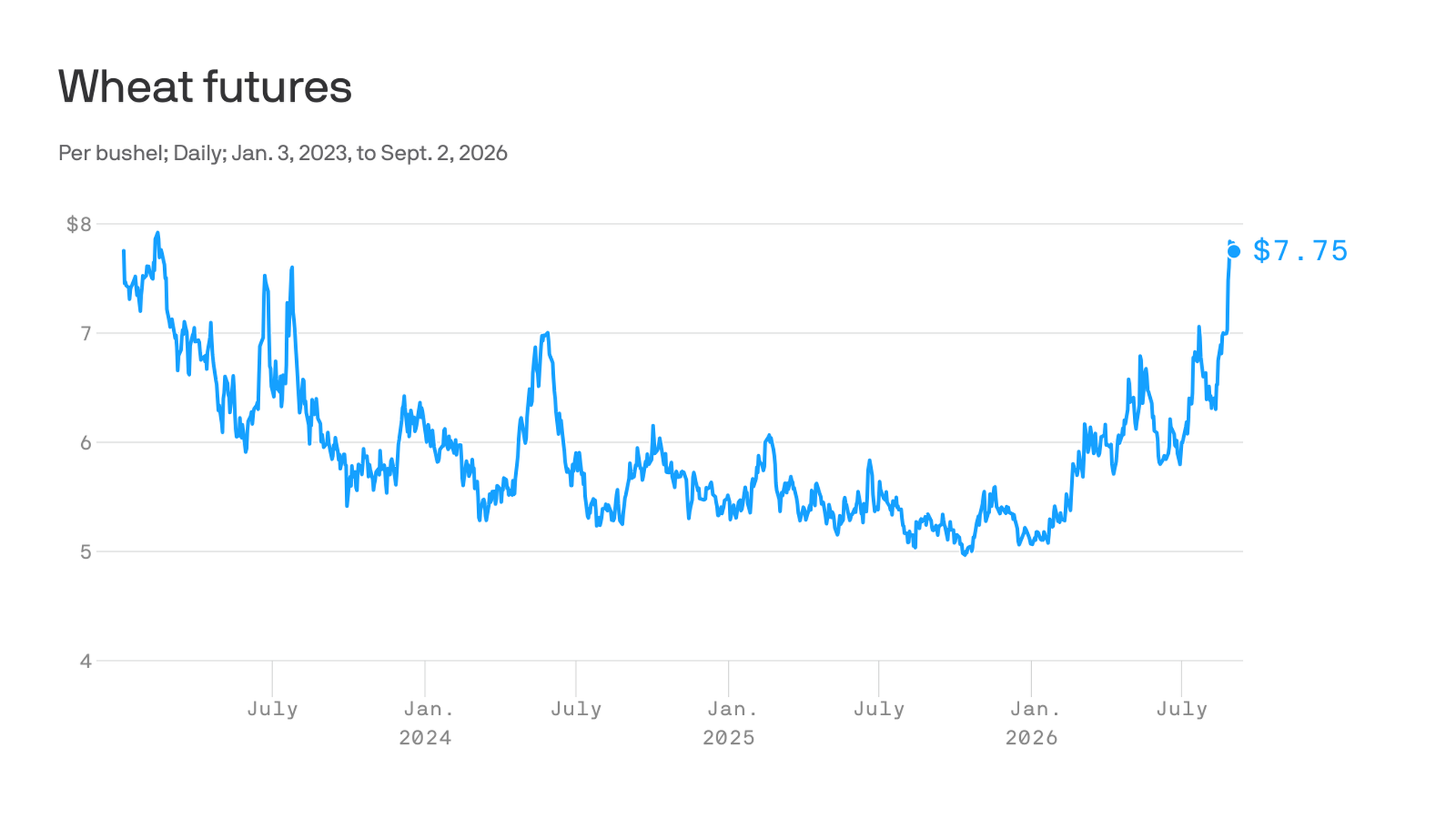
Data: CME Group via Factset; Chart: Emily Peck/Axios
A war half a world away pushed Kansas wheat to its highest price in three years, but a drought at home left farmers with their smallest crop in more than six decades.
Why it matters: Kansas grows more winter wheat than any other state, and a price spike that should have been a payday is instead arriving after drought shriveled the fields before harvest.
Driving the news: Since July, attacks on ports and cargo ships in the Black Sea have slowed grain shipments out of Russia and Ukraine, which together supply 27% of the wheat traded worldwide. Less wheat on the market means buyers pay more for what's left.
- Kansas grows hard red winter wheat, the variety used in most bread flour. Its cash price rose nearly 59% year over year, to $9.42 a bushel as of Sept. 1, Kansas Wheat CEO Justin Gilpin told Baking Business.
The catch: Most Kansas farmers have little to sell. USDA's August forecast puts the state's crop at 191.4 million bushels, down 45% from last year.
- Drought was so severe that farmers gave up on 900,000 planted acres without harvesting them, and the fields they did cut yielded 33 bushels an acre instead of last year's 51.
- Kansas hasn't harvested less wheat since the early 1960s, per NASS.
- "The expenses are going to overcome what the prices are bringing for the yields we got," southwest Kansas farmer Gary Millershaski told Brownfield.
Across the state line, Missouri had a bad year too, but not a historic one. The state grows soft red winter wheat, a lower-protein variety used in crackers and pastry.
- Its crop fell to 28.4 million bushels from 36.8 million, per USDA.
- Soft red wheat sells for less. On Aug. 13, it traded about 66 cents a bushel below Kansas wheat, per USDA.
Flashback: Hard red winter wheat is still traded under the name "Kansas City wheat" because its price was set at the Kansas City Board of Trade for more than a century, until CME Group bought the exchange in 2012 and moved trading to Chicago.
Yes, but: Prices jumped because traders expect a shortage, but USDA says the countries that usually buy Russian and Ukrainian wheat haven't started buying American wheat instead.
What's next: Gilpin expects Kansas farmers to plant about as much wheat as last year, possibly a little more, but the newest seed varieties are already hard to find because this year's small crop left less grain to save as seed.