Kansas' role in cutting-edge flight safety technology

Add Axios as your preferred source to
see more of our stories on Google.
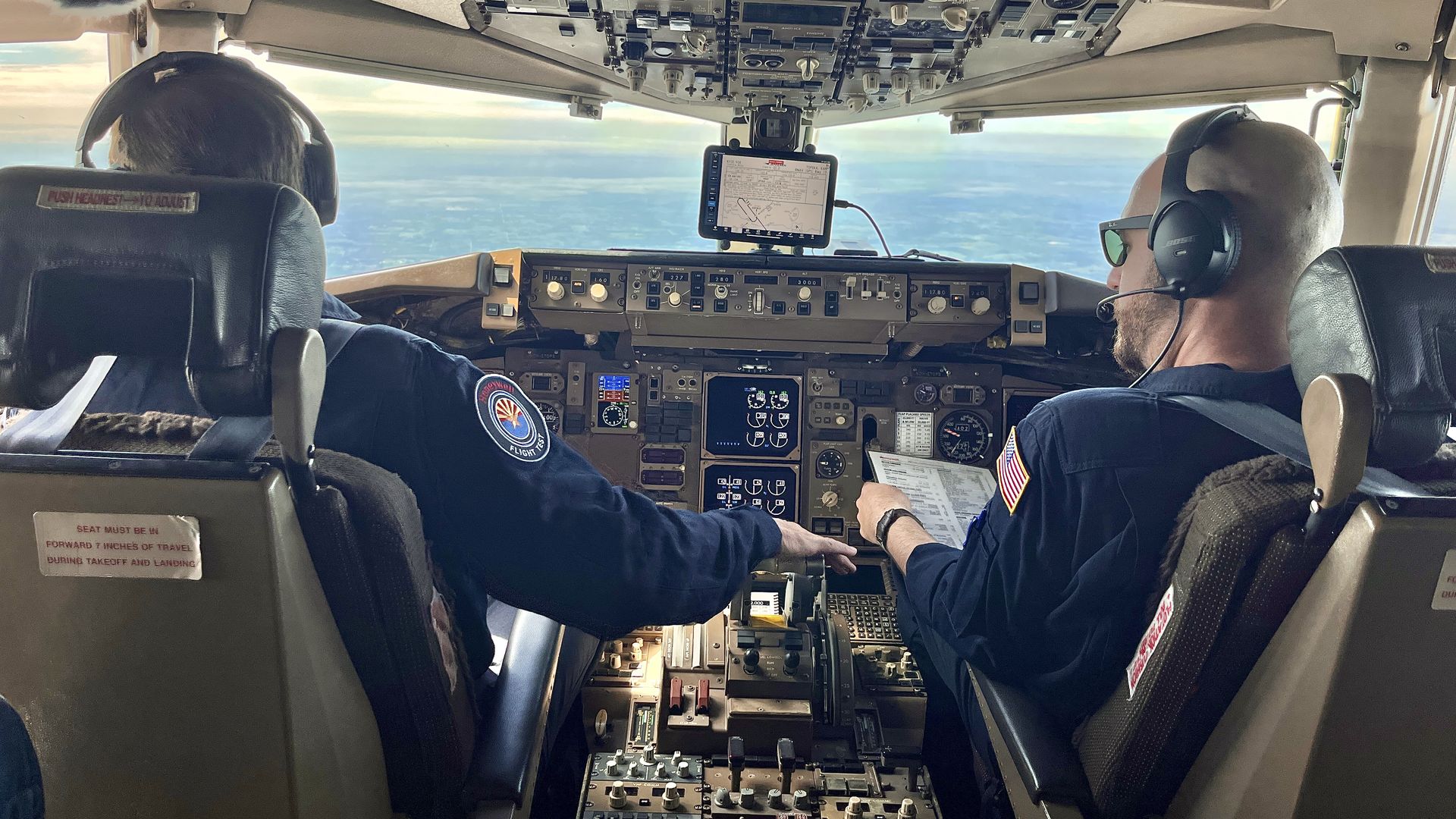
Honeywell pilots head toward Topeka. Photo: Travis Meier/Axios
Kansas is playing a big role in new airplane safety technology that could better alert pilots to potential collisions.
Why it matters: The software by tech conglomerate Honeywell, which has a facility in Olathe, could help reduce human error at a time when air travel is busier than ever and air traffic controllers are facing mounting pressure due to staffing shortages.
How it works: The in-flight software, called Surface Alert (SURF-A), uses the vector of an airplane along with positioning signals from other aircraft to detect if there's a plane on the runway during landing or takeoff.
- The alert comes directly to the cockpit as an audio and visual cue.
Driving the news: Honeywell performed a demonstration flight last month from Kansas City's downtown airport to Topeka and back.
- It's part of the company's bid to receive certification from the FAA, a multistep process required to introduce changes in airplane technology.
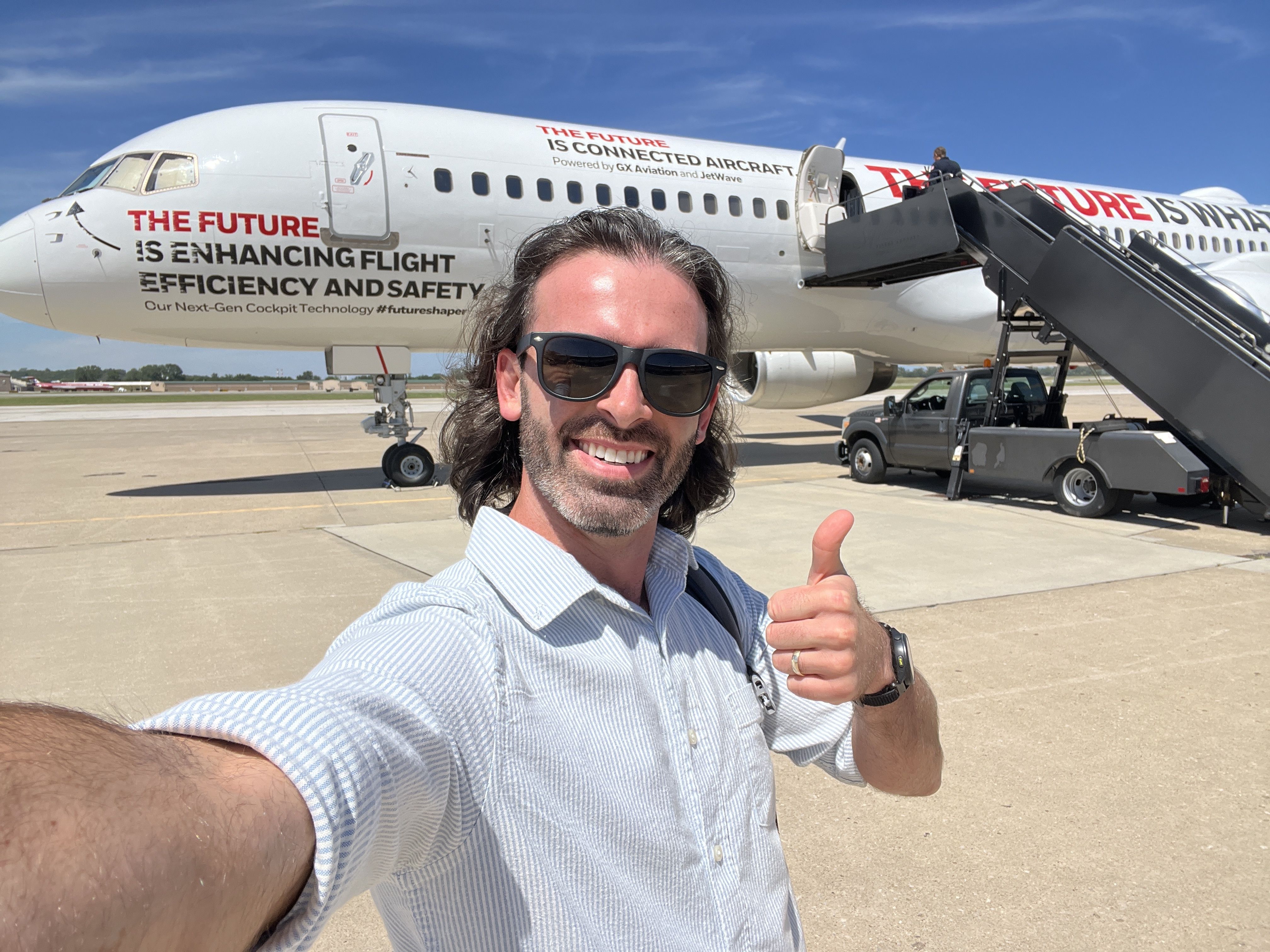
- Axios Kansas City reporter Travis Meier rode in the experimental aircraft — a custom Boeing 757-200 — to see the system in action firsthand.
Context: Honeywell, a multinational Fortune 500 company headquartered in Charlotte, makes tech for aerospace, building and industrial automation, and energy and sustainability.
- In 1975, Honeywell created the original terrain warning technology that became the FAA-mandated standard.
Threat level: Honeywell's chief test pilot, Kirk Vining, says most pilots and air traffic controllers rely heavily on visuals and conversations to warn of potential runway hazards.
- That poses serious issues when weather is bad, pilots are distracted, or communication lines are busy.
- "Seconds can literally be the difference between life and death," Thea Feyereisen, a runway safety tech expert with Honeywell, says.
Case in point: A cargo plane coming in for landing at Austin-Bergstrom International Airport in 2023 narrowly avoided hitting a Southwest flight, likely by fewer than 100 feet.
- Another near-miss happened at John F. Kennedy International Airport in 2023 when an American Airlines flight taxied onto a runway while a Delta flight was taking off.
- In both cases, Honeywell representatives say SURF-A would have alerted pilots well in advance.
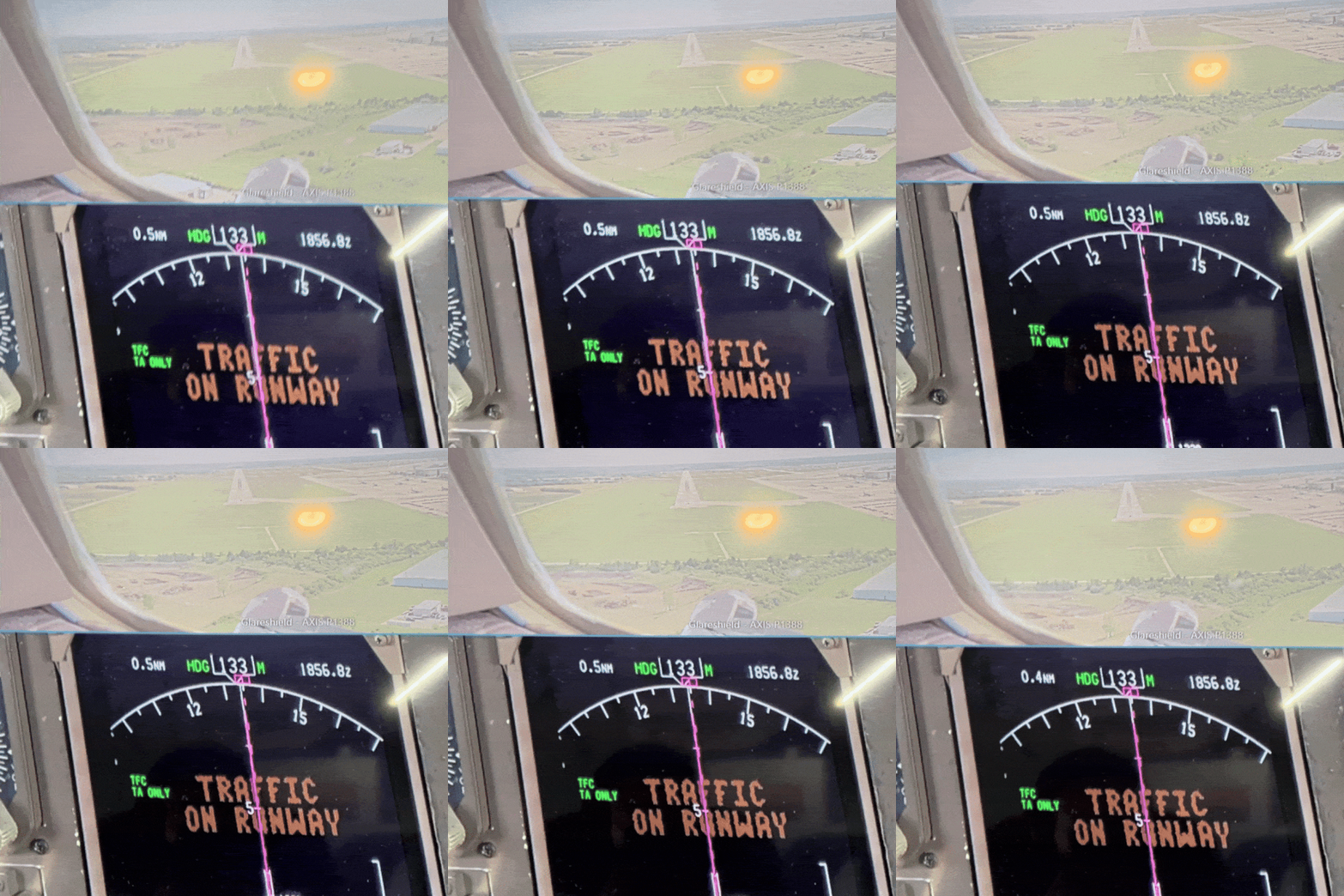
What we saw: It was hard to see another plane sitting on the runway as we made our descent into Topeka, even on a clear day. The warning system shouted "Traffic on runway" while I was still squinting to see it.
- As for taking off, the view was even less clear without a bird's-eye vantage.
Context: Republican Kansas Sen. Jerry Moran coordinated the demonstration with Honeywell's chief executive, Vimal Kapur, according to the senator's communications director, Angela Lingg.
What they're saying: "The company's demonstration reflects progress toward delivering the advanced avionics systems necessary to maintain safe skies and runways," Moran said in a statement to Axios.
Zoom in: In the wake of the American Airlines flight from Wichita that crashed into a helicopter in D.C. earlier this year, Moran — who is chairman of the Senate Subcommittee on Aviation, Space, and Innovation — introduced legislation to increase air safety.
What's next: Honeywell representatives say they expect to get SURF-A certified by the FAA in 2026.
Yes, but: Airline companies would still need to purchase the software, install it on all aircraft, and implement new training and procedures.