"Legal morphine" sold in Kansas and Missouri draws FDA warning


Add Axios as your preferred source to
see more of our stories on Google.
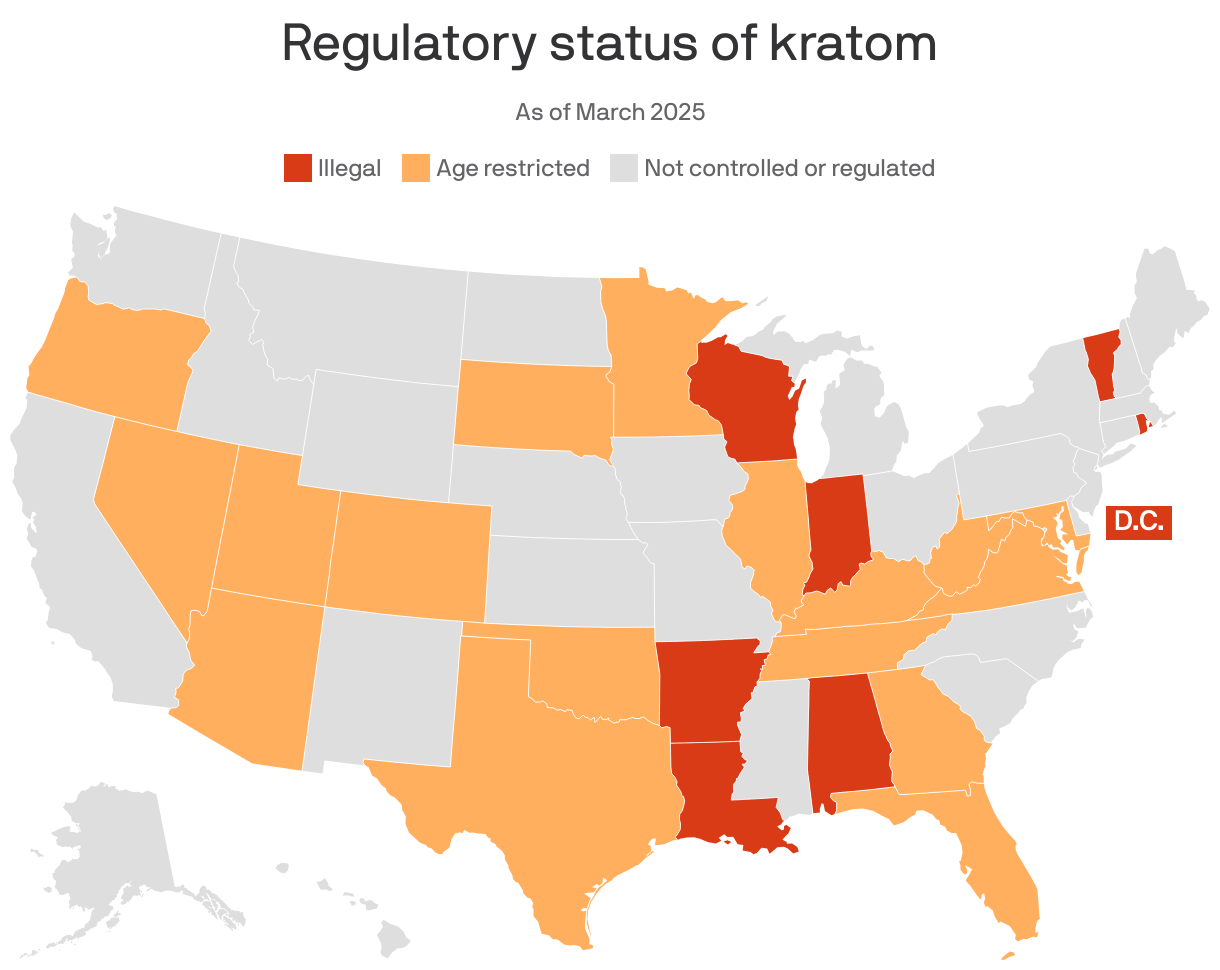
The FDA is cracking down on a potent compound found in kratom supplements, which are sold in Kansas and Missouri with no state oversight.
Why it matters: Products containing 7-hydroxymitragynine, or 7-OH, a compound that acts like an opioid and has been dubbed "legal morphine" by researchers, have surged in popularity.
Catch up quick: Kratom 7-OH semi-synthetic products were introduced to the market in September 2023.
The latest: On Tuesday, the FDA recommended more regulation and warned consumers about the risks.
- Last month, the FDA sent a letter to companies about the illegal marketing of these products, calling them potentially dangerous and unproven.
Zoom in: Products with 7-OH, including pills and powders, are widely available in Kansas and Missouri.
- Kansas introduced a bill this year that would regulate kratom like a food product and would require buyers to be at least 21. The bill hasn't passed.
- Missouri's House advanced a similar bill in March that would restrict kratom to buyers 21 and older and ban synthetic or contaminated versions. The bill drew criticism for allowing products with up to 2% 7-OH to remain on shelves if they aren't labeled as kratom.
- The bill still needs final approval in the House and Senate to become law.
Threat level: OH-7 "is a pure opioid," Chris McCurdy, a professor of medicinal chemistry at the University of Florida who's studied kratom for over 20 years, says. That means it interacts with opioid receptors the same way prescription opioids do, so it could be highly addictive, researchers warn.
The bottom line: For now, concentrated 7-OH products remain legal here, but that could change if proposed consumer protection legislation passes.