Huntsville's role in the future of Artemis

Add Axios as your preferred source to
see more of our stories on Google.

Artemis is charging ahead with three more missions planned in the next two years. Photo: NASA via Getty Images
The world is still coming down from the highs of the Artemis II mission, but NASA is already full steam ahead on Artemis III.
Why it matters: Artemis II tested hardware and rehearsed operations in deep space, and Artemis III will take the next step toward NASA's goal of landing on the Moon in 2028, constructing a Moon base and ultimately launching toward Mars.
- And as the Artemis program moves forward, the role of Marshall Space Flight Center will only grow.
What they're saying: "The next big milestone is actually [April] 20th," MSFC Acting Director Rae Ann Meyer told Axios last week.
- That's when NASA is set to roll out the top four-fifths of the Space Launch System core stage from Michoud Assembly Facility in New Orleans for transport to Kennedy Space Center in Florida for stacking and launch preparations.
Catch up quick: NASA shuffled its Artemis lineup last month, adding a 2027 mission and setting the first lunar landing for Artemis IV.
- Artemis III is a demonstration mission in low-earth orbit in mid-2027 to test commercial landers from SpaceX and/or Blue Origin.
- Artemis IV, set for early 2028, will land astronauts on the Moon, and use a standardized Space Launch System, replacing the interim cryogenic propulsion stage with a new second stage.
- Artemis V, scheduled for late 2028, will see astronauts land on the Moon again, and kick off NASA's goal of annual lunar missions thereafter.
Zoom in: Marshall, which manages the SLS program, will see its role in the program grow as Artemis' scope increases, especially looking toward landing on the lunar surface.
- "It's a huge part of our future," Sharon Cobb, associate program manager for the SLS, told Axios at the Artemis II Splashdown Party last week.
- "The SLS rocket is the only rocket that can lift the Orion spacecraft and co-manifested payloads or other hardware … into a trans-lunar injection-type orbit," she said.
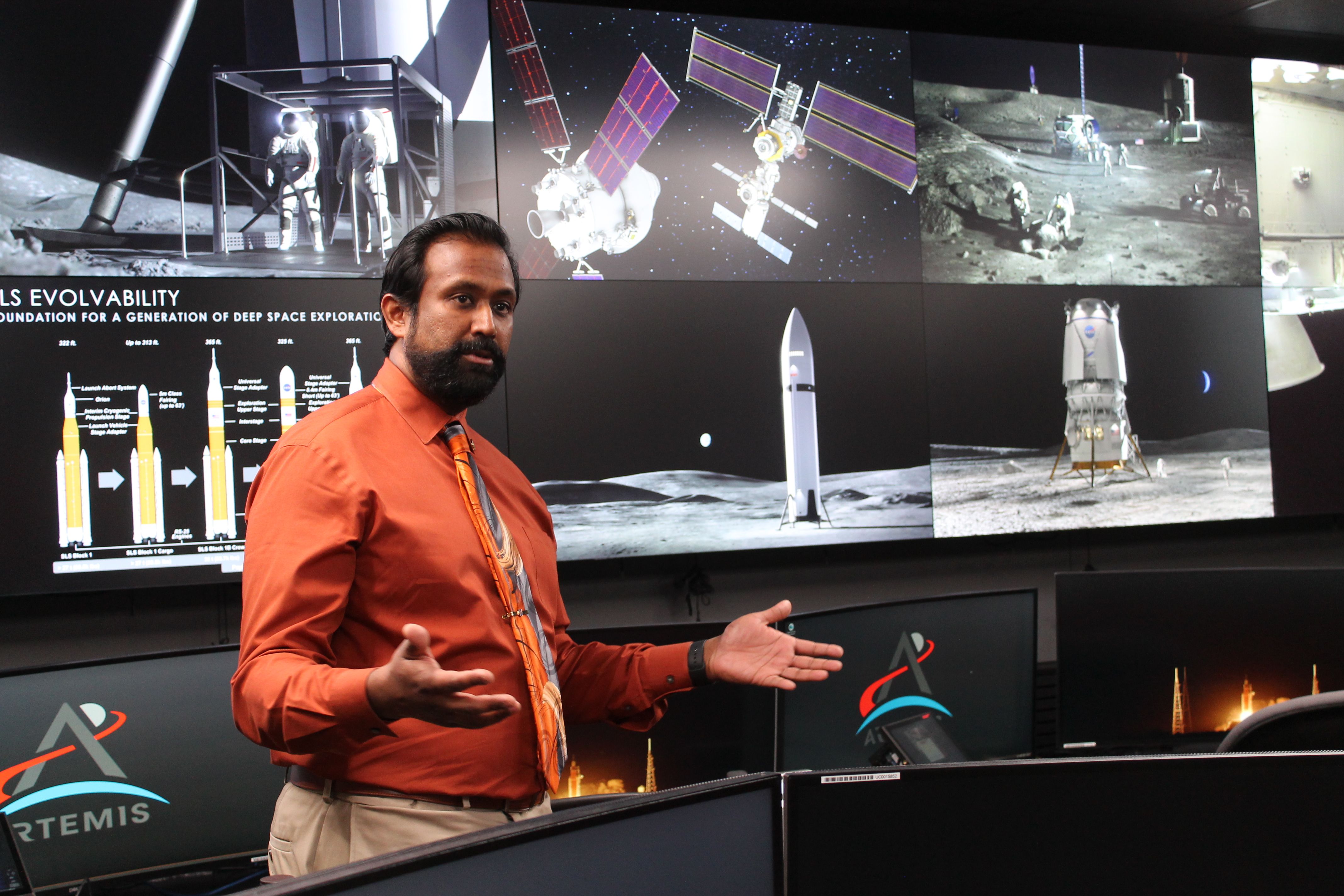
Case in point: Marshall also leads the Human Landing System, and two control rooms there will be crucial to future Artemis missions: the Lunar Utilization Control Area (LUCA) and Lander Engineering Support Area (LESA).
- "When the HLS lands, even though it's a commercial provider, there's going to be early engagement from the team in this specific room," said Harish Chandranath, payload and mission operations division lead for HLS, standing in the LESA during a media event earlier this year.
- "A lot of critical functions that come out of this room" will provide insight back to program management on how the mission is progressing, including influence on the "go, no-go" call, he said, as well as tech and safety expertise.
The bottom line: As NASA Administrator Jared Isaacman says, Artemis II is just "the opening act in America's return to the Moon."