Artemis II heads to launch with Marshall on deck

Add Axios as your preferred source to
see more of our stories on Google.
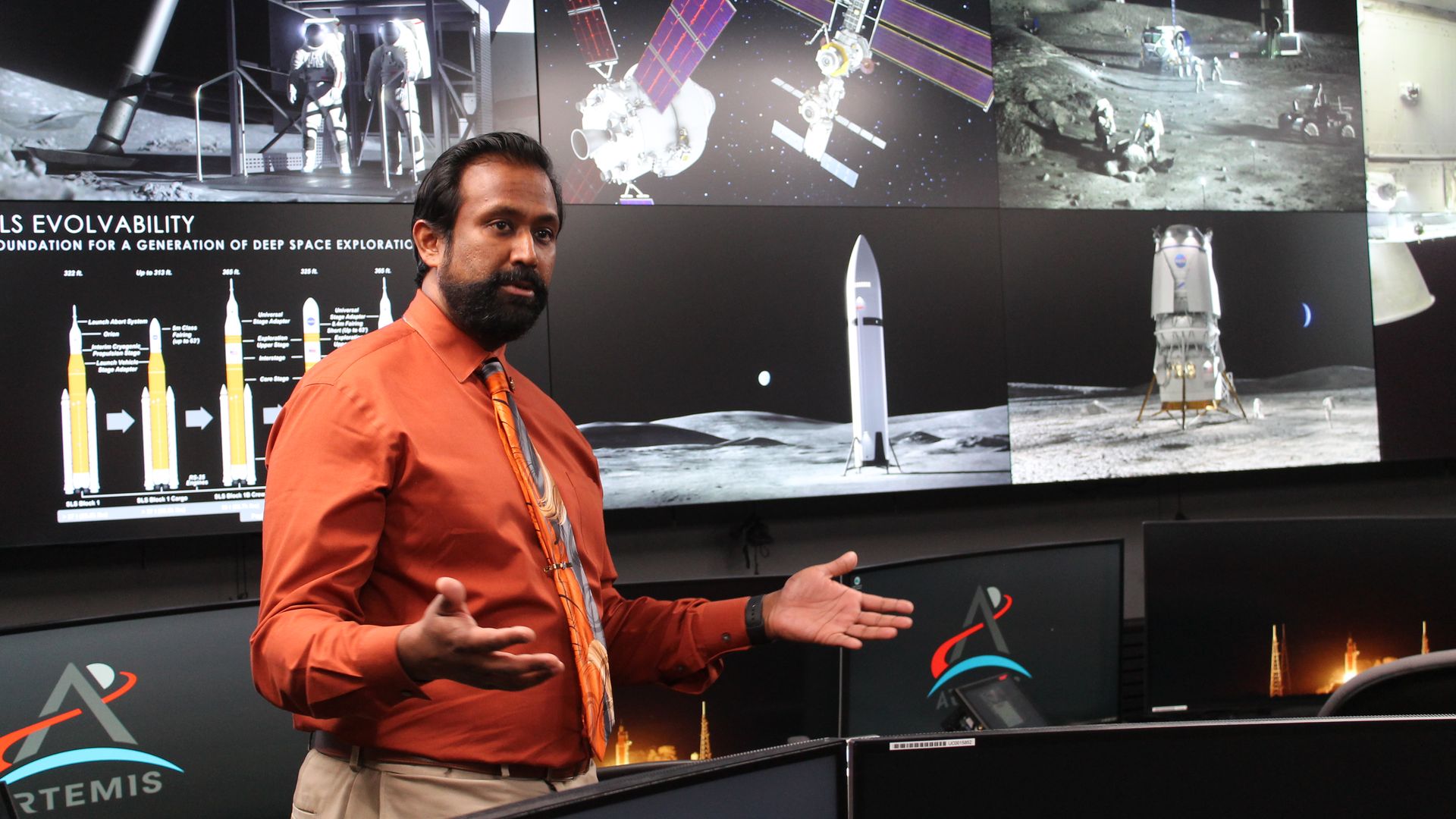
Harish Chandranath, PMOD HLS project lead, shows media where they'll monitor the HLS for Artemis III. Photo: Derek Lacey/Axios
Artemis II is stacked and nearly ready for launch.
Why it matters: At NASA's Marshall Space Flight Center, officials are poised to support that mission as it enters a launch window starting Feb. 6, and as it circles the moon before returning to Earth.
- Crews at Marshall will also watch as years of hard work pay off, taking the first astronauts to the moon since the Apollo missions more than half a century ago.
Catch up quick: Artemis II will take four astronauts on a 10-day lunar flyby as NASA eyes its next chapter of space exploration, including a long-term presence on the moon and future trips to Mars.
- And Huntsville's fingerprints will be all over it.
Zoom in: At a media event Wednesday, NASA officials touted all the ways Marshall and the wider aerospace community is involved in the mission.
What they're saying: "Marshall's unique facilities, cutting-edge technologies and world-class workforce are critical to helping NASA lead the way in taking humanity farther than ever before," said Rae Ann Meyer, acting director at MSFC.
- That work centers on two pillars of the mission that are led in Huntsville: the Space Launch System (SLS) and the Human Landing System (HLS), the latter of which will come into play with Artemis III.
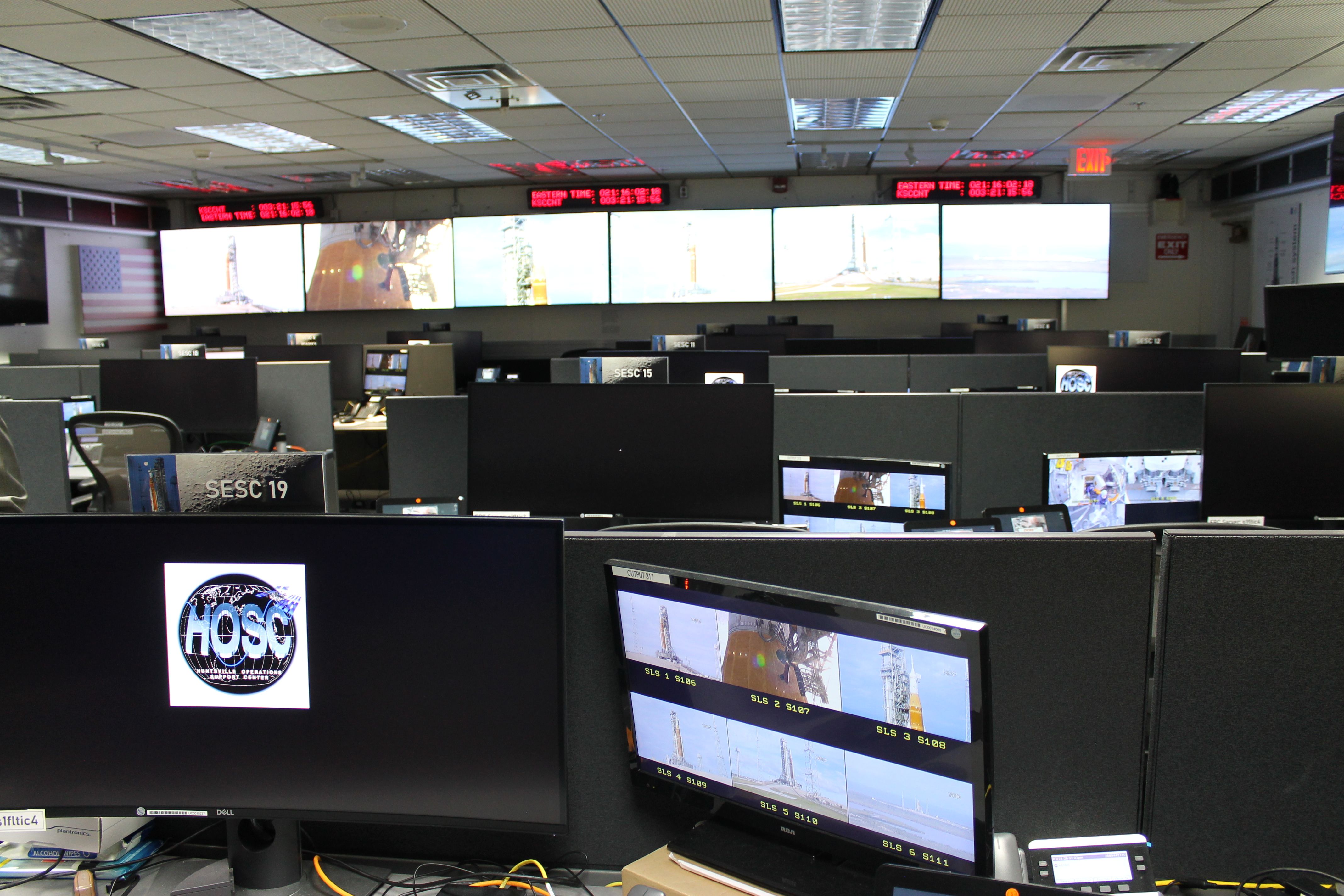
Case in point: "This is one of the most complex machines that humans have ever created," said Dave Reynolds, booster program manager for SLS.
- As Artemis II goes through the pre-launch routine, including the Wet Dress Rehearsal by Feb. 2, Reynolds will be watching to make sure the boosters perform as planned.
Driving the news: As spaceflight continues to commercialize — including the Human Landing System which will be constructed by SpaceX — NASA officials say SLS is still the best tool for this job.
- "It is the only rocket that can take [a] crew in the Orion spacecraft and large cargoes to the moon in a single launch," said Sharon Cobb, associate program manager for SLS.
Zoom out: Marshall is home to the SLS Engineering Support Center, monitoring mission data and providing support from the ground.
- Also based at Marshall is the Systems Integration Lab, where all software on the SLS is tested on simulators that can mimic real-time launch conditions to see how the rocket would perform.
- Crews will also man control rooms at Marshall around the clock during the 10-day mission, monitoring payload operations for Artemis II. And on Artemis III, they'll do the same for the HLS.
The bottom line: "We still have a frontier to explore, and this is an exploration rocket," Reynolds said, of SLS.