Von Braun's Rocket City legacy, 75 years later

Add Axios as your preferred source to
see more of our stories on Google.
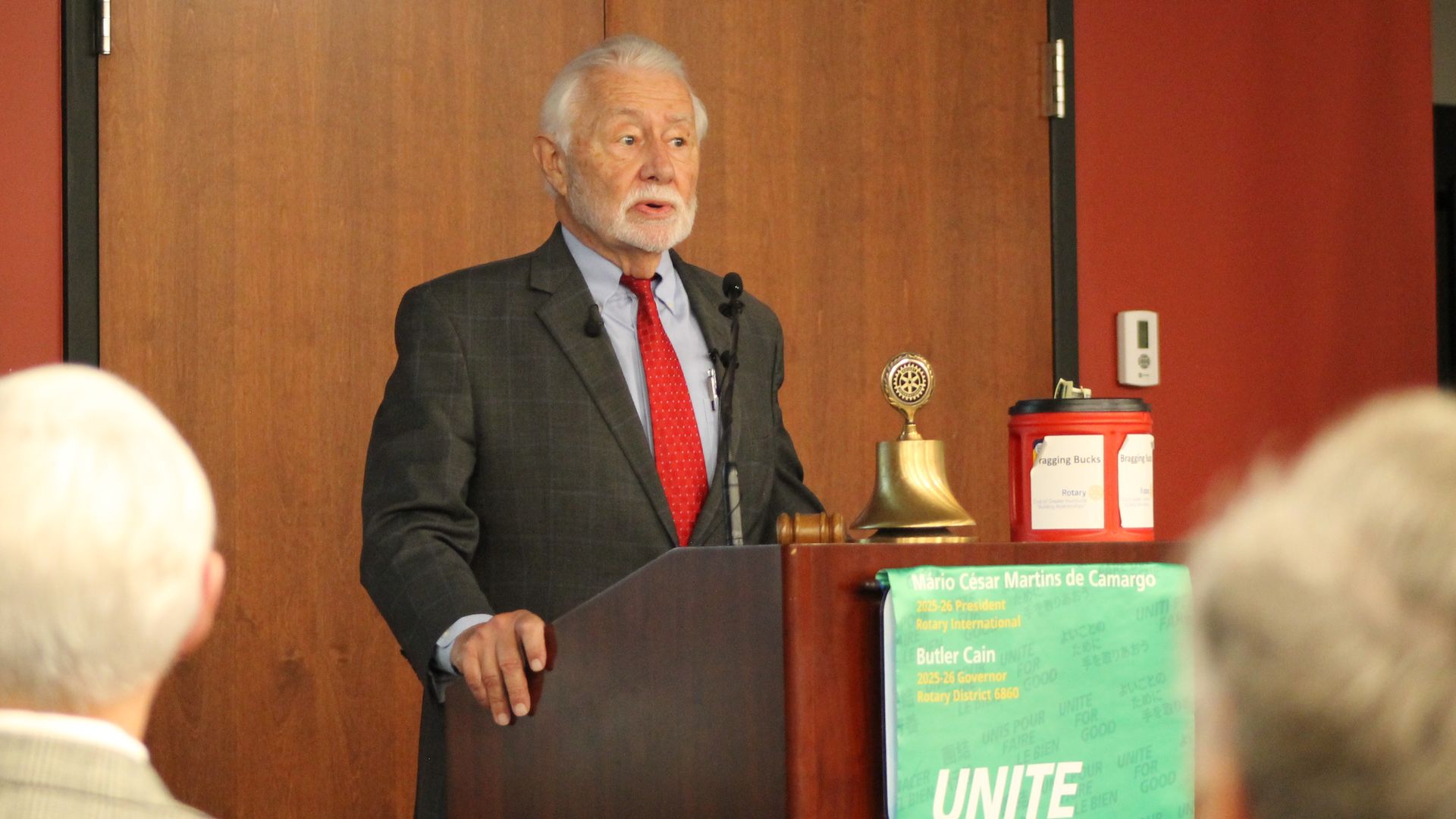
Nothing is impossible if you use the Apollo way, says Ralph Petroff. Photo: Derek Lacey/Axios
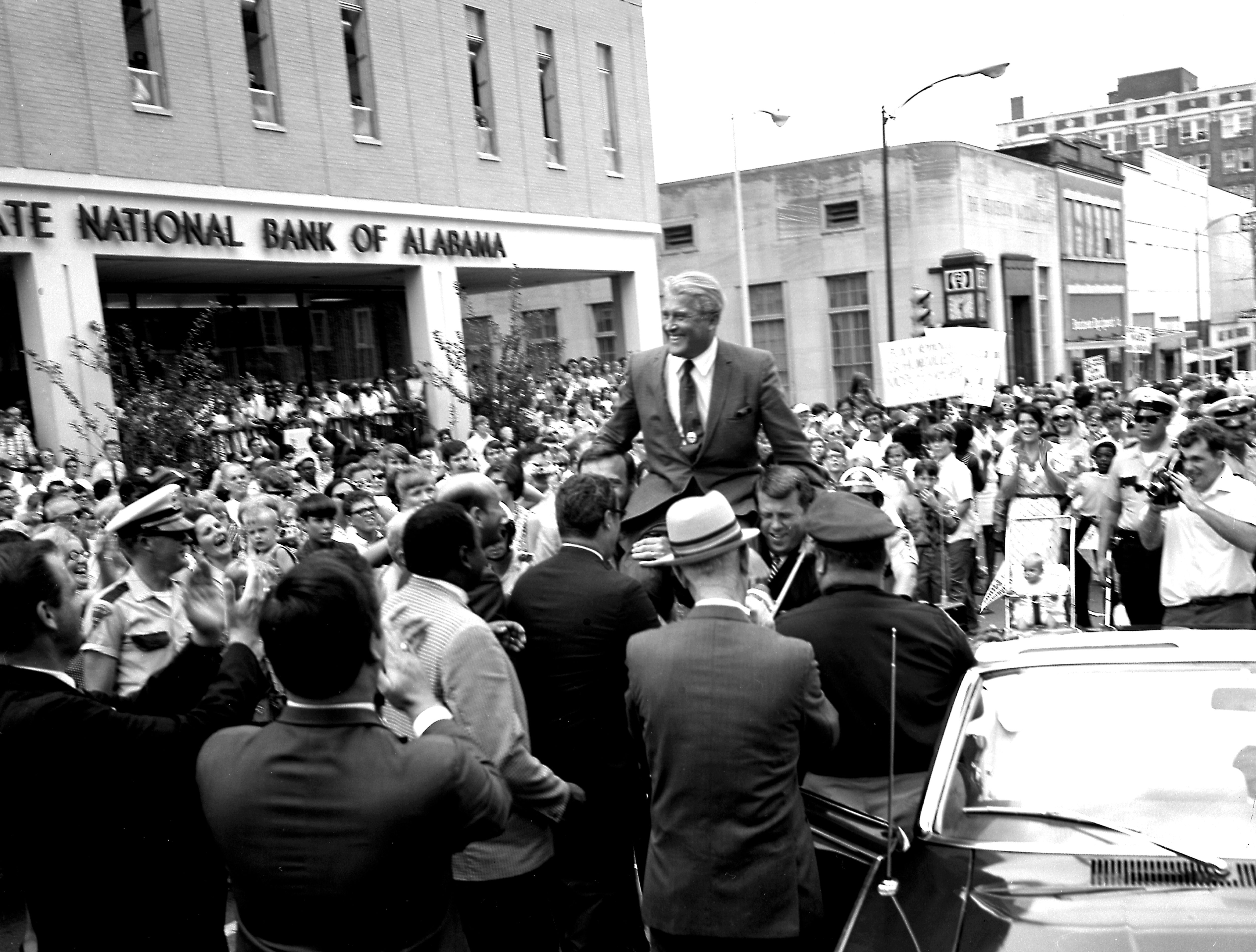
Wernher von Braun stepped off the train in Huntsville 75 years ago.
Why it matters: Von Braun, and the German and American scientists and engineers he worked with, built the rockets that put Americans on the Moon and turned Huntsville into Rocket City.
Driving the news: Ralph Petroff, president emeritus of Huntsville-based Marathon Targets, whose father worked with von Braun in the '60s, said von Braun and his team's work is the greatest legacy of the 20th century.
- "They played the central role in the most historic achievement of the 20th century," Petroff said Wednesday at the Rotary Club of Greater Huntsville.
- He added, "There are people in this room who knew [von Braun] and worked with him and think he was almost a mythical human being who could accomplish so much and was decent and kind."
Zoom in: Petroff believes future historians will look back at the 20th century and mark July 20, 1969, as its most important date.
- He hopes to make Apollo Day a global holiday, starting this year, when it will fall just a couple of weeks after America's 250th birthday.
Yes, but: "There are other people who, many of them never met him and who are from out of town, and they go, 'Oh my gosh, you named the civic center after a Nazi?'" he said.
- "It's very easy from 80 years past to say, 'Oh, I would have done this. I would have done that,' but you have to put yourself in their shoes," said Petroff, whose parents both nearly died in Nazi prisons.
- Petroff said he once asked his father, Peter Petroff, how he could work with those who imprisoned him and was told, "These boys, they were 'little n nazis,' they weren't true believers."
Catch up quick: Von Braun told his parents at age 13 that he'd go to the Moon one day, graduated college at 20, earned his Ph.D. two years later and was leading a 1,000-person team by 24.
- He was arrested in 1943 by the Gestapo, and was almost executed for not being sufficiently dedicated to the war effort, Petroff said.
- Surrendering to the Americans, von Braun and his team became what his chief scientist Ernst Stuhlinger called "prisoners of peace," eventually landing in Huntsville in 1950.
- He began recruiting GI Bill grads from Deep South schools like Auburn and Georgia Tech, who worked with their former enemies to win the Space Race.
"The Apollo Way is putting aside your differences and focusing on the mission," Petroff said.
- It also means having a crystal-clear mission, embracing failure and using the word "impossible" with the greatest of caution.
The bottom line: "What makes Huntsville unique?" he said. "We make dreams come true, and we get along despite our differences. We did the heavy lifting, we sold the program, got it funded, but we never get the credit for it."