ISS Crew-11 astronauts bring the view from orbit to Marshall

Add Axios as your preferred source to
see more of our stories on Google.
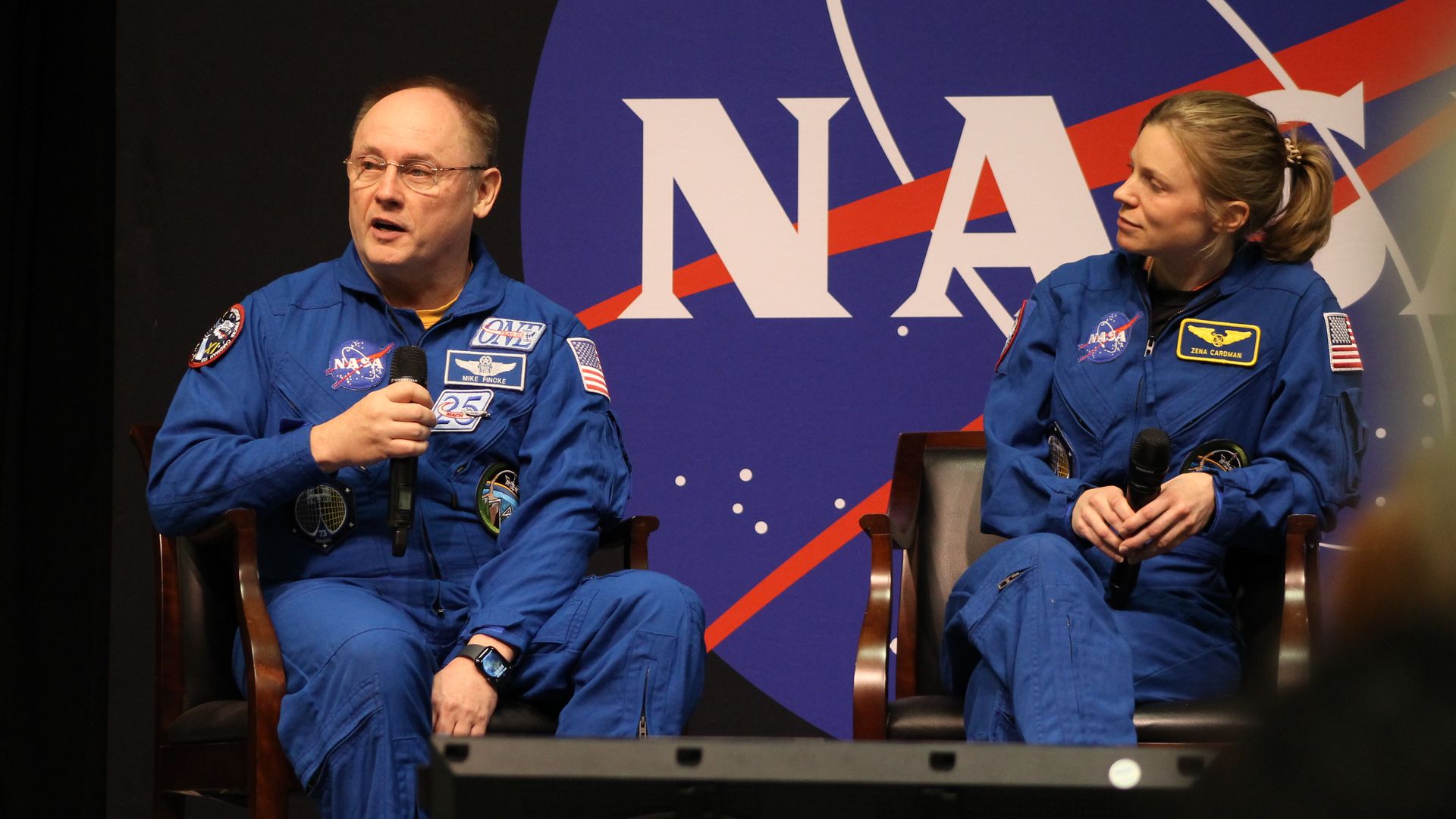
Astronauts Mike Fincke and Zena Cardman took questions at Marshall Space Flight Center Wednesday. Photo: Derek Lacey/Axios
Astronauts from the International Space Station stopped in Huntsville Wednesday to talk with folks they communicated with over five months in space.
Why it matters: ISS astronauts work in close concert with folks on the ground at Marshall Space Flight Center in Huntsville as they conduct scientific experiments in orbit.
Zoom in: NASA's SpaceX Crew-11 astronauts Zena Cardman and Mike Fincke and JAXA astronaut Kimiya Yui recapped their five-and-a-half-month mission and what's stuck with them since coming back to Earth.
- The Crew-11 mission was cut short due to a medical issue, prompting the first-ever medical evacuation of the space station in January.
Catch up quick: Marshall's Payload Operations Integration Center, which recently celebrated 25 years supporting the ISS, is NASA's primary space station science command post, coordinating experiments and payload activities.
What they're saying: "It puts the human in human spaceflight," Cardman said, on meeting people that the crew worked with so much in space.
- "It's the people that you talk with on the day-to-day that really make it feel like an expedition and something that we can only do as human astronauts."
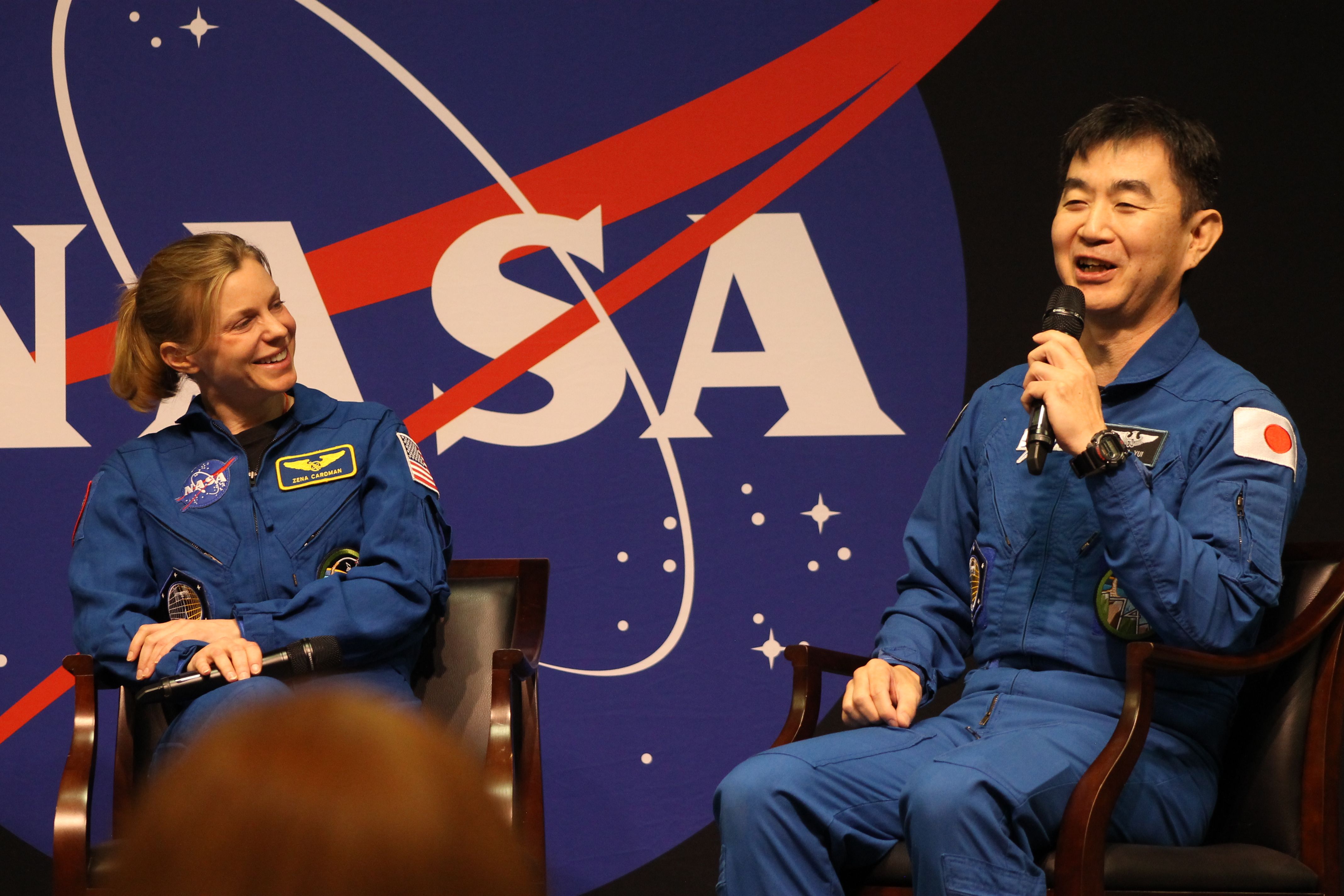
Inside the room: Questions at the event ranged from big-picture, existential reflections to nuts-and-bolts feedback on hardware.
On how the experience shaped the crew's spiritual, societal or religious views, the message from Fincke and Yui was that seeing all of Earth out the window drove home that "we're all brothers and sisters," as Fincke put it.
- Cardman noted that from orbit, she could see impacts of human agriculture and other activities — for better or worse — and seeing her home from so far away made her "homesick for an entire planet."
On feedback for future space station builds, Fincke pointed to two things: more room to live via a habitation module, and flexibility to incorporate new technology.
- The ISS currently has ethernet cables running along the walls, said Fincke, an astronaut for 30 years, and he recalled friction when laptops were first brought on board. Now it's tablets and iPhones.
Driving the news: NASA announced Tuesday that it's focusing on building a Moon base and aiming to launch a nuclear-powered spacecraft before 2029.
- Asked about it by a reporter Wednesday, Fincke said "we all feel incredibly excited," and on nuclear propulsion, an effort spearheaded at Marshall, "We're going to need the help of our friends in Alabama."
- On the growing importance of public-private partnerships in space stations and launches, he said "it was a joy to fly on SpaceX (Falcon 9)" and that "it's going to open up all kinds of new opportunities for our country."