Marshall made: Orion stage adapter ready for launch

Add Axios as your preferred source to
see more of our stories on Google.
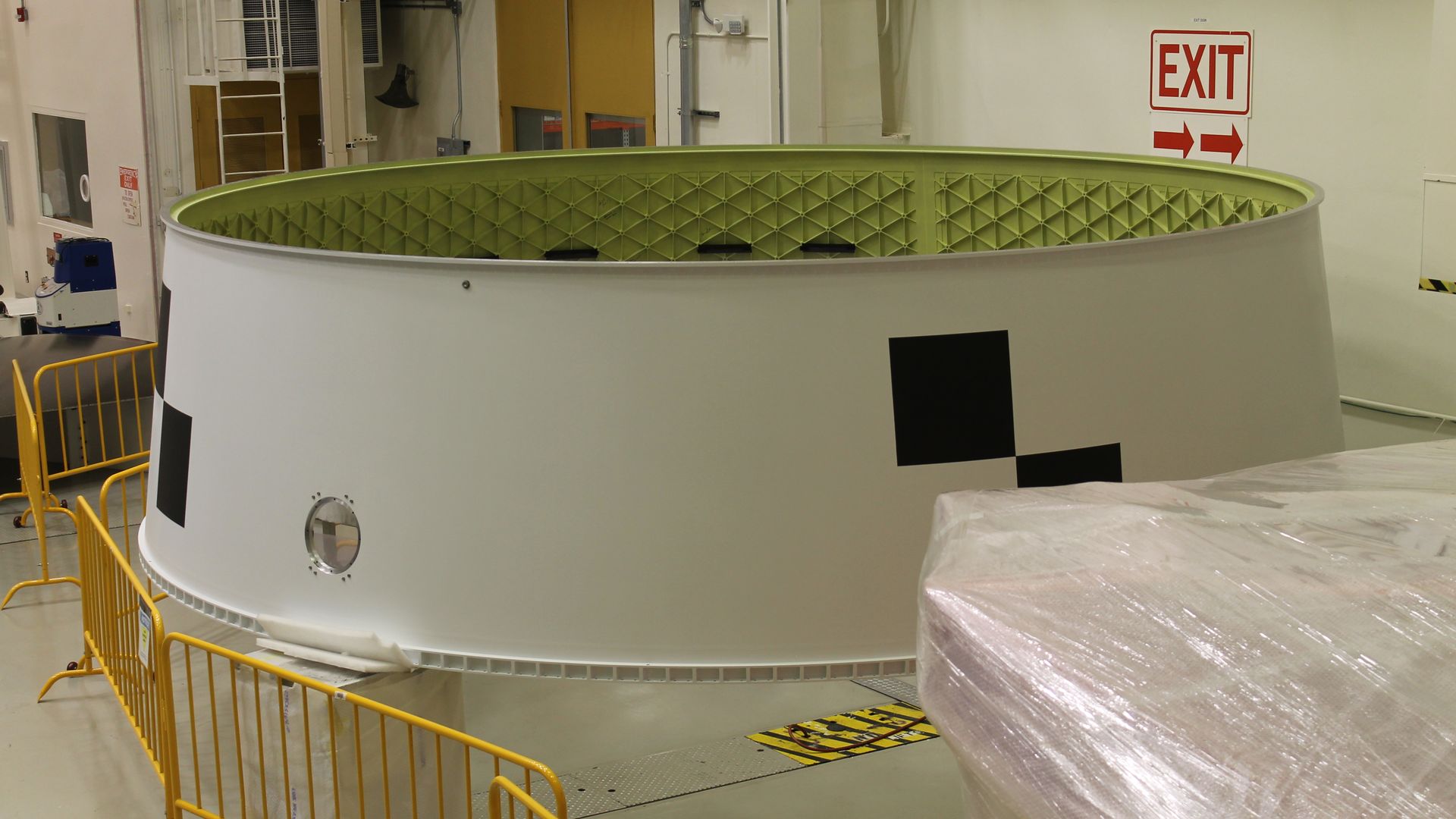
The actual Orion stage adapter for Artemis II is wrapped up and ready to ship. Shown is the virtually identical piece for the Artemis III mission. Photo: Derek Lacey/Axios
Marshall Space Flight Center has wrapped up a key part of next year's crewed moon mission — the Orion stage adapter — now bound for Florida to be stacked atop the Space Launch System rocket for Artemis II.
Why it matters: This is why Huntsville is The Rocket City.
- The adapter was constructed at Marshall and is part of the center's — and Huntsville's — contribution to mankind's exploration of deep space.
Catch up quick: The OSA may not look like a futuristic spaceship part, but it's a crucial component of NASA's most ambitious mission in decades.
- The ring-shaped structure is 5 feet tall, 18 feet in diameter. Inside is a dome-shaped barrier that protects the Orion spacecraft, and the astronauts inside it, from gases that can escape during launch.
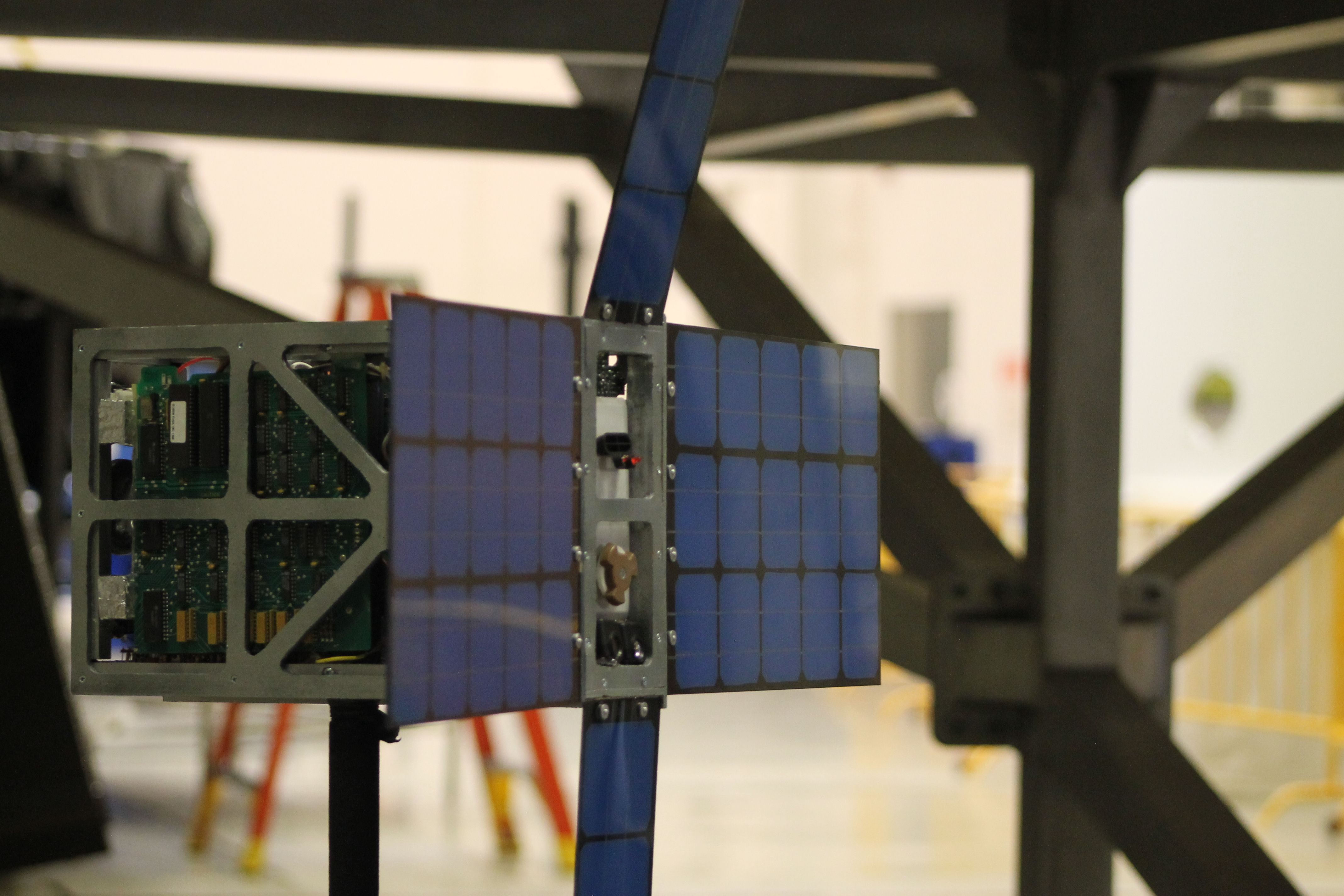
- It's the topmost portion of the Space Launch System rocket, and essentially connects the rocket to the Orion spacecraft. It will also carry four small CubeSats into space, but could potentially hold 17.
The OSA is packed up and soon to be transported via a State Trooper-escorted truck to Kennedy Space Center in Florida to be added to the SLS in preparation for the Artemis II launch early next year.
- It's the culmination of years of hard work at MSFC, officials told media on Thursday.
What they're saying: "It's a sense of accomplishment," said Monique Wallace, OSA deputy lead. "There are many people who've had hands in this, from finance to engineering to technicians, who've done the hands-on work."
- "So to see it finally leave and to be integrated into the vehicle stack, it will be amazing," she said.
Zoom in: Russell Lane, payload integration lead for SLS, said agreements are in place with Saudi Arabia, Germany, Argentina and South Korea for launching CubeSats.
- They'll gather data on space weather, study radiation's effect on human tissue, test technology for future lunar landers and validate long-range communications systems.
- They're contained in essentially spring-loaded metal boxes, Lane explains, which will open after launch and propel the satellite into space.
How it works: AJ Gallemore is a materials and processes engineer at Marshall, and the OSA's completion, constructed by friction-stir welding its aluminum parts, stirs a lot of pride in him.
- "It's preferred in aerospace applications," he said of the welding method. "It reduces the porosity in a weld, and that capability was already here and present at Marshall."
The bottom line: "The Orion stage adapter is truly something that was designed, analyzed, manufactured at Marshall," he said. "It is a Marshall product for SLS."