The coolest things at the 2026 Space Symposium

Add Axios as your preferred source to
see more of our stories on Google.
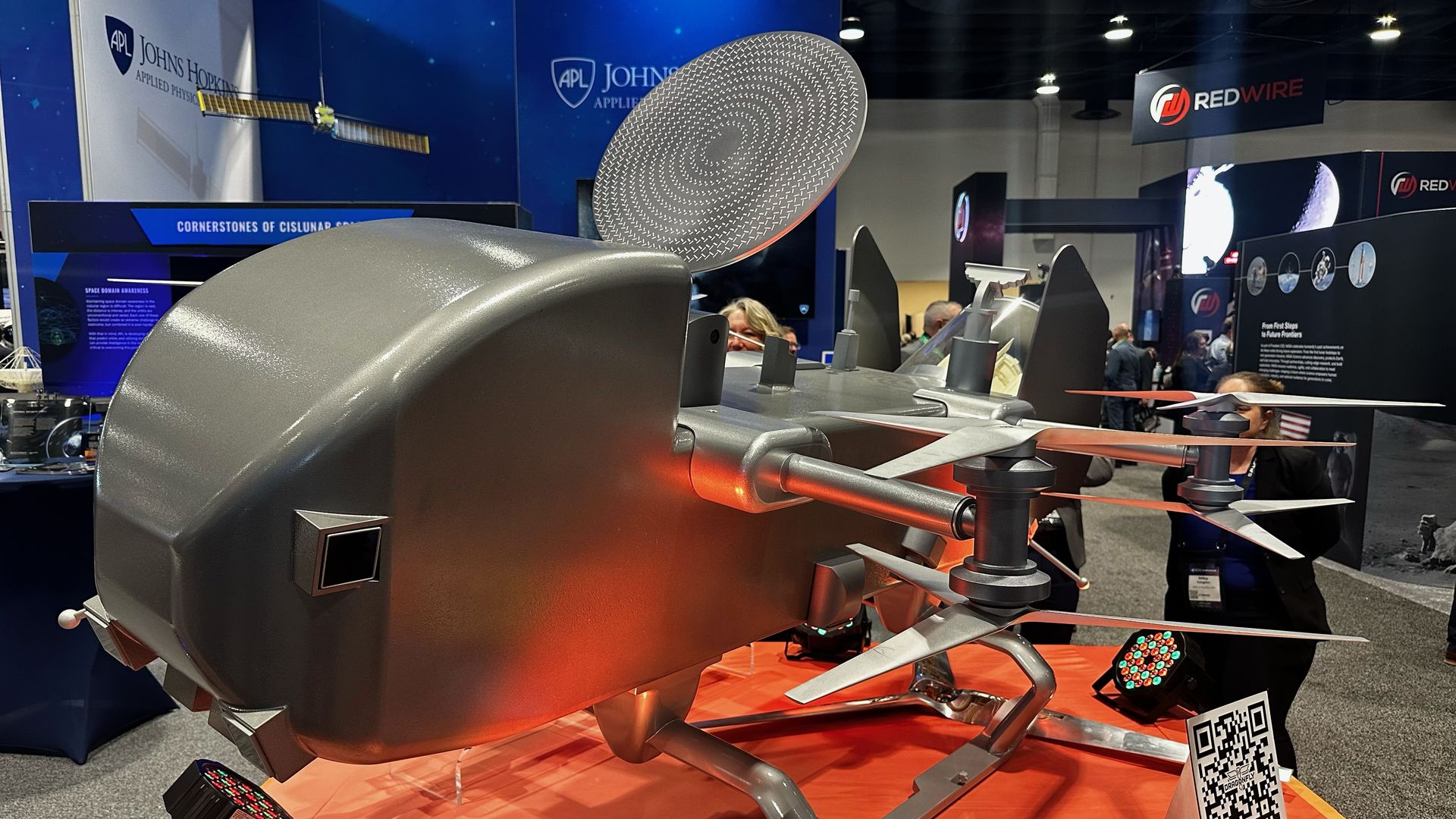
The 41st Space Symposium this week showcased cutting-edge aerospace tech — from NASA's Titan drone to commercial space stations and next-gen rover wheels.
- Yes, but: With basic attendee registration starting at $3,560, most people won't get close to the exhibit floor.
So I did it for you. Here's what stood out.
🚁 Dragonfly rotocraft: The Johns Hopkins University Applied Physics Laboratory booth featured a large model of the rotocopter drone NASA is developing to explore Saturn's moon Titan, slated to launch in 2028.
- The car-sized craft — like something out of "Dune" — is expected to arrive in 2030.
- It will make 30-minute "hops" across Titan's surface, before landing in between to recharge via its nuclear power source.
🛸 Space Station tour: Aerospace company Vast showcased a life-sized model of its Haven-1 space station.
- The company hopes to launch Haven-1 next year as the world's first commercial space station.
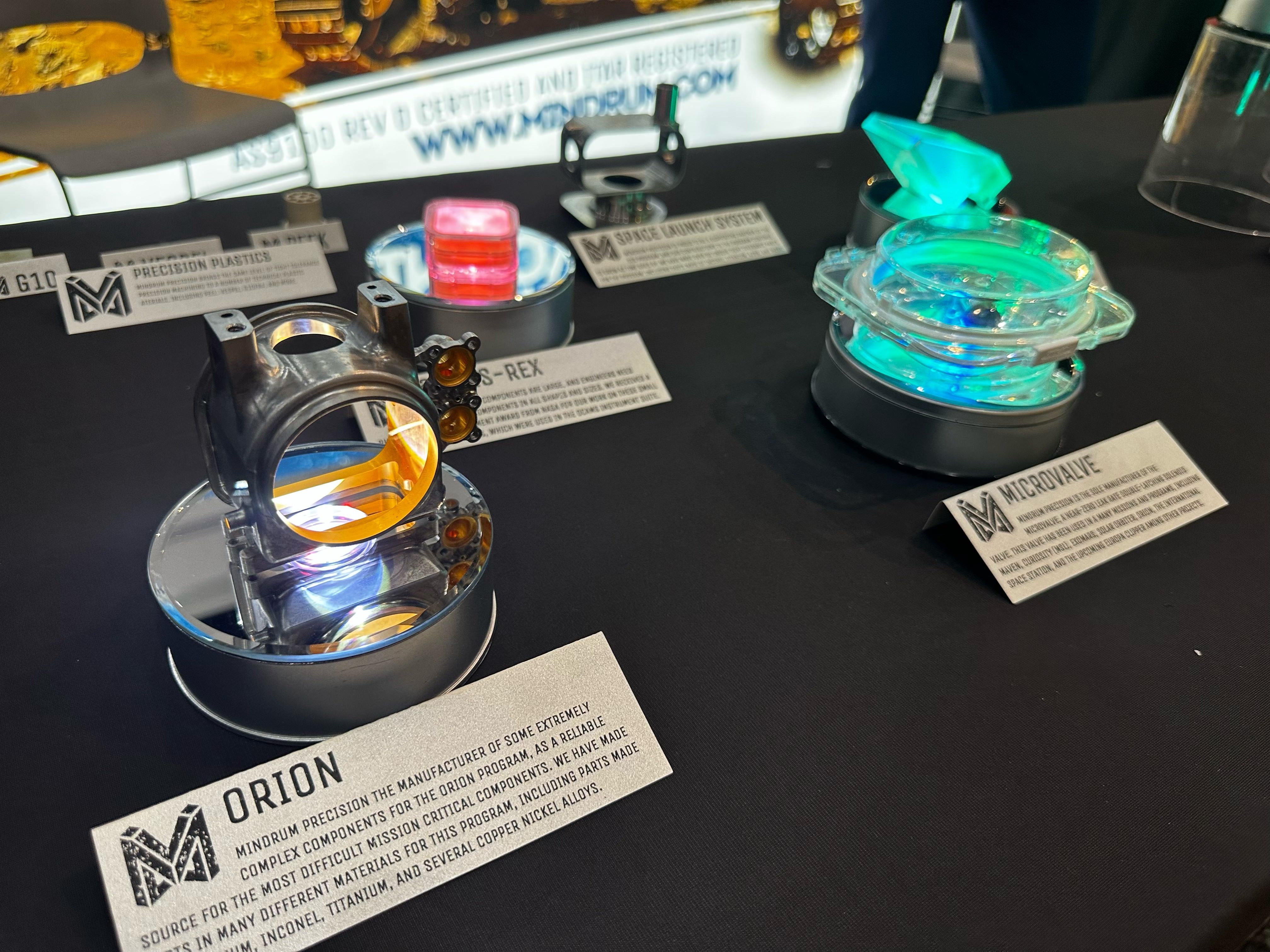
🔎 Space-age glass: Glass and ceramic manufacturers dotted the exhibit floor, highlighting materials critical to aerospace.
- Glass is used in cockpits, instrument panels and optical sensors.
- Ceramics offer a rare mix of strength, light weight and heat resistance.
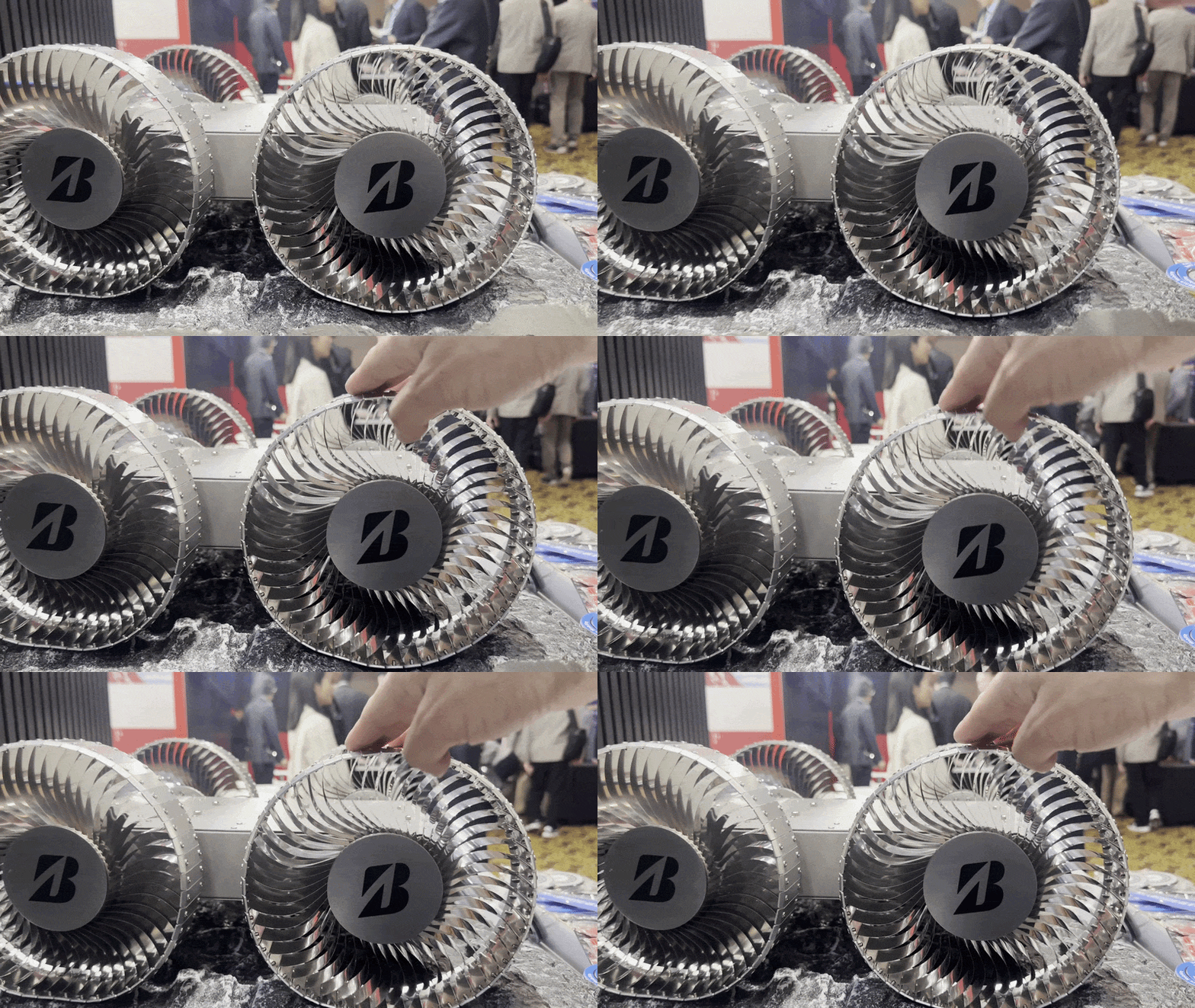
⚙️ Rover wheels: Bridgestone showcased its steel-alloy wheels designed for Moon and Mars rovers — lighter and more maneuverable than past designs.
🇦🇺 Australia's pavilion: The symposium featured 24 national space agencies and hundreds of international exhibitors.
- But Australia stood out — with its own lively pavillion that doubled as one of the event's most social hubs.
🛰️ Orion VR: Lockheed Martin — a major aerospace player — brought a VR experience simulating NASA's Orion crew capsule, part of the Artemis missions.