UC's student-built satellite deploys into orbit

Add Axios as your preferred source to
see more of our stories on Google.
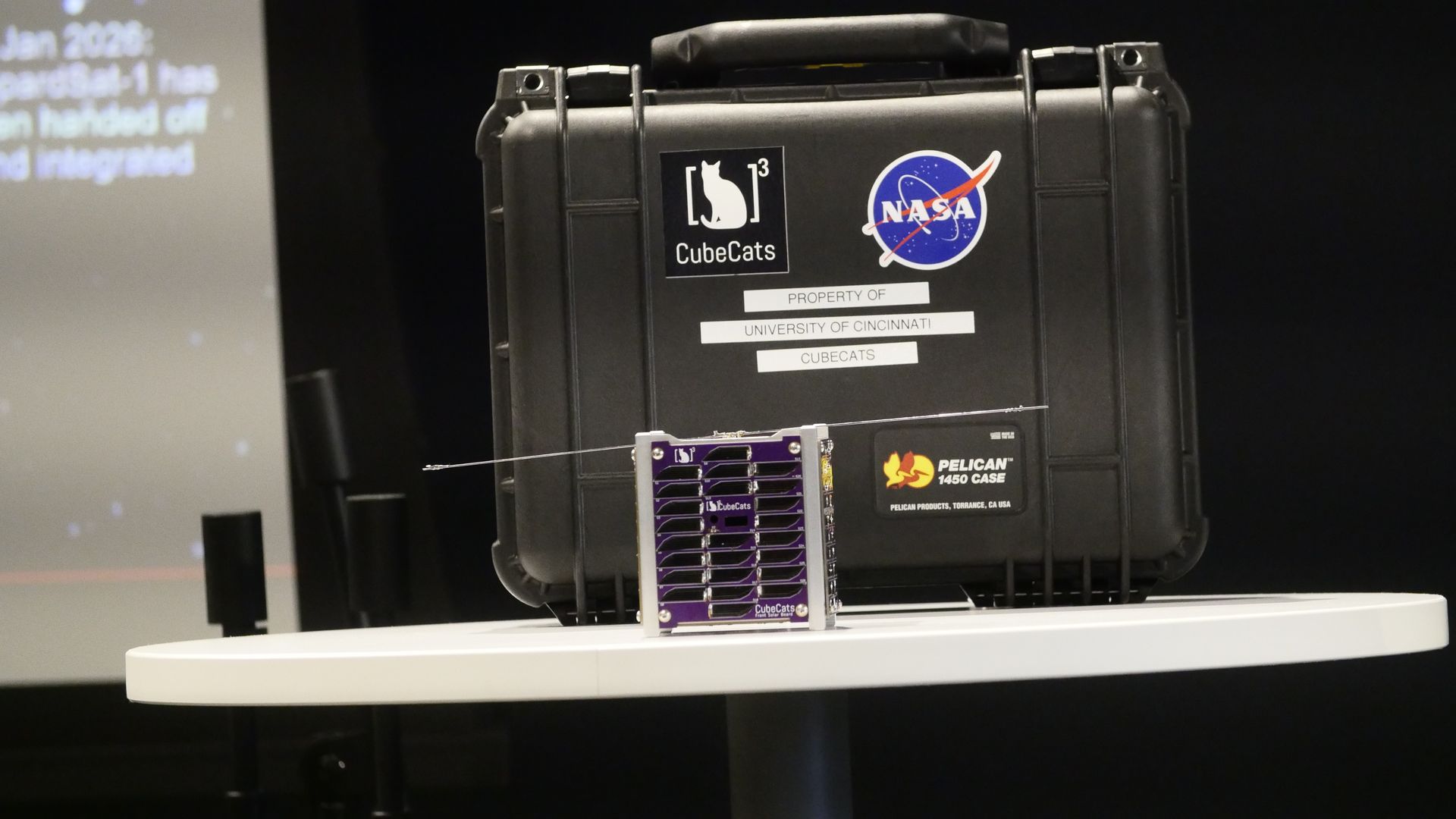
The small purple box is LEOPARDSat-1, the UC CubeCats' Earth-orbiting satellite. Photos: Courtesy of the University of Cincinnati/UC CubeCats
University of Cincinnati students are celebrating a milestone nearly a decade in the making after astronauts released their satellite from the International Space Station.
Why it matters: Researchers hope the mission will help design safer spacecraft and spacesuits for future deep-space missions.
State of play: A multigenerational collection of Bearcats spent nearly eight years building LEOPARDSat-1, Ohio's first student-created satellite.
- It's collecting data in low Earth orbit as of early July.
"My parents told me to shoot for the stars in a figurative sense," said Nathan Nguyen, former president of UC CubeCats, the student-led organization behind the project.
- "I guess I decided to take that advice literally."
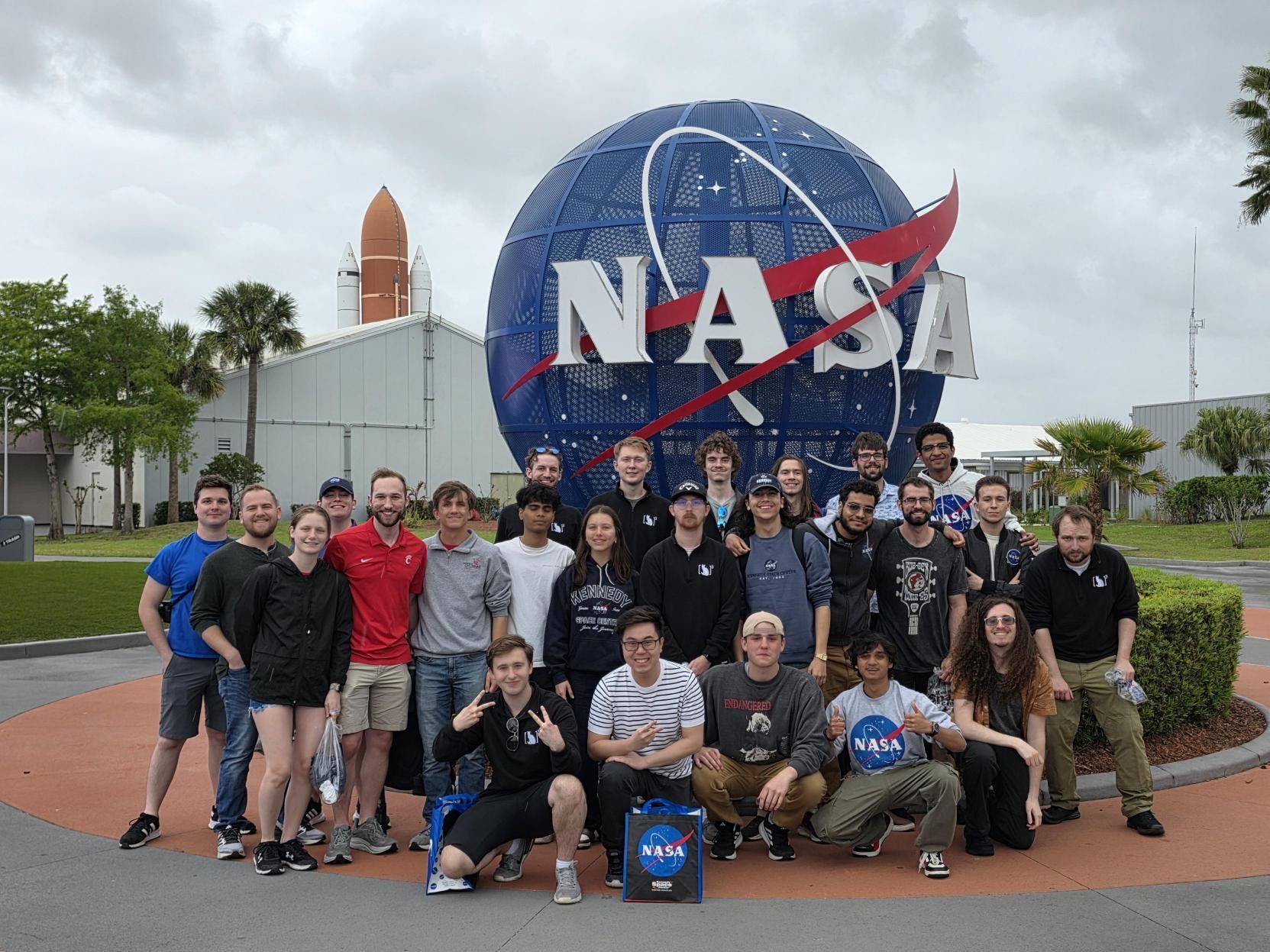
The backstory: The project began with a research idea in 2018, when students pitched a lightweight radiation-shielding material to NASA's CubeSat Launch Initiative.
- The program covers the launch costs for student-led projects.
Between the lines: Building a satellite is difficult. Building one as a student organization is even harder.
- About 30 students contributed as LEOPARDSat-1 passed from one generation of Bearcats to the next, with faculty adviser Donghoon Kim and partners including NASA and L3Harris providing guidance.
- "Normally in projects like these, the No. 1 cost is labor," graduate student Mike Carovillano said. "We, however, are an entirely volunteer organization."
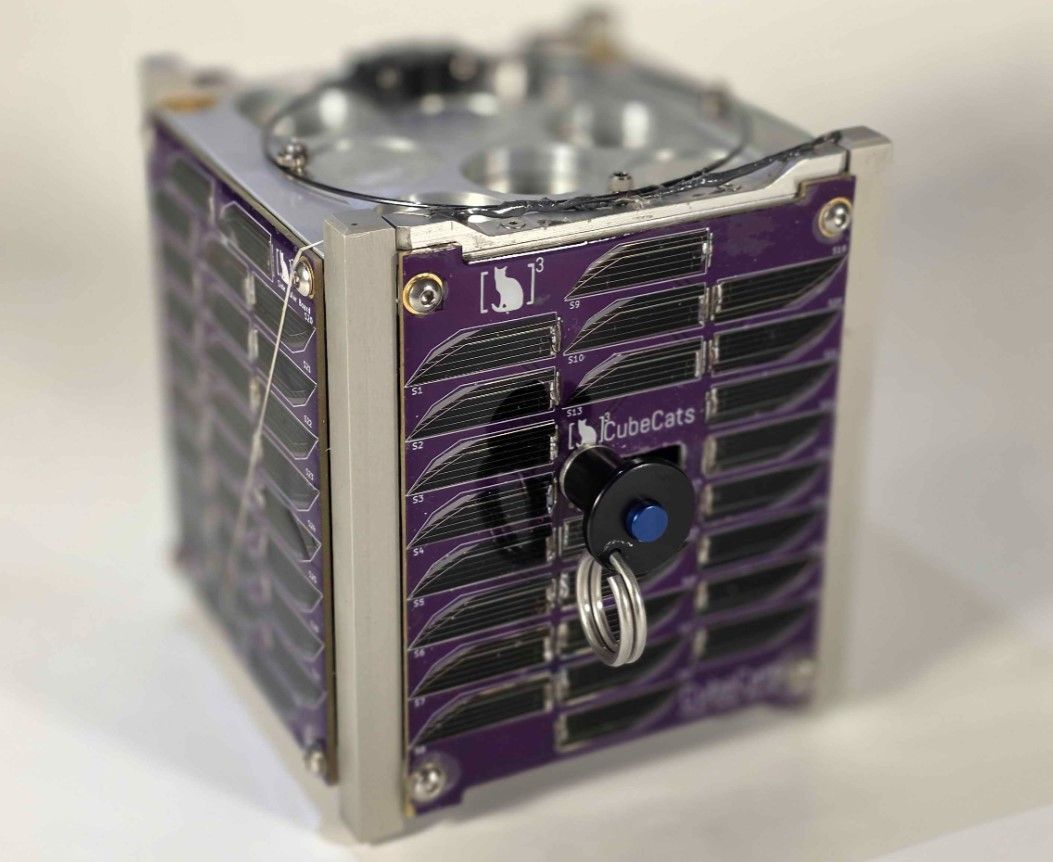
Yes, but: The satellite nearly missed its chance to fly after it failed a deployment test at Johnson Space Center by thousandths of an inch, forcing students to tear it apart and rebuild it during finals week.
- "Failure wasn't an option," former project manager Samuel Kohls said.
What's next: CubeCats is already building HABSat-1, a larger satellite that will monitor harmful algal blooms in Lake Erie.
- Plans are to launch in 2028.
The last word: "It might be our technology and our tests that kind of add to that mountaintop that people stand upon," Nguyen said.