NASA's Artemis II Moon mission is set to make space history

Add Axios as your preferred source to
see more of our stories on Google.
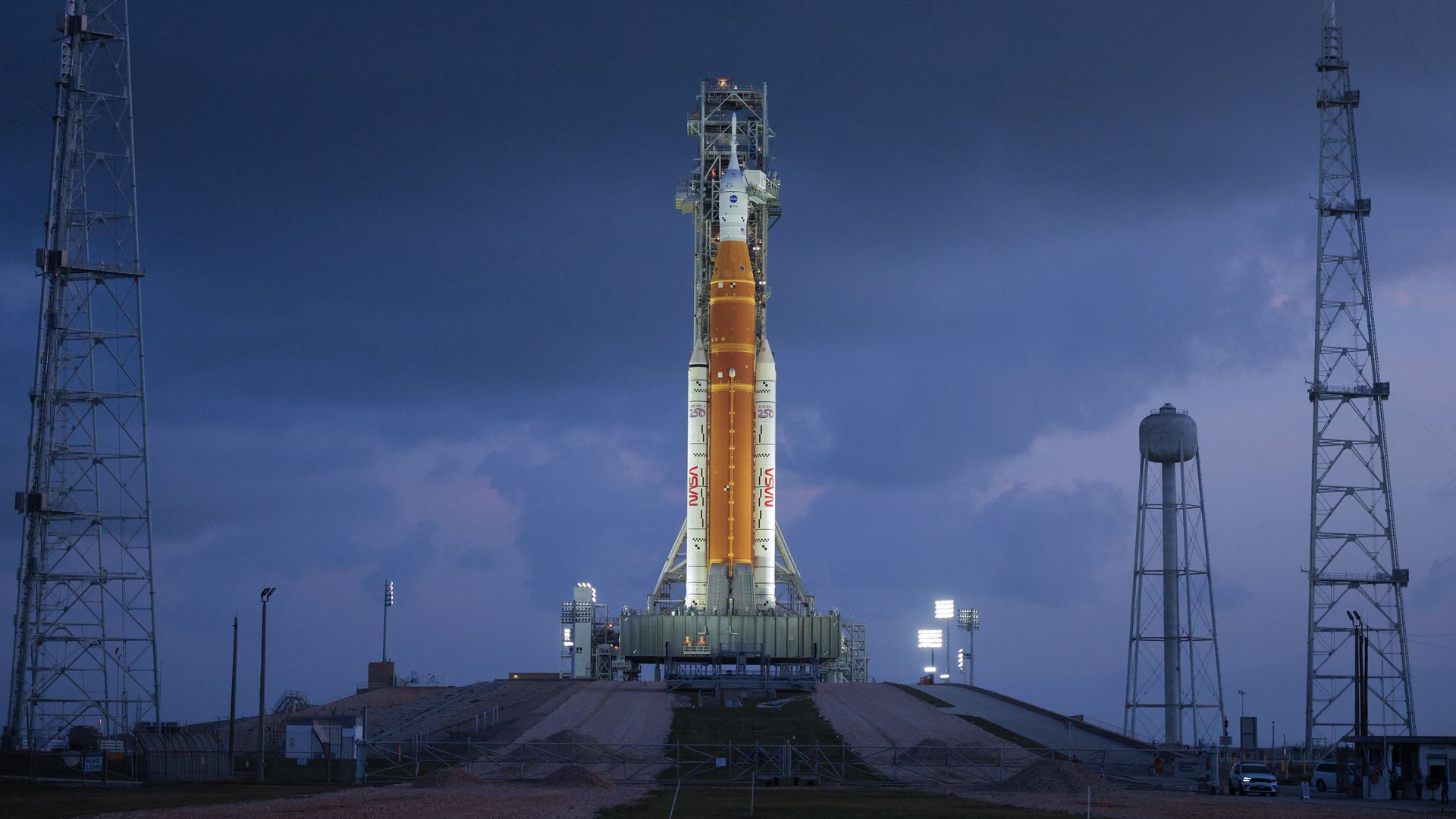
Artemis II sits on pad 39B at Florida's Kennedy Space Center on March 31. Photo: Chip Somodevilla/Getty Images
Just a few hours remain in the countdown for Artemis II, NASA's mission to return astronauts to lunar orbit for the first time since the Apollo era.
- The agency's new lunar hopes and dreams are sitting on pad 39B at Florida's Kennedy Space Center in the form of a 322-foot-tall rocket set to launch three Americans and one Canadian on a 10-day flyby of Earth's nearest celestial companion.
Why it matters: The mission — a crewed dress rehearsal for a lunar landing, like Apollo 8 and 10, decades ago — will set several space milestones.
- NASA astronauts Victor Glover and Christina Koch will become the first person of color and woman, respectively, to travel beyond low Earth orbit
- Canada's Jeremy Hansen will become the first non-American to voyage beyond that mark.
What they're saying: NASA chief historian Brian Odom tells Axios' Derek Lacey: "I think this [mission] signals a picking up where we last left off."
- "There's still that 'shoulders of giants' mentality."
What we're watching: The two-hour launch window opens Wednesday at 6:24pm ET. (Watch live on NASA's YouTube channel.)
- If needed, the next window opens Thursday at 7:22pm ET. Space travel can be unpredictable, after all.
Case in point: The Artemis II "stack" — that's the Space Launch System (SLS) rocket plus the Orion spacecraft atop it — had to be rolled back into its hangar in late February to fix technical issues that prevented an earlier launch attempt.
- The SLS is a NASA-led Boeing/Northrop Grumman/United Launch Alliance/Aerojet Rocketdyne endeavor, while Orion is a Lockheed Martin/Airbus Defense and Space effort.
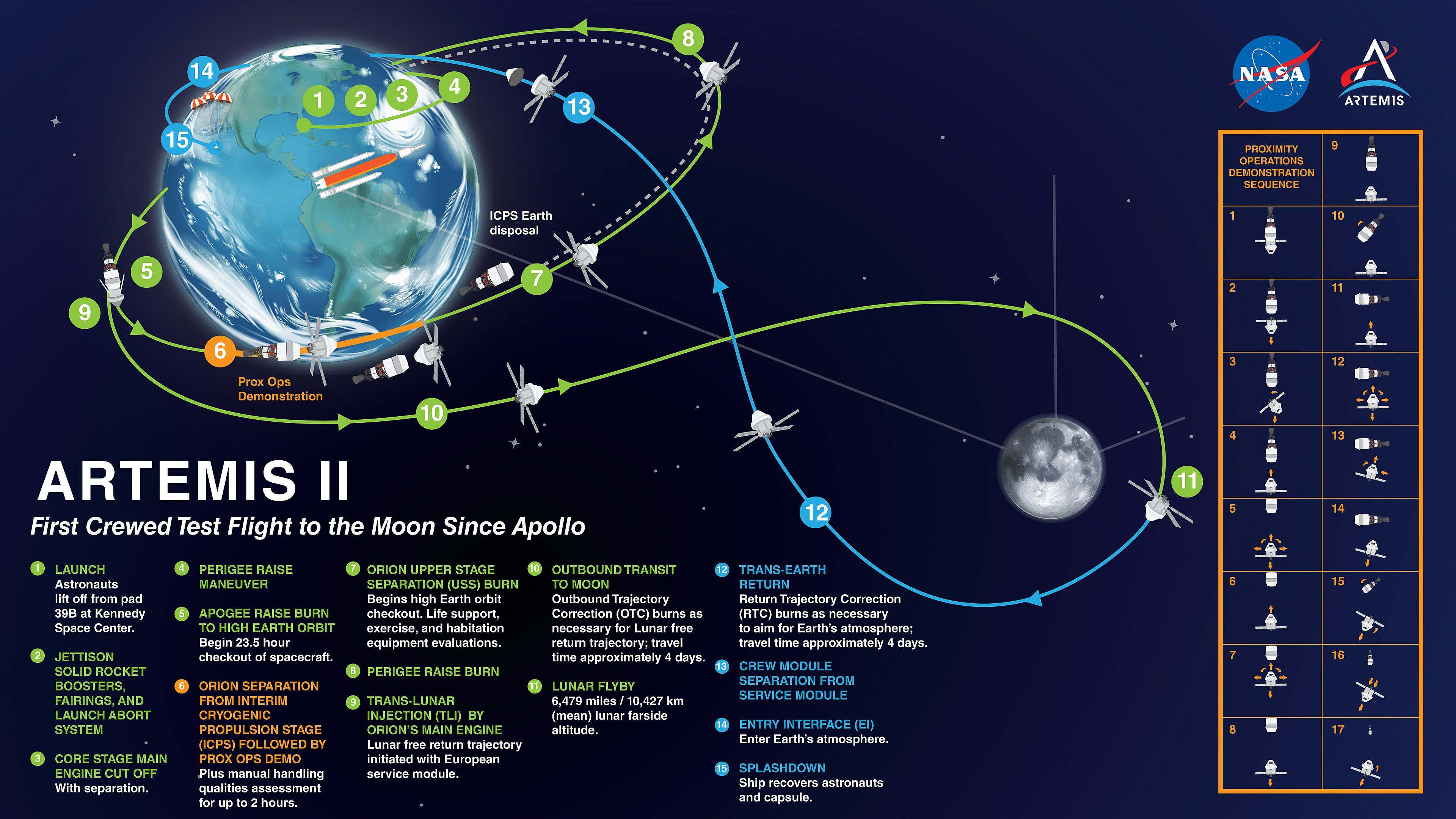
Between the lines: While no small feat, Artemis II is only a lunar flyby.
- NASA once planned a Moon landing with Artemis III, but recently rejiggered its schedule.
- Artemis III will now involve testing one or both of SpaceX and Blue Origin's lunar lander vehicles in low Earth orbit. A Moon landing is now targeted for Artemis IV in 2028.
What's next: NASA eventually hopes to return to the Moon annually, if not more often, with the ambitious goal of establishing a lunar base.
- But first: A quick visit to check out the cosmic neighborhood before getting into the real estate market.
