"We're in too deep": THC businesses brace for ban

Add Axios as your preferred source to
see more of our stories on Google.
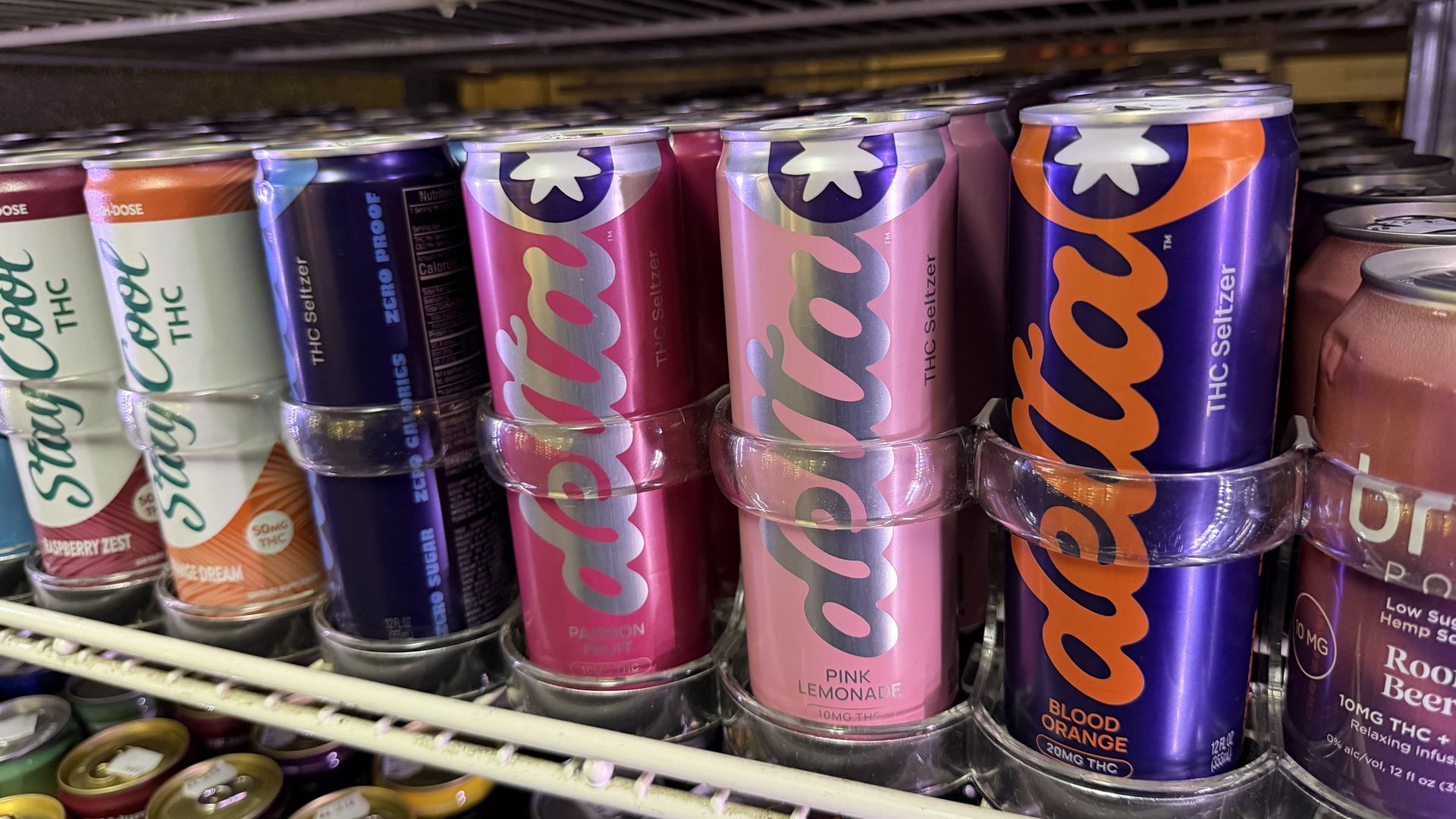
Photo: Alexandria Sands/Axios
As Dec. 11 gets closer, it's looking more like the federal ban on most intoxicating THC products could become a reality, disrupting a $28 billion industry.
Why it matters: The hemp-derived gummies, vapes and seltzers that have become so common in North Carolina won't disappear overnight. But they could become far less accessible as businesses weigh the financial risk of remaining open.
State of play: Technically, North Carolina's state laws around hemp are not changing. This new federal law narrows the definition of hemp, but the state's much broader definition will remain intact.
- However, businesses that continue to sell federally prohibited THC products after Dec. 11 will be vulnerable to federal charges and raids, and they may run into issues with banking and leases, UNC law professor Phil Dixon says.
- Many are hoping the ban, if it does go into effect, will be short-lived and Congress will relegalize most THC in early 2027, especially as newly elected Democrats take office.
Here's how three businesses are bracing for the ban.
Crowntown Cannabis Dispensary: Crowntown plans to keep its stores across the Charlotte region open. But it will have to make significant changes to how it operates and limit its sales and sourcing to North Carolina, owner Mike Sims tells Axios.
- "Honestly, we're in it too deep," Sims says. "We've got loans and leases that we're responsible for."
- Sims says Crowntown will only sell products produced, grown and manufactured in North Carolina. About 20% of Crowntown's sales are online out-of-state orders, he says.
- Crowntown may be forced to move to a cash-only model if banks decline to work with the business. Sims acknowledges this makes the stores a target for robberies.
- Sims also says some of his shops' landlords have started asking questions or discussing the stores shutting down, while Crowntown remains responsible for the rent.
- But Sims is ultimately hoping to ride out any temporary ban.
- "It's our plan to continue to operate until we're told by our attorneys that we simply cannot safely," Sims says. "Survival in this industry is pivoting to whatever changes or regulations come down the pipeline."
CbdMD: Charlotte-based CbdMD was founded as a CBD company. But it's grown into the full-spectrum THC space over the last few years, including launching its popular Oasis drink line, which is distributed to several states.
- Now, it's preparing to reverse course. About half of its hemp products will be affected by the ban, CEO Ronan Kennedy tells Axios. As a publicly traded company, it won't operate in violation of federal law, Kennedy says.
- In November, it closed on an acquisition of Twinlab, a traditional supplements business, to diversify its revenue streams.
- Kennedy says CbdMD's sales are strong right now as consumers try to stock up. Many in the industry are telling customers to stockpile as a marketing tactic to liquidate inventory, he says.
- "We're gonna survive, but the damage is gonna be done," Kennedy says. "Between the employment massacre, people losing their businesses, their livelihoods — it's a shame. It's a failure from our elected officials."
Delta Beverages: Delta Beverages is already feeling the effects of the looming ban and has had to furlough 15 employees, says David Thomas, the Charlotte company's chief strategy officer.
- Business started declining around September as retailers became reluctant to stock THC products.
- Thomas says he's working with a team in Washington, D.C., to push for a "bridge" measure before the Dec. 11 deadline. They're lobbying for a 60- to 90-day extension, giving lawmakers time to stop the outright ban and pen regulations, such as a 21-plus age limit.
- But if that doesn't happen, he says Delta will stop selling noncompliant products. In the meantime, Delta is developing an energy product with terpenes.
- "The good actors are going to stop doing business," he says.