Charlotte could hike property taxes for I-77 repayment

Add Axios as your preferred source to
see more of our stories on Google.
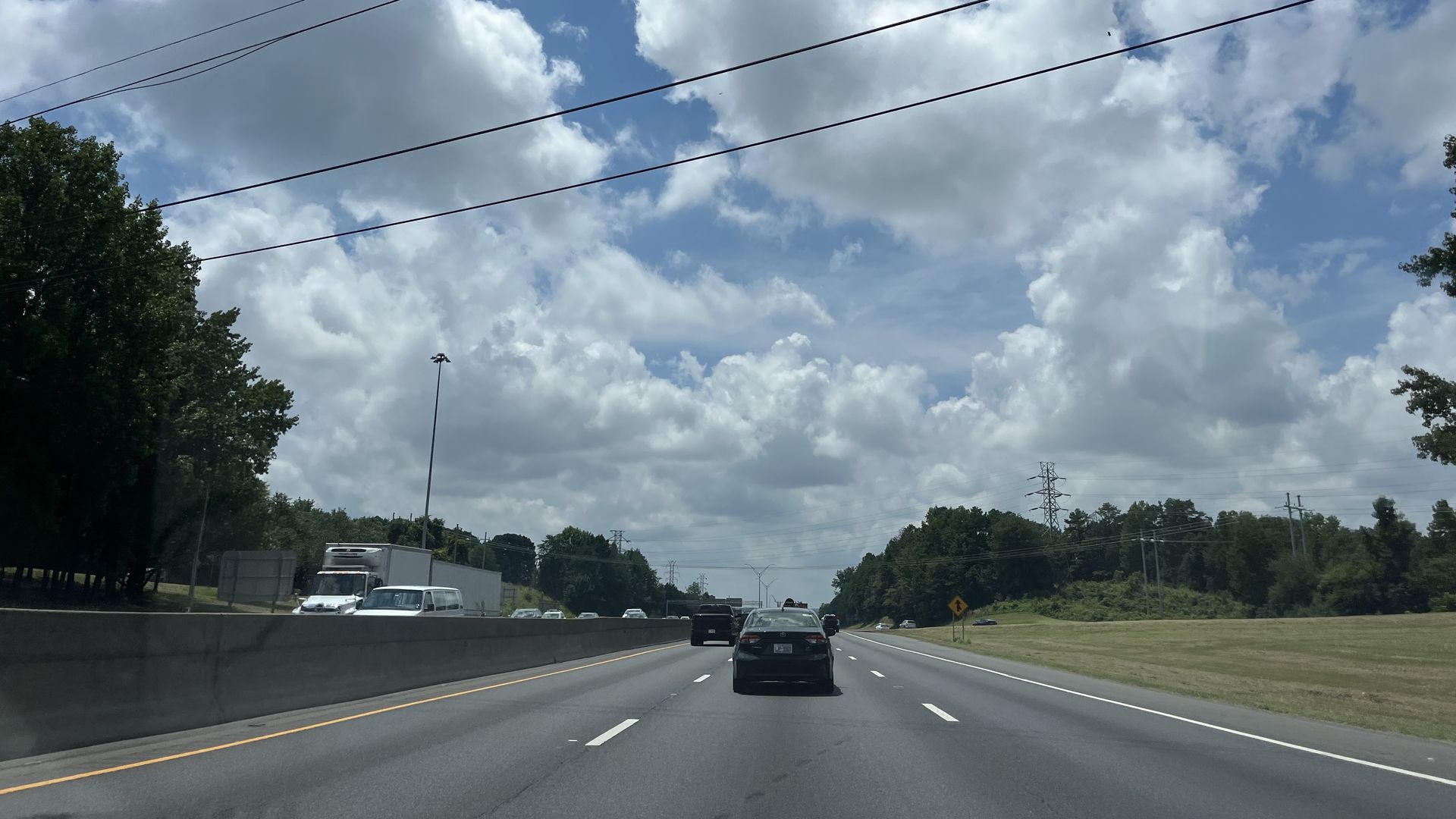
I-77 around 1:30pm on a Wednesday in August 2026. Photo: Alexandria Sands/Axios
If city leaders say no to the I-77 South toll lanes again next Monday, Charlotte may need to raise property taxes so it can repay the $59 million to $69 million that NCDOT says it has spent on the project so far.
Why it matters: That financial penalty — plus NCDOT's offer of "up to" $300 million for unspecified community benefits, which could include grocery stores on the west side — could push one or two swing council members to flip and favor the project again.
- But some council members say they want those perks spelled out in a contract, or want to demand even more from the state transportation agency.
Between the lines: Not only could Charlotte potentially lock in those benefits, but the city could avoid financial consequences if it ends its opposition and allows the project to move forward.
- City staff say they may need to raise property taxes by 0.1 cent or reduce future bond packages for affordable housing or public facilities if Charlotte gets stuck with a bill from NCDOT.
- City staff said they would argue that Charlotte owes less than what NCDOT is suggesting. Staff said the city should only be responsible for expenses going back to 2024, when council originally voted to support the public-private partnership for I-77. NCDOT is currently including all expenses since 2018 in its estimates.
Driving the news: The Charlotte Regional Transportation Planning Organization is scheduled to revote Sept. 23 on whether to support the I-77 South widening, adding toll lanes in both directions for 11 miles between Uptown and the South Carolina border.
- If Charlotte stands firm on its decision to kill the project, that's 31 of the 74 votes on the board, about 42%.
- Mecklenburg County has three votes and could bring the tally to 34 (46%). Charlotte and Mecklenburg County would then only need a few more delegates to join them — or just be absent — to hold the majority at the meeting, as WFAE noted.
Yes, but: Charlotte could indeed flip its vote.
- The city's last vote was a surprise, with the motion to rescind narrowly passing, 6-5. The six votes were Joi Mayo, Malcolm Graham, Renee Johnson, Victoria Watlington, J.D. Mazuera Arias and LaWana Mayfield.
- That means only one person may need to flip back. Mayor Rob Harrington would break a tie.
What they're saying: Council members were not entirely clear where they were leaning on Monday night.
- Council member Graham, who represents parts of the west side, says he has not made a decision. But he says he is not willing to raise taxes or jeopardize bonds. He called for council to demand more of NCDOT, including guaranteed compensation for displaced homeowners and disrupted small businesses.
- Joi Mayo, whose district is also affected by the project, says she has not made a final decision, either. But she mentioned that she often sees a man in a motorized wheelchair crossing a bridge in her area. NCDOT has said it would replace 17 bridges and overpasses as part of the project.
- "Really make sure that you are looking at this project in totality," she told her colleagues. "Is this project great? Not completely, but there are opportunities."
State of play: Many smaller towns — including Monroe, Statesville and Cornelius (two votes each) — have already decided to reverse their "no" votes so they can be exempt from repaying any money, especially since they have smaller budgets.
- The state provision prohibits Charlotte from covering another jurisdiction's penalty, according to the city attorney.