A Charlotte native spent three years searching for the city's soul — and wrote a book about it

Add Axios as your preferred source to
see more of our stories on Google.
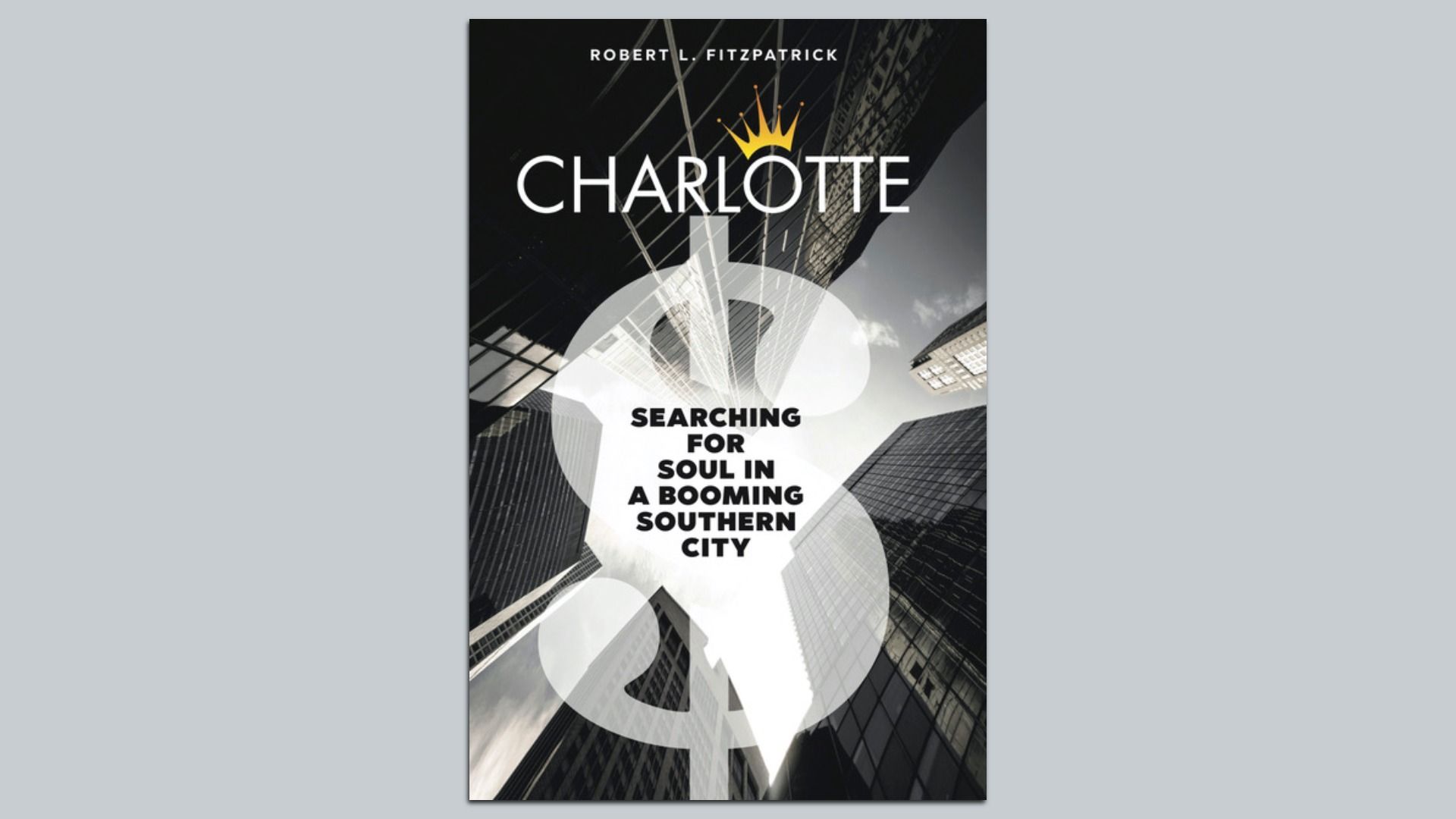
Cover: Provided by Fitzpatrick
Robert FitzPatrick has spent over five decades in Charlotte, but after all that time, he didn't know how to describe the city's soul.
- So, he dedicated three years to searching for it.
Why it matters: Charlotte's debatable lack of culture, identity, character (or whatever else you want to call it) is a persistent pain point for the city. People either want to gripe about it, deny it or not talk about it at all.
The result of FitzPatrick's research is a 355-page book, "CHARLOTTE: Searching for Soul in a Booming Southern City," which he says is the first in-depth examination of Charlotte's character.
Context: FitzPatrick justifies his authority on the matter as both a native and an engaged long-term resident, "which turn out to be rare qualifications in Charlotte," he writes.
- He was a trained community organizer in the '70s and worked in areas like North Charlotte (now NoDa) during some of the city's most formative years.
What he found: As the nation's No. 2 finance center, Charlotte has become so hyper-commercial that even long-term residents can feel exiled, or like they don't truly belong, FitzPatrick explains.
- Simply put, financial interests have always prevailed here, turning the city into a place to make money rather than to live.
- "Everything gets measured in economic terms," he says, "and as a consequence, many of the elements of daily life that make life soulful in a city ... are vitally missing in Charlotte."
- For example, he argues the mass transit system wasn't developed as it should have been because bus riders weren't considered valuable.
- Parks — which studies show the city lacks access to — and art are other missing elements. He points to Charlotte-born artist Romare Bearden, who was renowned in New York but underappreciated here during his lifetime.
- "Art just didn't really figure into the city's culture because it's not a big commercial force," he says.
Case in point: He recalls how Camden Road was once blossoming into an arts hub before Charlotte Art League's lease was terminated in 2017. The area was attracting investors in part because it was strategically coined "Historic South End" in the '90s, even though nearly all the old buildings were torn down and replaced with commercial development.
- Even the name bestowed on the city's urban core was a deliberate branding decision. City leaders officially proclaimed it "Uptown" in 1974 to promote vibrancy rather than a gritty downtown.
What they're saying: "The city spends a lot of money on branding, boosterism, promotions and image building," he said, "and yet it's haunted by this quite devastating critique that the city lacks character and has no soul."
Flashback: FitzPatrick traced Charlotte's "obsession" with economic development back to its early settlers: Scots-Irish Presbyterians who followed Calvinist theology.
- In "The Mind of the South," an influential 1941 book, W. J. Cash wrote about how these Presbyterians saw "making money as doing God's work," FitzPatrick summarizes.
- Over the years, Charlotte has prioritized profits over preserving or acknowledging its history, FitzPatrick concludes.
- Bank of America Stadium, for instance, used to be the site of Good Samaritan Hospital, where Black patients were treated during the Jim Crow era. It was where Charlotte's only recorded lynching occurred. A historical marker recognizing the hospital was eventually erected at the 1996 stadium, but not until 2002.
Friction point: FitzPatrick had to counter many arguments during his writing, such as the idea that people move more nowadays, live online and no longer emotionally attach themselves to places.
- He found that historic preservationists are often accused of being anti-progress or desiring "the old days, misogyny and patriarchy and racism."
Yes, but: FitzPatrick did find glimpses of Charlotte's soul, mostly glaringly in the immigrant population.
- However, he believes Charlotte's immigrants may have felt more exiled following recent ICE and Border Patrol raids. He views the immigrant community as the one area leaders could embrace to make the most immediate impact on the city's culture.
- "Soul has been so beaten down," he says, but adds, "It does show up like fireflies."
The bottom line: "CHARLOTTE" is available on Amazon and at Park Road Books. FitzPatrick will have a discussion and book signing at Park Road Books on Feb. 7 at 2pm.