Highway construction threatens Charlotte's historic Black neighborhoods again

Add Axios as your preferred source to
see more of our stories on Google.
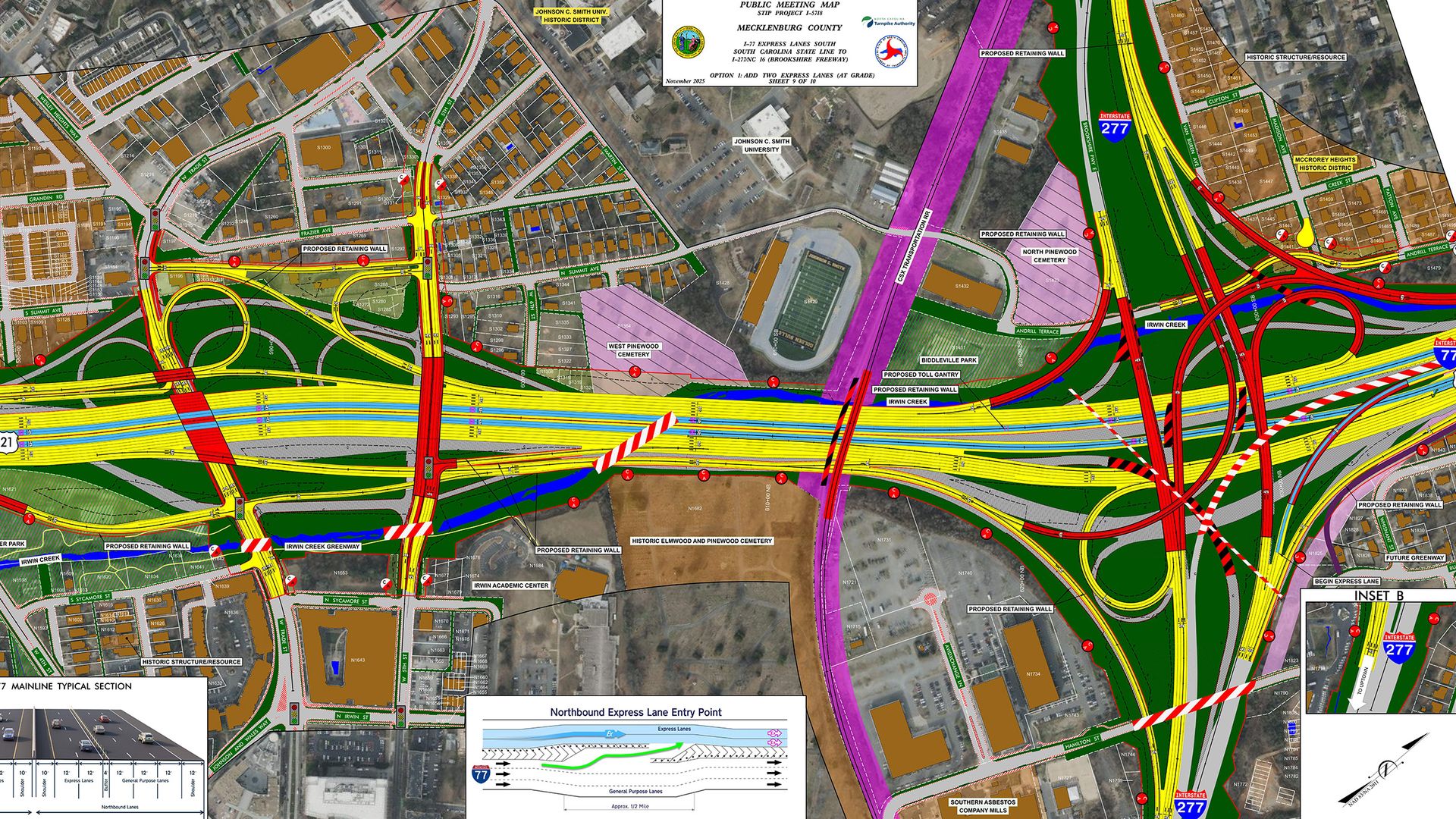
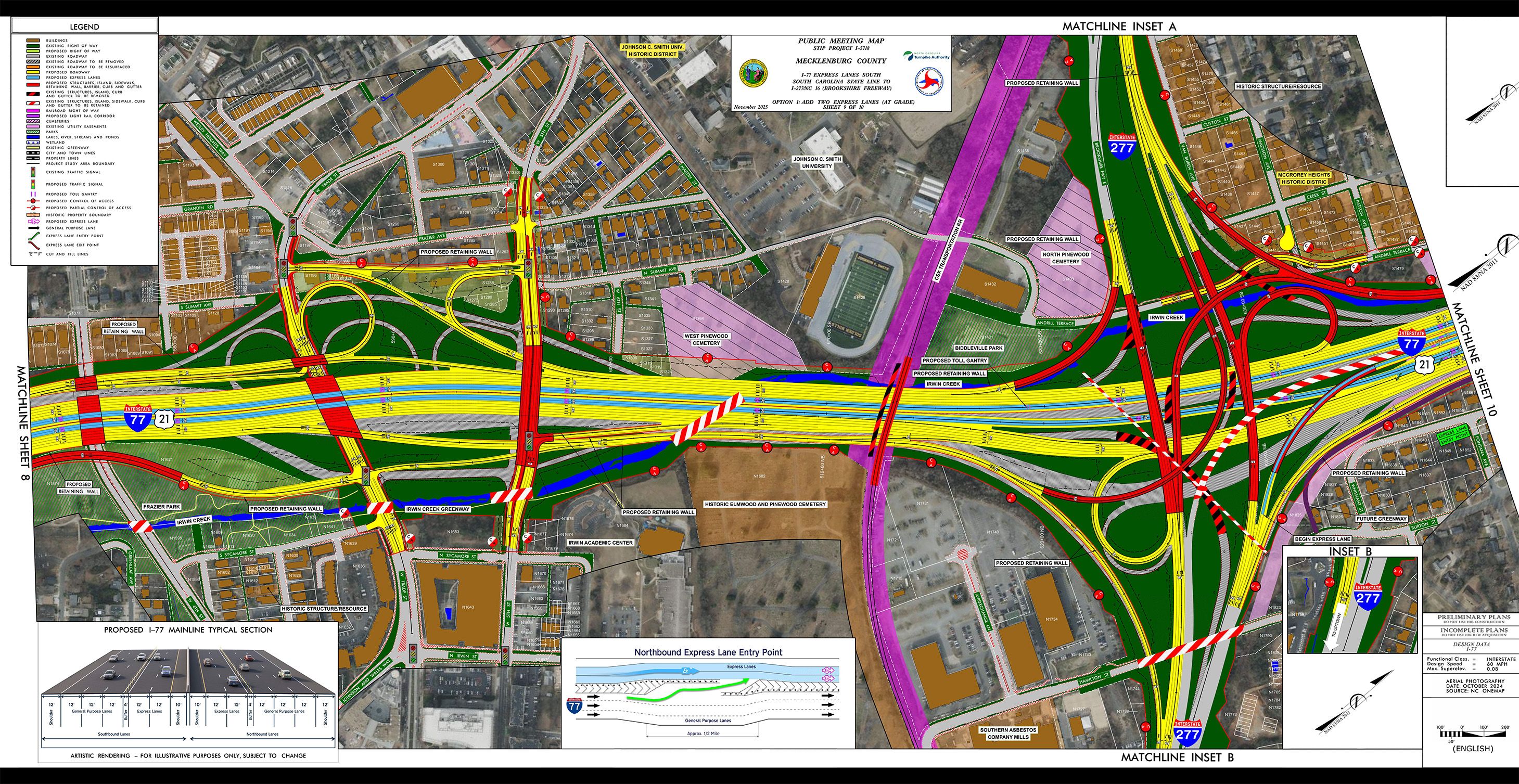
Proposed structures (red) and roadway (yellow) cut into the McCrorey Heights historic district and through Frazier Park. The construction also appears to graze Pinewood Cemetery, an 1853 burial ground for Black Charlotteans that was once separated by a fence from the neighboring white cemetery, Elmwood. The purple is a future rail line. Map: NCDOT
History could repeat itself if the state moves forward with a $3.2 billion preliminary plan to extend I-77 toll lanes along several of Charlotte's Black neighborhoods, potentially threatening homes, parks and historic sites.
Why it matters: In the 1950s-1970s, construction of new highways near Uptown sliced through Black neighborhoods, displacing families, destroying schools, disrupting businesses and plummeting property values.
- "In the name of progress, we undercut, undermine, shortchange Black communities in Charlotte," said city council member Malcolm Graham, who represents many of the affected areas.
- "We cannot have that happen again."
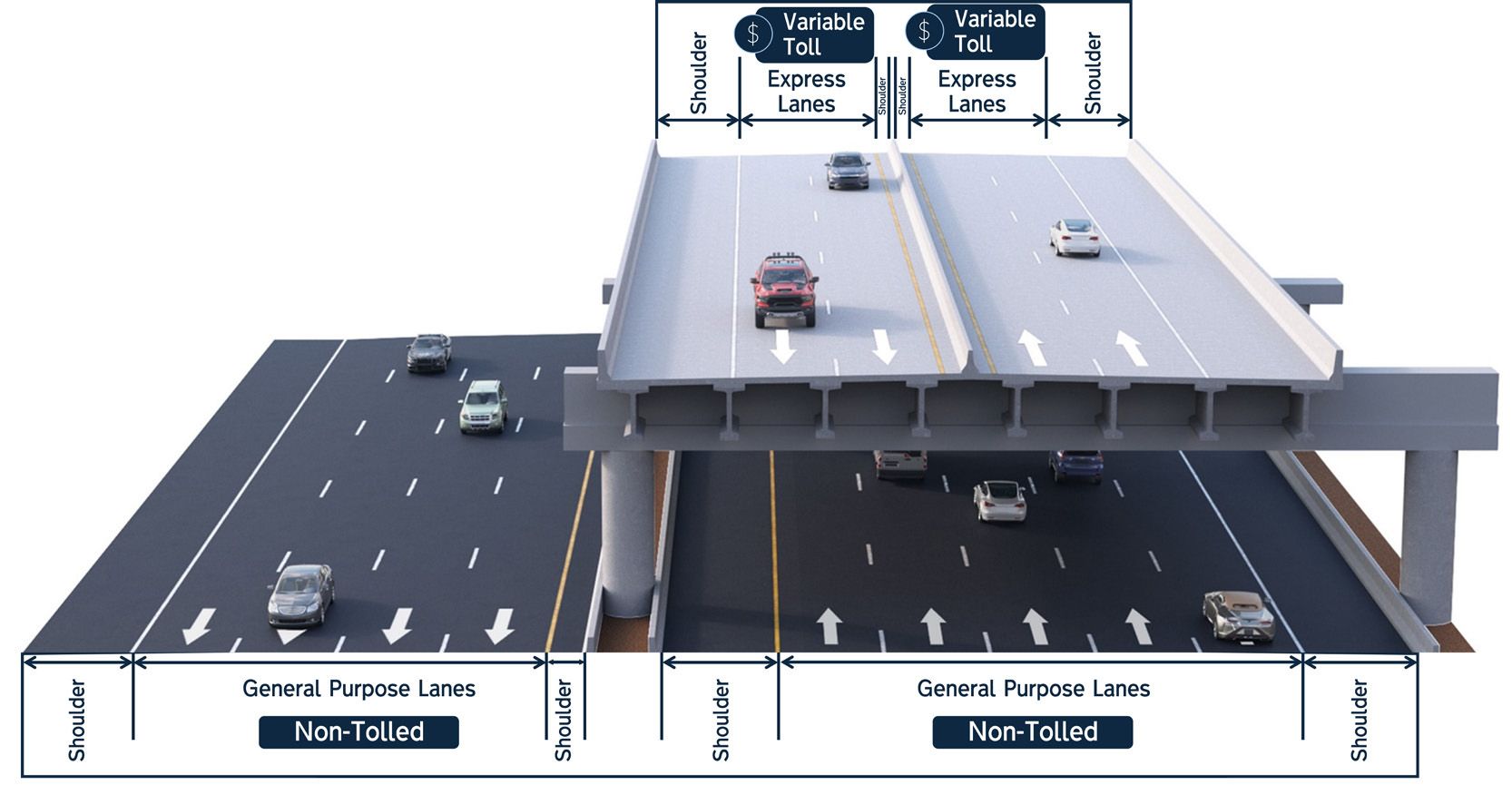
Zoom in: The project will add 11 miles of express lanes, including potential elevated lanes, from Brookshire Freeway to the South Carolina line.
- The North Carolina Department of Transportation will also reconstruct interchanges and bridges as part of the widening.
Between the lines: Neighbors are alarmed that the widening could come near and even onto properties in Biddleville, Oaklawn Park, McCrorey Heights, Dalebrook, Wesley Heights, Seversville and other areas.
- Maps show the construction could graze Pinewood Cemetery, an 1853 burial ground for Black Charlotteans, and take part of Frazier Park in Uptown's Third Ward.
- The state can take land through eminent domain, although NCDOT division engineer Felix Obregon says the agency would avoid that as much as possible, to keep costs low and reduce the impact on the communities.
- "This is a corridor that hasn't been widened since the '90s because there's lots of constraints, as you can see on the map," Obregon says. "We're trying to literally thread the needle."
The other side: State transportation officials say the project will accommodate explosive population growth, manage congestion, and "support economic growth," as I-77 is a critical interstate to move goods and people through Uptown.
- Driving the 11-mile stretch right now could take you anywhere from 10 minutes to nearly an hour, depending on traffic, according to NCDOT. More than 160,000 cars travel the segment per day.
- It also has two and a half times more crashes than other urban interstates, Obregon says.
Reality check: Expanding a highway doesn't necessarily fix traffic, researchers have found.
- Instead, more drivers show up to try to take advantage of the new lanes, and the traffic problem persists.
- It's a phenomenon called "induced demand" that's widely accepted by transportation experts but rarely by departments of transportation.
Driving the news: More residents are just now finding out about the new designs, released in late October. Graham said Wednesday that he was still learning the facts and had a call scheduled with NCDOT. He called the images he'd seen "unacceptable."
- "There were a couple of neighbors frantic when surveyors were out there surveying their yards," Graham said. "It caused this feverish panic — which it probably should."
Flashback: Charlotte Regional Transportation Planning Organization, a board of local elected officials, voted in October 2024 to move forward with the project and partner with a private company on the toll lanes, as was done in the northern direction on I-77.
- Having a private partner helps make feasible the "most expensive project in the state's history."
- In 2019, NCDOT opened about 27 miles of express lanes from Brookshire Freeway to N.C. 150 in Iredell County.
- The northern tolls are controversial, calling into question who gets the luxury of a faster trip, while those who can't afford fluctuating rates stay in the general-purpose lanes.
- "That is the definition of a two-tier system," Shannon Binns, founder of Sustain Charlotte, wrote in a Nov. 1 letter to council member Graham.
- Responding to the criticism, CRTPO has asked that toll rates be capped on the south side.
The big picture: Local projects like the Gold Line streetcar and Five Points Plaza have sparked revitalization on Charlotte's west side, an area long disconnected from the rest of the city by past highway construction.
- "We just started to overcome that barrier," says Shannon Hughes, Wesley Heights president. "Then here comes the state again, going to repeat the same ills of the '60s and '70s as if lessons weren't learned."
What's next: The widening project has no clear timeline, but it likely won't start until at least the next decade, an NCDOT spokesperson told Axios. The agency is still studying and documenting the potential human and environmental impacts through 2027.
- Meanwhile, NCDOT is hosting public information meetings this month to explain the preliminary designs and take feedback.
- Obregon stresses these maps are not the final product: "We still have a long way to go."
- "I'm encouraging everybody to come out and to attend," Graham said, "so we could make factual decisions, not emotional decisions, about what's about to occur or if we can even stop it."
Nov. 12, 2025 4-7pm
- Johnson C. Smith University, Smith Tech-Innovation Center - Room 322
- 100 Beatties Ford Road
Nov. 13, 2025 4-7pm
- Silver Mount Baptist Church
- 501 West Arrowood Road
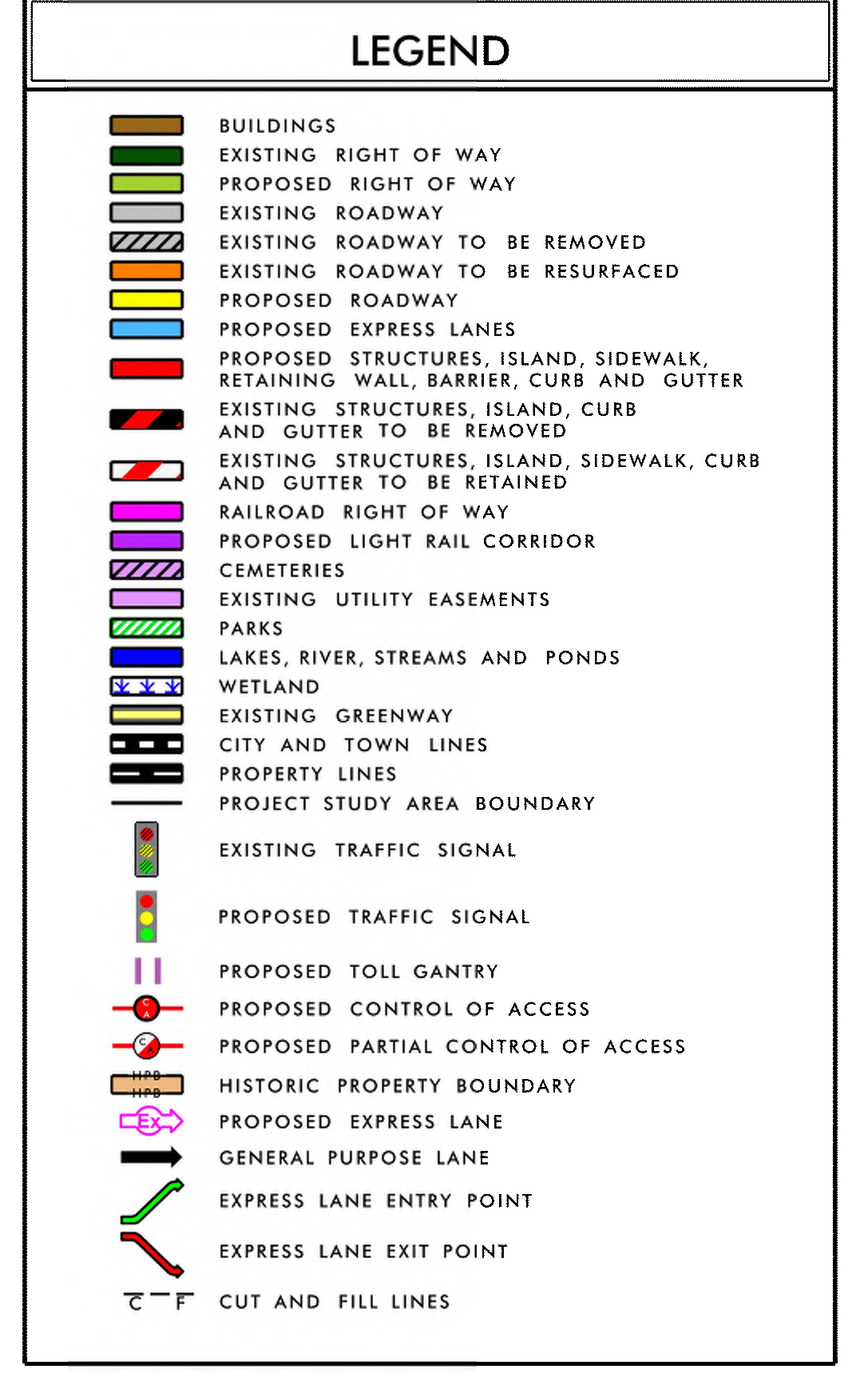
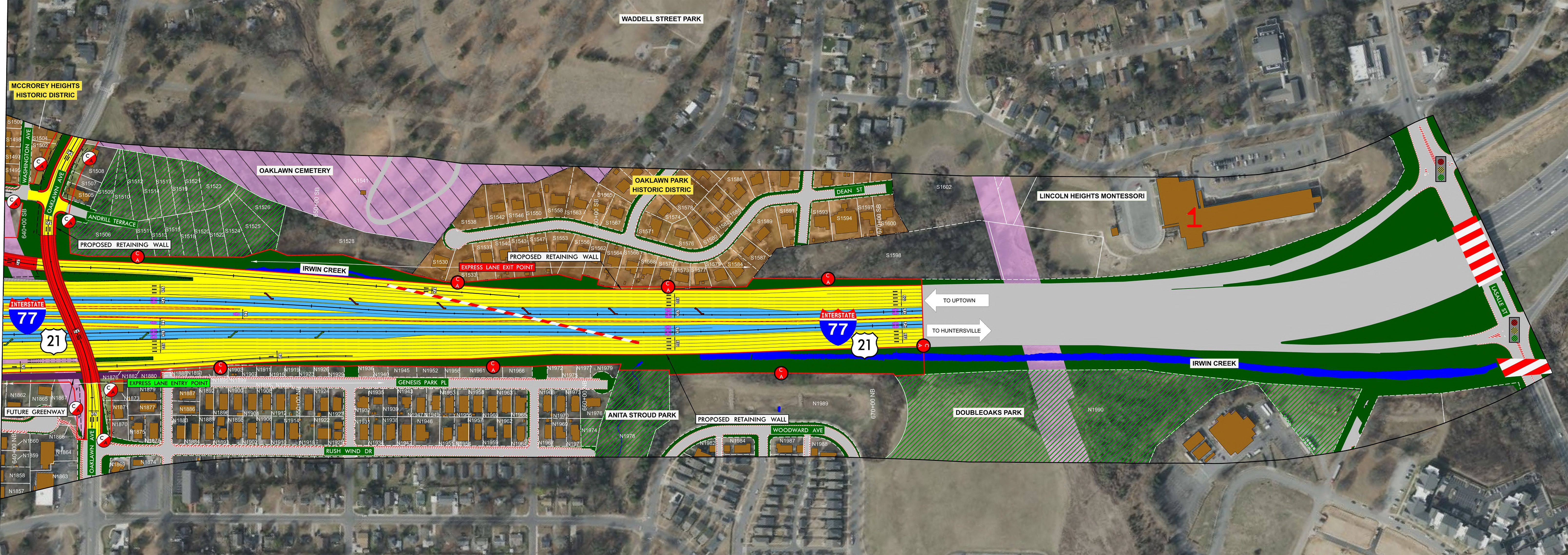
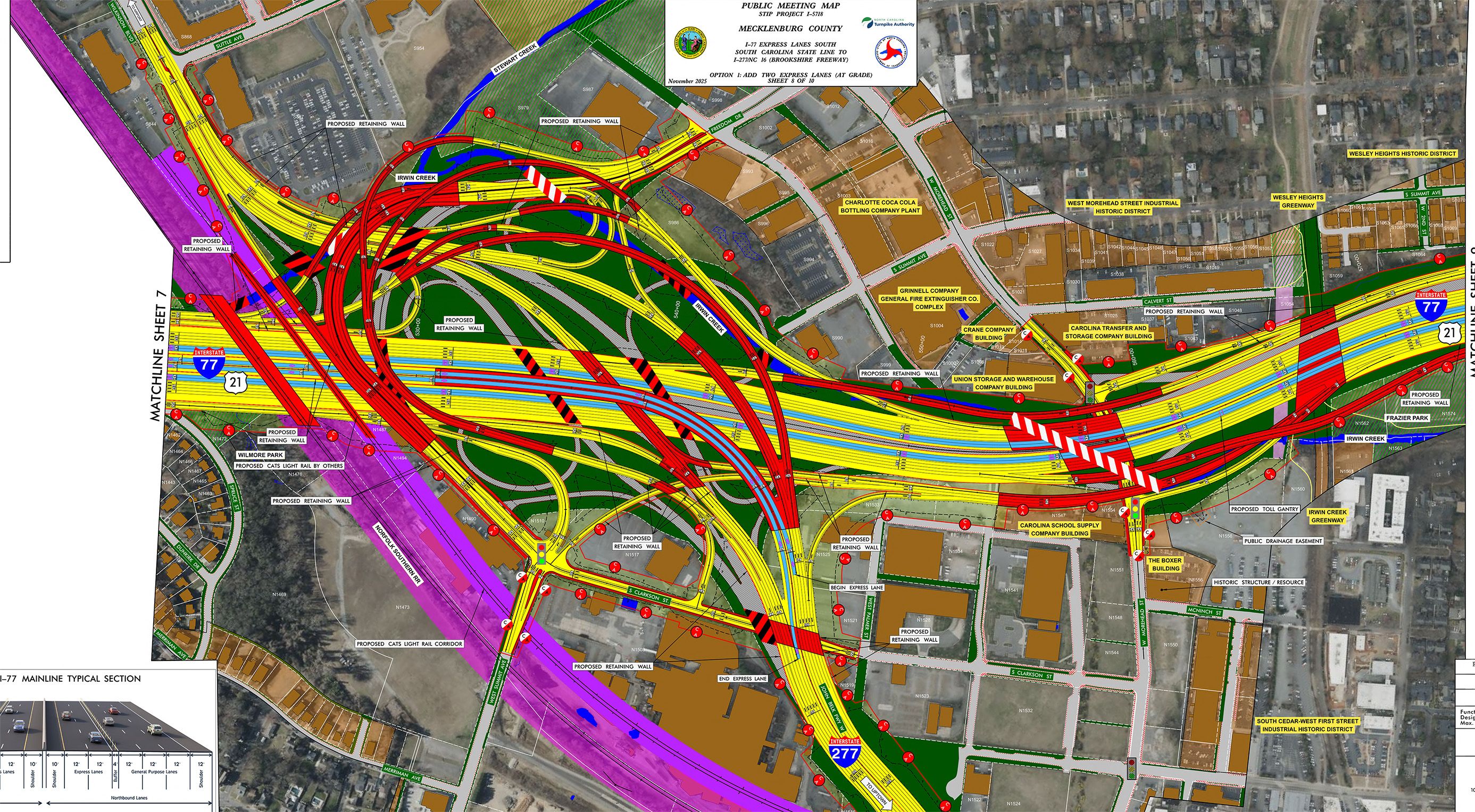
View the rest of NCDOT's maps here.