How to use Charlotte's new economic mobility tracker

Add Axios as your preferred source to
see more of our stories on Google.
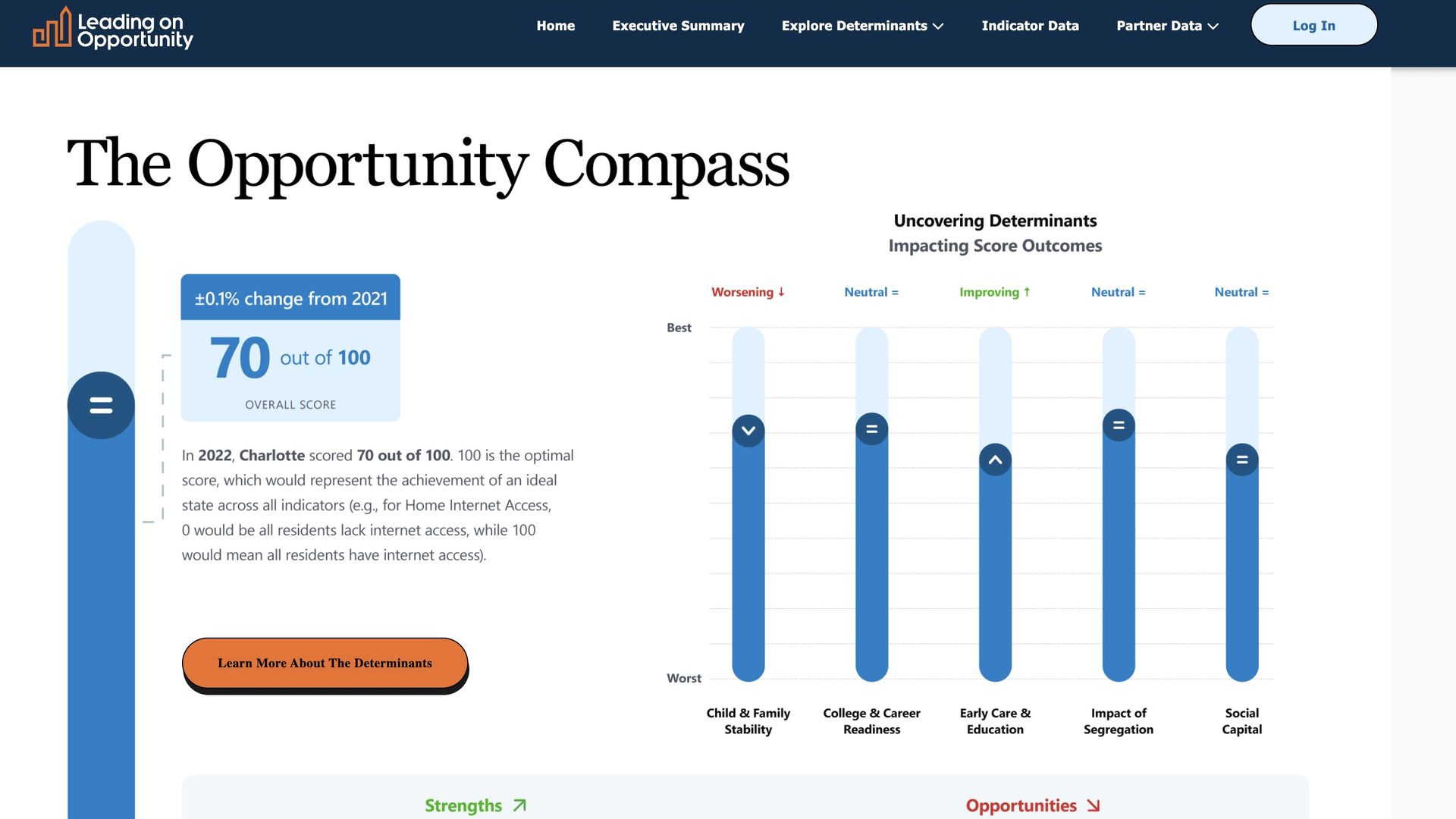
Opportunity Compass dashboard. Screenshot: Leading on Opportunity.
Charlotte has an updated online tool that shows whether the city is getting better at helping children rise out of poverty.
Why it matters: A decade ago, Harvard economist Raj Chetty found Charlotte ranked dead last among major U.S. cities for upward mobility. His latest update shows progress, and this new tool helps track it in real time.
Driving the news: The new "Opportunity Compass" by local nonprofit Leading on Opportunity tracks 82 data points, up from 33 in the old version.
How it works: The compass measures Charlotte's progress across five "determinants" of economic mobility. They are early care and education, child and family stability, college and career readiness, social capital, and the impact of segregation.
- Arrows for each determinant point up or down to show whether Charlotte is making progress. Some outcomes are reported as "neutral."
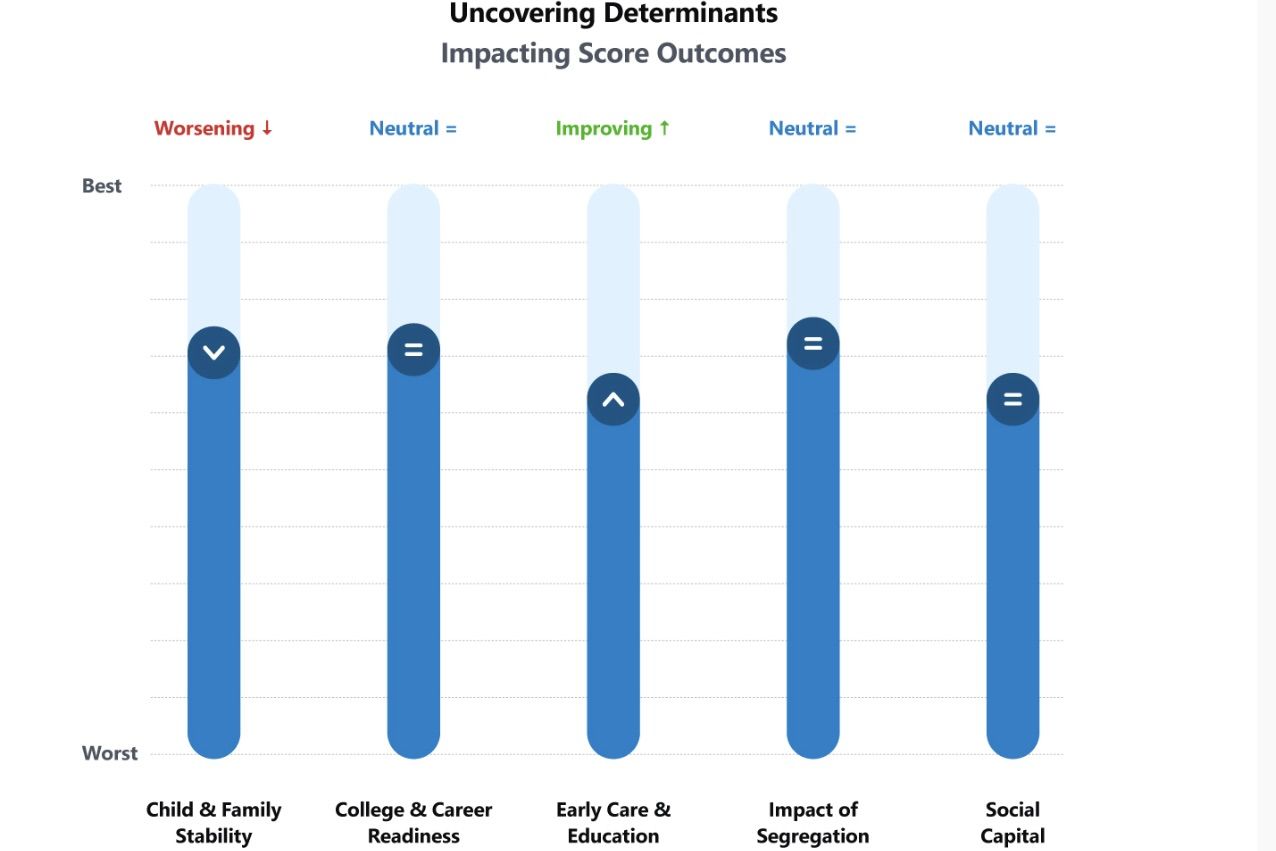
Zoom in: One of the areas trending in the wrong direction, according to the compass, is "Child and Family Stability."
- All four of its drivers — health and well-being, family formation, financial and housing prosperity, and safe and stable homes — are worsening.
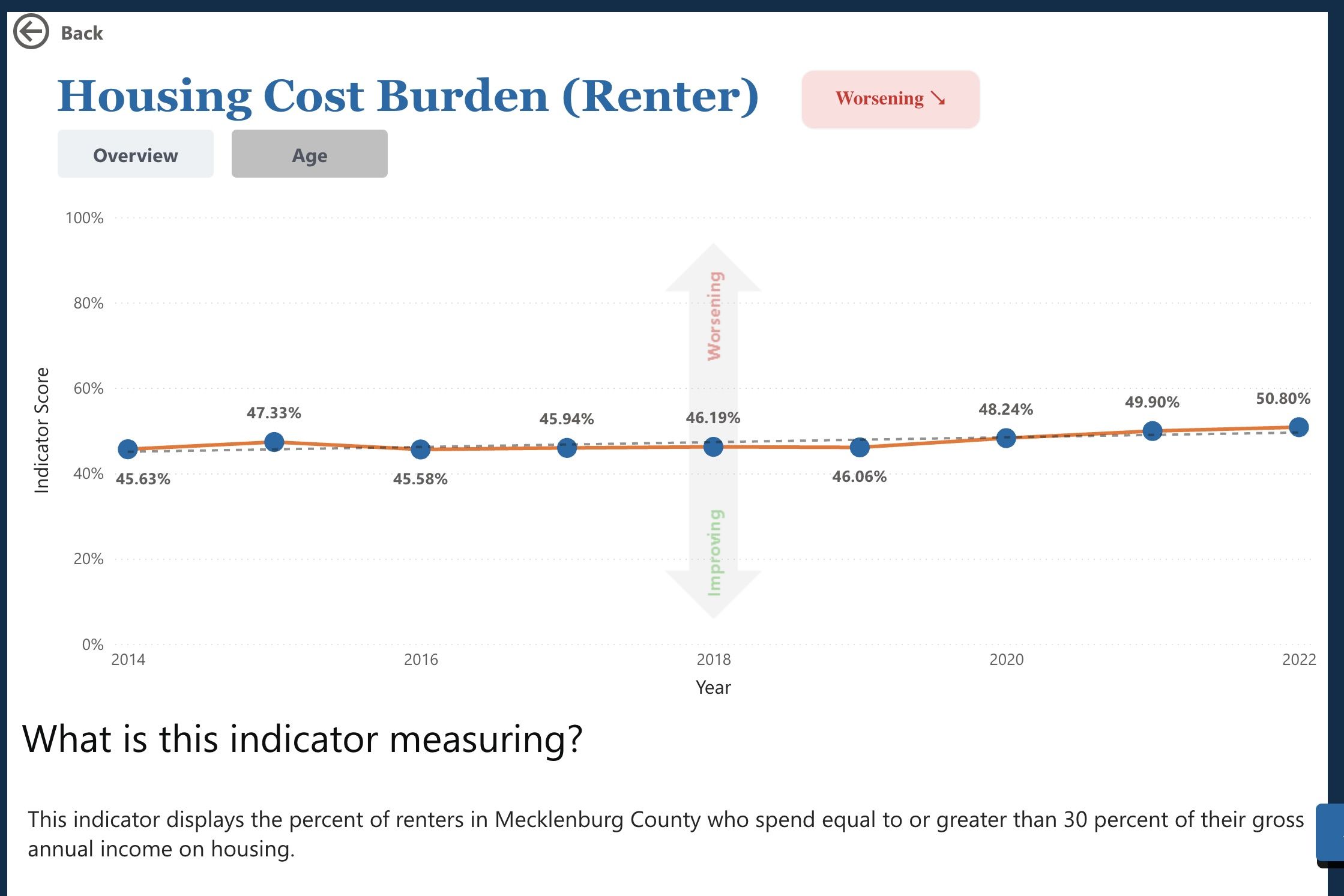
If you zoom in even further, you'll find data to support each driver.
- For example, the share of Mecklenburg County families spending 30% or more of their income on housing rose from 46% in 2014 to 51% in 2022.
- That suggests Charlotte's affordable housing crisis is holding back economic mobility and could keep the city from climbing higher in future rankings.
For those who want to get involved, the site lists nonprofits and national resources, like Results for America, which showcases proven policy ideas such as zoning reforms.
Flashback: Chetty's 2014 "Land of Opportunity" study shocked Charlotte, ranking it last among major U.S. cities for upward mobility.
- It analyzed tax returns of people born into poverty in the late '70s and early '80s and found that, on average, Charlotte natives earned less than their parents.
- A 2024 follow-up, tracking children born in 1992, showed major progress: Charlotte climbed to No. 38.
- Leading on Opportunity was formed in 2017 in response to the initial study and continues to monitor the city's progress.
What they did: Leading on Opportunity weighted its indicators based on a "community priority survey" of about 700 residents, who ranked the determinants by how much each impacts their lives.
- The outreach targeted ZIP codes struggling with economic mobility on Chetty's online "Opportunity Atlas" tool.
Caveat: Data is lacking on mental health and public transportation — two areas that community members said were important, Leading on Opportunity's team told Axios.
- Some data is also missing from 2020 due to COVID-19.
Follow the money: The new version of the tool also tracks funding tied to each of the determinants.
- So far, Leading on Opportunity has financial data from four organizations: Atrium Health, Ally Financial, Bank of America and Mecklenburg County. Together, that group committed $18 million in 2023 to efforts in the "child and family stability" category, according to the site.
- Leading on Opportunity expects to add other public funders soon, including the City of Charlotte. The initial four were included because they sit on the Leading on Opportunity council and were willing to share their information.
Go deeper: Charlotte no longer "50th out of 50" for economic mobility, new Chetty study shows