CATS aims to enforce transit fares after light rail attack

Add Axios as your preferred source to
see more of our stories on Google.
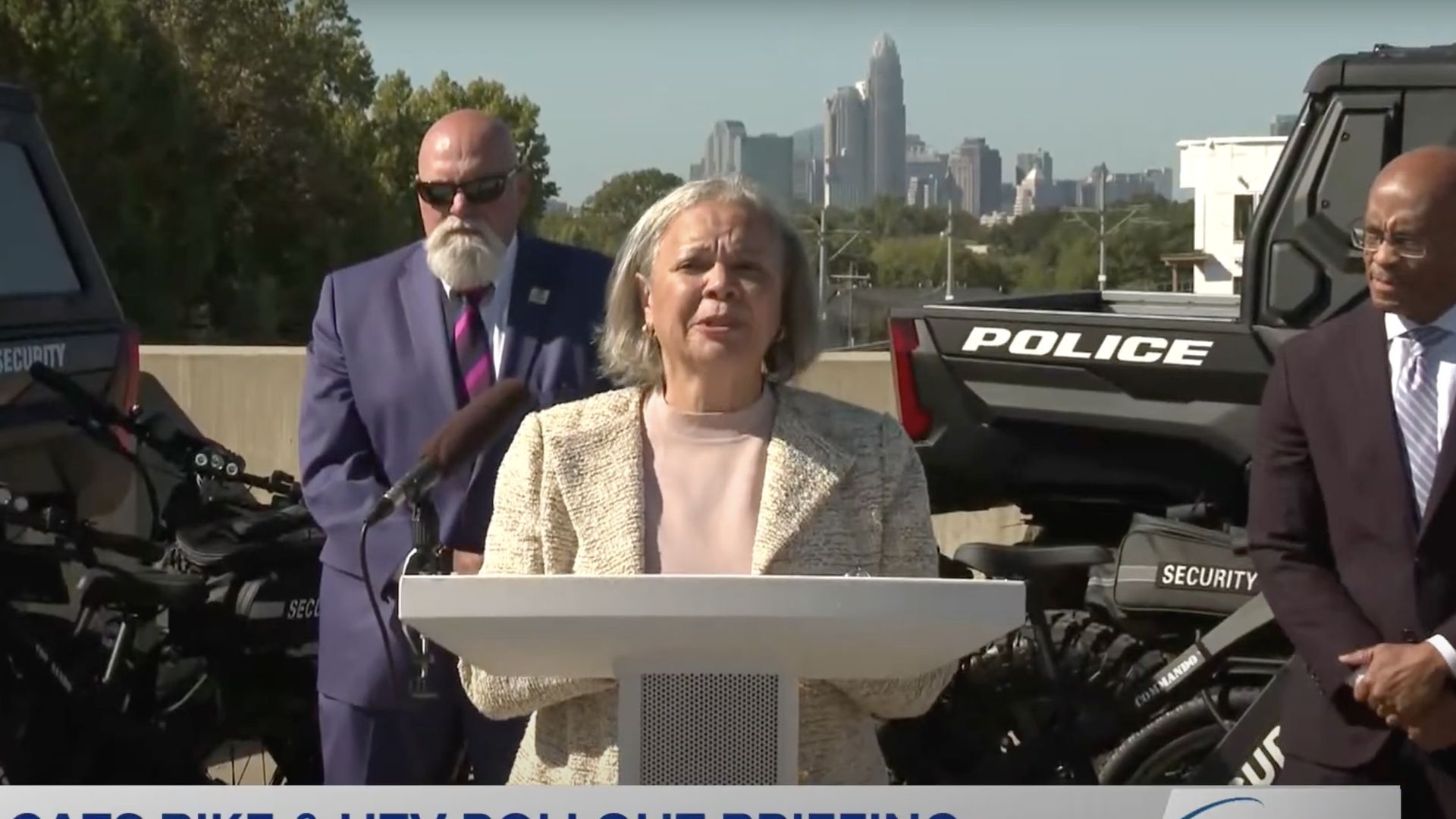
Mayor Vi Lyles speaks at CATS' Oct. 3 press conference on security enhancements. Screenshot: City of Charlotte
Charlotte Area Transit System is tightening its security protocols after the Aug. 22 light rail attack, including by enforcing fares and deploying bike and urban terrain vehicle patrols along the light rail.
- However, there are no plans to place armed guards on every vehicle despite recent pressure.
Why it matters: The safety of riding CATS has come under intense scrutiny since Ukrainian refugee Iryna Zarutska was fatally stabbed on the light rail. No security was on board at the time of the attack, and the man charged with the murder did not buy a ticket.
Driving the news: The attack led to probes into CATS. A state audit found CATS' armed force has dwindled from at least 68 armed guards (out of 108 total security positions) in 2019 to just 39 (out of a total force of 219).
- That's not enough for CATS to cover all 48 train cars at once, the auditor emphasized.
The other side: At a safety press conference Friday, interim CATS CEO Brent Cagle said stationing an armed guard on every car is not feasible if the agency wants a mobile force that can respond across the system.
- CATS security staffing has actually increased 100% since 2019, including unarmed security.
- "It was about creating that right mix to create better visible presence," Cagle said.
- CATS' security provider, Professional Security Services, now has approximately 200 staff hired, including more than 40 armed personnel. They're backed by 966 hours per week of off-duty Charlotte-Mecklenburg Police Department officers.
- Charlotte City Council recently expanded PSS' jurisdiction so it can patrol areas such as the Charlotte Transit Center and the Rail Trail.
- The agency is also deploying bike patrols and urban terrain vehicles to help security respond quickly to hard-to-reach platforms in Uptown and South End.
Between the lines: Charlotte's light rail has an open access model with ticketing machines on each light rail platform. Fare enforcement currently comes in the form of onboard checks by an inspector, not turnstiles.
- But CATS scarcely does checks. The light rail has, arguably, operated as an honors system in recent years. Cagle said CATS could consider turnstiles, but an open system is the "norm" for a light rail.
What's next: Mayor Vi Lyles said she will introduce a resolution related to fare evasion at the next Metropolitan Transit Commission meeting, scheduled for Oct. 22. She said a discussion is needed to figure out how to best enforce it.
- "Fare evasion is often a symptom of different challenges," Lyles said. "We can't ignore that. So we will have to work out how to best do it."
- Lyles also highlighted the sales tax mobility referendum, if it passes in November, would generate new revenue for safety investments.
Go deeper: Everything to know about the 1% transportation sales tax referendum